
Chemistry Nobel goes to Kagan and Soai for cracking a mirror-image molecule puzzle
Henri B. Kagan of France and Kenso Soai of Japan won the 2026 Nobel Prize in Chemistry for showing how reactions can strongly favor one "handed" form of a molecule. The work helps explain how life's building blocks became one-sided and has shaped how drugs are made.
AI-assisted · US Brief desk · Sources listed below
What happened
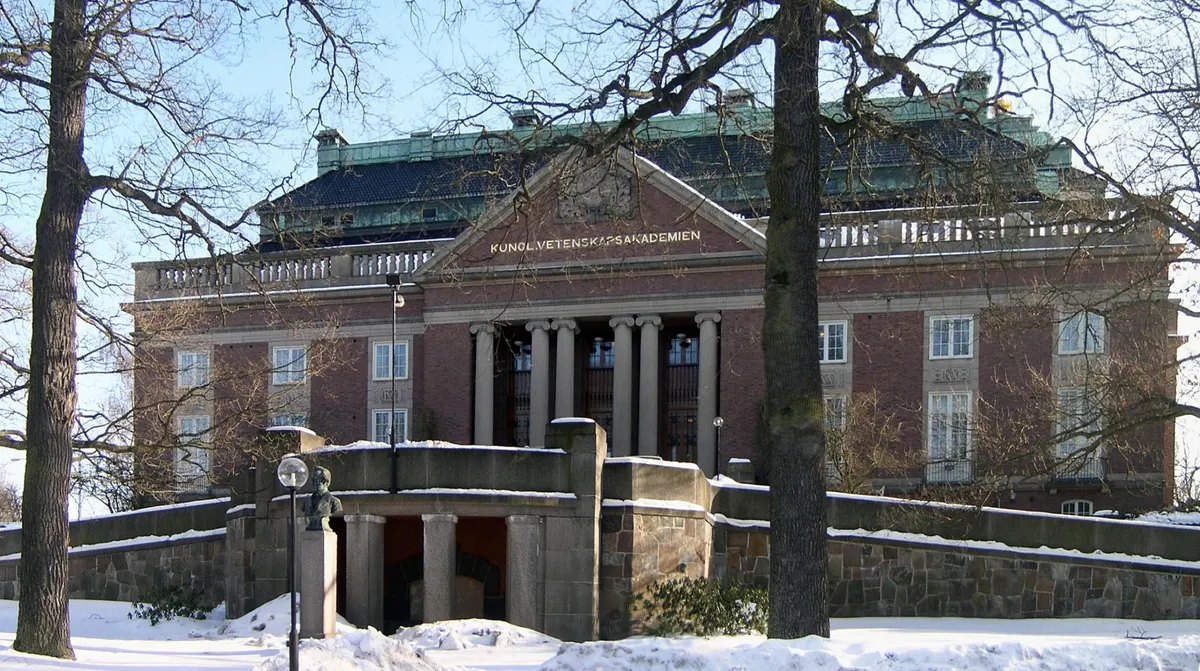
The Royal Swedish Academy of Sciences awarded the 2026 Nobel Prize in Chemistry on Wednesday to Henri B. Kagan of Université Paris-Sud in France and Kenso Soai of the Tokyo University of Science in Japan. They share the prize equally "for the discovery of non-linear effects and autocatalysis in asymmetric organic synthesis."
The work is about chirality, or "handedness." Some molecules, such as amino acids, come in two mirror-image forms, like left and right hands. Living things use only one form. How that one-sidedness, called homochirality, could arise was a chemistry mystery for more than a century, the academy said.
Kagan took the first big step in 1986. He found a way to make a reaction produce a bigger excess of one mirror image than the helper molecule, or catalyst, carried itself. That had been thought impossible.
Why it matters
The academy said the discoveries have been decisive for chemists who design reactions to make medicines. The Soai reaction has also energized research into how life's one-handed molecules first appeared.
What’s next
The Nobel announcements run through Oct. 12. This week's medicine prize honored the development of optogenetics.
More context
Soai took the next step. In 1995 he described a reaction in which the product acts as its own catalyst, copying its handedness as it forms. In 2003 he showed a reaction that made only one of the two mirror images. "Other than life itself, no one had previously achieved this feat," the academy said. The reaction now bears his name.
"Henri Kagan and Kenso Soai have provided a solution to a chemical mystery that is over a century old: how homochirality can emerge spontaneously," said Heiner Linke, chair of the Nobel Committee for Chemistry. "The chemical reactions they have developed are spectacular."
5 listed sources
- NobelPrize.org, Oct 7, 2026: Press release: Nobel Prize in Chemistry 2026
- NobelPrize.org, Oct 7, 2026: Nobel Prize in Chemistry 2026 summary
- NobelPrize.org, Oct 7, 2026: Popular science background (PDF)
- Royal Swedish Academy of Sciences, Oct 7, 2026: Scientific background (PDF)
- Sourcing note: Primary Nobel announcement materials; no political lean. Related US Brief: Nobel medicine prize goes to 3 scientists who found a way to switch brain cells on with light.
References listed by US Brief; a source count is not a verification score.
Editorial sourcing notes
Details and quotes are from the Royal Swedish Academy of Sciences' press release and background papers on nobelprize.org. No licensed photos of the laureates were available.
Like US Brief? You can support it with a tip.