
Nobel medicine prize goes to 3 scientists who found a way to switch brain cells on with light
Karl Deisseroth of Stanford and Germany's Peter Hegemann and Georg Nagel won the 2026 Nobel Prize in Physiology or Medicine on Monday for optogenetics. The method uses a protein found in algae to turn individual nerve cells on or off with light, and it is now used in labs around the world to study the brain.
AI-assisted · US Brief desk · Sources listed below
What happened
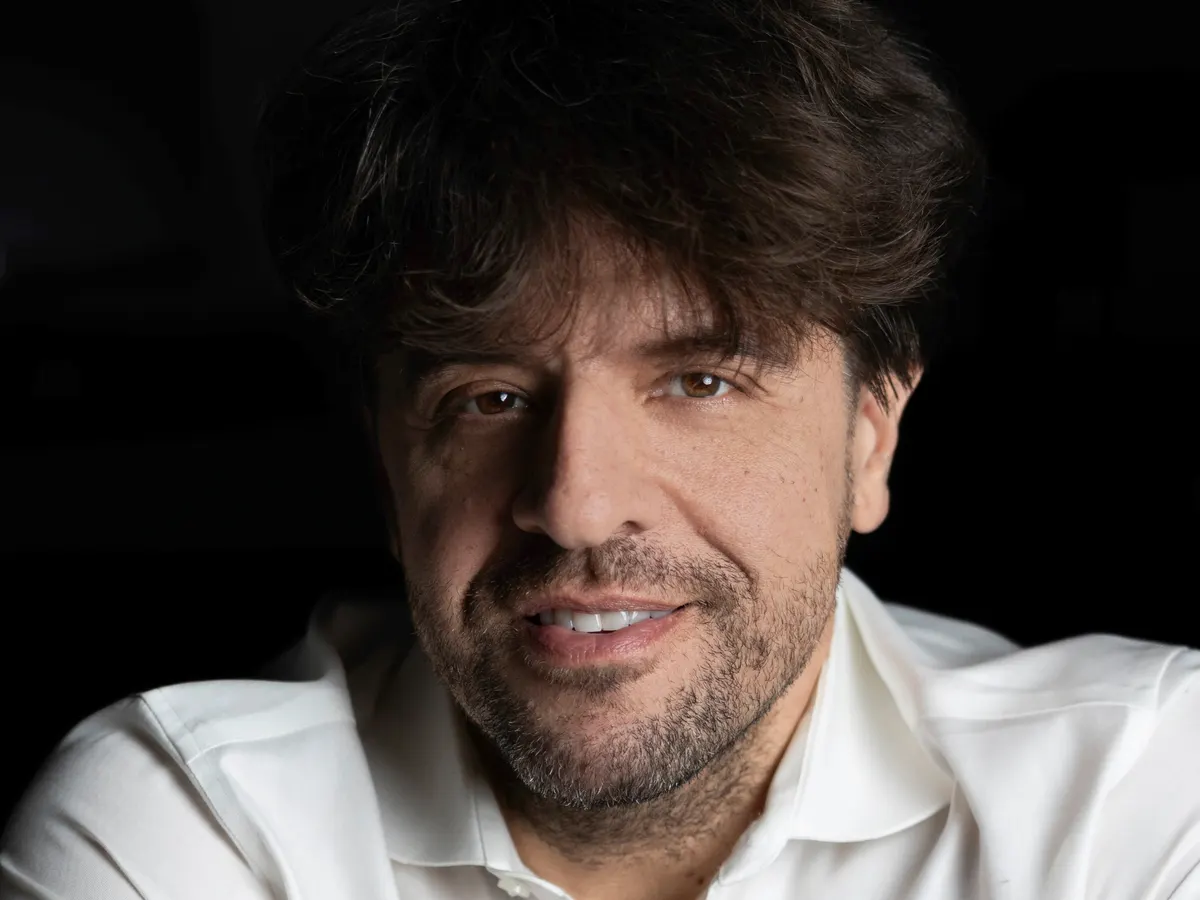
Three scientists won the 2026 Nobel Prize in Physiology or Medicine on Monday for finding a way to switch brain cells on and off with light. The Nobel Assembly in Stockholm named Karl Deisseroth, 54, of Stanford University and the Howard Hughes Medical Institute; Peter Hegemann, 71, of Humboldt University of Berlin; and Georg Nagel, 73, of the University of Würzburg in Germany. The prize honors "discoveries concerning light-gated ion channels and optogenetics." The three will share 12 million Swedish kronor, about $1.2 million, according to Reuters and AP.
The work began with a question about algae. Hegemann wanted to know how Chlamydomonas, a single-celled green alga, swims toward light. In the early 2000s, he and Nagel found a protein on the alga's surface called channelrhodopsin. When blue light hits it, a channel opens, charged particles flow into the cell, and an electrical signal starts. Any cell given the protein became sensitive to light, the Nobel Assembly said.
Deisseroth's team put the gene for that protein into rat nerve cells in a dish. Pulses of blue light made the cells fire. He published the result in 2005, and two years later made it work in the brains of living mice. "People usually think about light as a way of collecting information to observe things," he told AP. "This is using light to control things, to make things happen, and to do it in a very precise way."
Why it matters
brain cells talk in milliseconds, and optogenetics gave scientists a way to control specific cells at that speed. That lets researchers test which circuits actually drive memories, feelings and behavior. "It has let us go from a 'Rand McNally' road atlas of the brain to something more akin to 'Google Earth,'" Georgetown neuroscientist Patrick Forcelli told AP. Nobel Assembly member Abdel El Manira said the method has shown how circuits go wrong in blindness, depression, addiction and dementia.
What’s next
Nobel week continues with physics on Tuesday, chemistry on Wednesday, literature on Thursday and the peace prize on Friday. The economics prize will be announced Oct. 12.
More context
For now, optogenetics is mostly a research tool. But AP reports that companies are running studies on an inherited form of blindness, retinitis pigmentosa, by adding a light-activated protein to a patient's retina and pairing it with special light-emitting glasses. Deisseroth, who is also a practicing psychiatrist, said other scientists are using what optogenetics has revealed to pursue possible treatments for autism and schizophrenia.
Deisseroth almost slept through the news. Stanford says the call came at 12:27 a.m. Pacific time; he missed it, and the committee then reached his wife's phone. "I almost felt as if I'd lost the power of forming words," he told AP. His next job, he said, was packing his kids' school lunches: "That's my one obligation I have in the next few hours, to make sure I make their sandwiches."
7 listed sources
- Nobel Assembly at Karolinska Institutet, Oct 5, 2026: Press release, Nobel Prize in Physiology or Medicine 2026
- Karolinska Institutet, Oct 5, 2026: The 2026 Nobel Prize in Physiology or Medicine to Peter Hegemann, Georg Nagel and Karl Deisseroth
- Reuters, Oct 5, 2026: American Deisseroth and Germans Hegemann and Nagel win 2026 Nobel medicine prize
- AP (Kostya Manenkov, Lauran Neergaard, Adithi Ramakrishnan, Stefanie Dazio), Oct 5, 2026: Nobel medicine prize goes to 3 scientists for shining light on brain activity (via KPRC)
- Stanford Report, Oct 5, 2026: Karl Deisseroth wins Nobel Prize — (laureate's university)
- HHMI, Oct 5, 2026: Karl Deisseroth awarded the 2026 Nobel Prize in Physiology or Medicine — (laureate's funder)
- Scientific American, Oct 5, 2026: 2026 Nobel Prize in Physiology or Medicine awarded to scientists behind optogenetics
References listed by US Brief; a source count is not a verification score.
Editorial sourcing notes
Prize details are from the Nobel Assembly's press release and Karolinska Institutet. Ages and prize money are from Reuters and AP. Deisseroth's quotes are from his phone interview with AP and from Stanford Report. Stanford and HHMI are his employer and funder; we used them only for background and the timing of the call. The retinitis pigmentosa trials are as described by AP; we did not independently review them. Hegemann and Nagel had not spoken publicly by draft time.
Like US Brief? You can support it with a tip.