
Retail sales rise just 0.2% in October as shoppers cut big buys
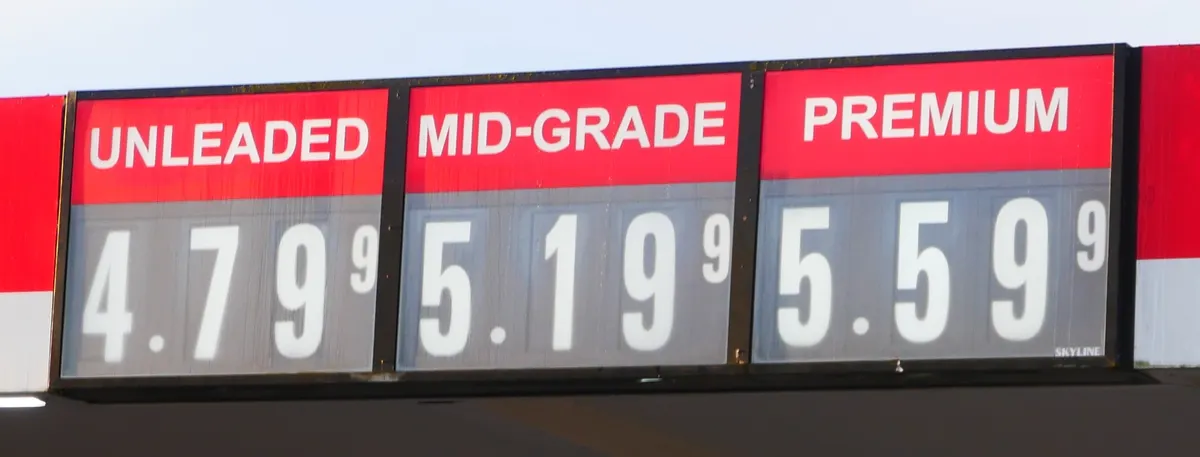
U.S. retail sales rose 0.2% in October to $748.2 billion, the Census Bureau said Tuesday, slowing from September's 0.8% gain as shoppers spent less at car dealers and furniture and clothing stores. Gas stations, up 30.3% from a year earlier, account for about a third of the past year's sales growth.
AI-assisted · US Brief desk · Sources listed below
What happened
Americans spent $748.2 billion at stores, gas stations, websites and restaurants in October, up 0.2% from September, the Census Bureau said Tuesday in its advance estimate. That was in line with what economists expected, Reuters reported, but well below September's unrevised 0.8% gain. Census noted the margin of error is plus or minus 0.4%, so the October change is too small to say for certain that spending grew at all. Compared with October 2025, sales were up 6.8%.
Why it matters
Separate Labor Department data Tuesday showed import prices rose 1.1% in October, more than the 0.7% economists expected, led by a 3.6% jump in fuel costs, according to Reuters. Futures markets price in a quarter-point Federal Reserve rate hike in December and another in January, Reuters said, citing CME's FedWatch tool. The Fed's benchmark rate now sits at 3.75% to 4.00%, and higher rates mean costlier car loans, mortgages and credit card balances.
More context
Where shoppers pulled back: Sales at car and parts dealers fell 1.6%, furniture stores 2.3%, clothing stores 0.7% and sporting goods, hobby, music and book stores 0.7%. Electronics and appliance stores were flat and grocery stores slipped 0.2%. Online and other nonstore retailers rose 1.2%, gas stations and health and personal care stores each rose 1.5%, building-material stores 0.5% and restaurants and bars 0.2%. Leaving out car dealers, sales rose 0.6%; leaving out gas stations, they rose just 0.1%.
What the numbers show: Gas-station sales were $68.6 billion in October, 30.3% more than a year earlier, according to the Census table. That roughly $16 billion increase is about a third of the $47.8 billion rise in total monthly sales over the past year. Without gas stations, sales were up 4.9% from a year ago, not 6.8%. Reuters reported that the ongoing U.S.-Israeli war with Iran is driving up inflation and eroding households' buying power.
Prices vs. spending: Retail sales are not adjusted for inflation. Consumer prices rose 0.4% in October, the Labor Department reported last week, faster than the 0.2% sales gain, though that price index also covers services such as rent. Inflation-adjusted disposable income fell 0.3% in September and the saving rate hit a near four-year low, Reuters noted. "More consumers are clearly struggling with rapidly rising prices but are not yet ready to throw in the towel," said Scott Anderson, chief U.S. economist at BMO Capital Markets. Carl Weinberg of High Frequency Economics called it "a mixed report card on the health of the consumer," AP reported.
The stronger side: A narrower 'control' measure that leaves out autos, gasoline, building materials and restaurants, and feeds most directly into economic growth figures, rose 0.6%, beating the 0.4% forecast, and September's figure was revised up to 0.5%, Reuters reported. Consumer spending grew at a 3.8% annual pace in the third quarter.
Holiday season ahead: The National Retail Federation in October forecast November–December sales will grow 4.2% to $1.013 trillion, a measure that excludes car dealers, gas stations and restaurants. The CNBC/NRF Retail Monitor, based on card spending, showed October sales up 0.2%, the slowest monthly gain since November 2025. "Households are managing budgets carefully, timing purchases around special offers and sales events in order to stretch their dollars," NRF CEO Matthew Shay said, CNBC reported. Amazon and Best Buy start Black Friday sales on Thursday, Nov. 19.
What's still unknown: Whether gas prices ease enough to free up money for gifts, and whether the big-ticket pullback deepens as rates rise. October's figures are advance estimates and will be revised. The November retail report is due Dec. 16, after the Fed's December meeting.
8 listed sources
- U.S. Census Bureau, Advance Monthly Sales for Retail and Food Services, October 2026 (CB26-181), Nov. 17, 2026
- U.S. Census Bureau, full release with Tables 1–2 (PDF), Nov. 17, 2026
- Reuters (Lucia Mutikani) via Investing.com, US retail sales increase moderately; import prices rise above expectations, Nov. 17, 2026
- AP (Anne D'Innocenzio) via ABC News, Shoppers slowed spending in October with high prices leading to caution, Nov. 17, 2026
- CNBC, Consumers are showing signs of strain even as they keep spending, CNBC/NRF Retail Monitor shows, Nov. 11, 2026
- National Retail Federation, NRF Forecasts 2026 Holiday Sales Growth as Consumers Remain Resilient, Oct. 15, 2026
- US Brief, Consumer prices rose 0.4% in October, more than expected
- US Brief, Black Friday starts Nov. 19 at Amazon, Best Buy; Walmart Nov. 23
References listed by US Brief; a source count is not a verification score.
Editorial sourcing notes
All sales figures come from the Census Bureau's advance October 2026 retail report, which is based on a sample and will be revised; they are seasonally adjusted but not adjusted for inflation. The gas-station share of yearly growth is US Brief's calculation from the Census table. Forecasts, import prices and Fed-rate pricing are as reported by Reuters and can change. Photos are file images, not from this report; the hero shows a gas price sign photographed in April 2026.
Like US Brief? You can support it with a tip.