Briefs / World / Trump–Xi White House summit ends with Taiwan clash, thin deals, and Atlanta pandasWorld briefing
Trump–Xi White House summit ends with Taiwan clash, thin deals, and Atlanta pandas
After South Lawn pageantry, Thursday’s Trump–Xi talks produced no comprehensive tariff, rare-earth, or Taiwan breakthroughs. Xi urged Washington to “oppose Taiwan independence”; Trump declined substantive answers and said he wants AI left “exactly where it is.” The main concrete items remain Wednesday’s trade-truce extension to Jan. 10 and Xi’s confirmation that two giant pandas will arrive at Zoo Atlanta in days.
By US Brief desk · Updated 2026-09-24T17:55:00-07:00
Editor’s note: Facts follow Foreign Policy’s Sep 24 evening World Brief (Alexandra Sharp), Bloomberg/Financial Post summit coverage (Mason, Lowenkron, Gan), Channel NewsAsia’s White House wrap, and Associated Press via PBS NewsHour on the Zoo Atlanta panda announcement. Attribute Taiwan language to Xinhua’s readout as those outlets report it; note the White House has not released a matching Taiwan readout. Distinguish today’s thin summit outcomes from Wednesday’s Bessent trade-truce extension (already covered in fin-china-trade-truce) and from morning preview pieces world-xi-washington and pol-xi-visit. Do not invent bilateral deal text or private Oval Office quotes beyond attributed public remarks.
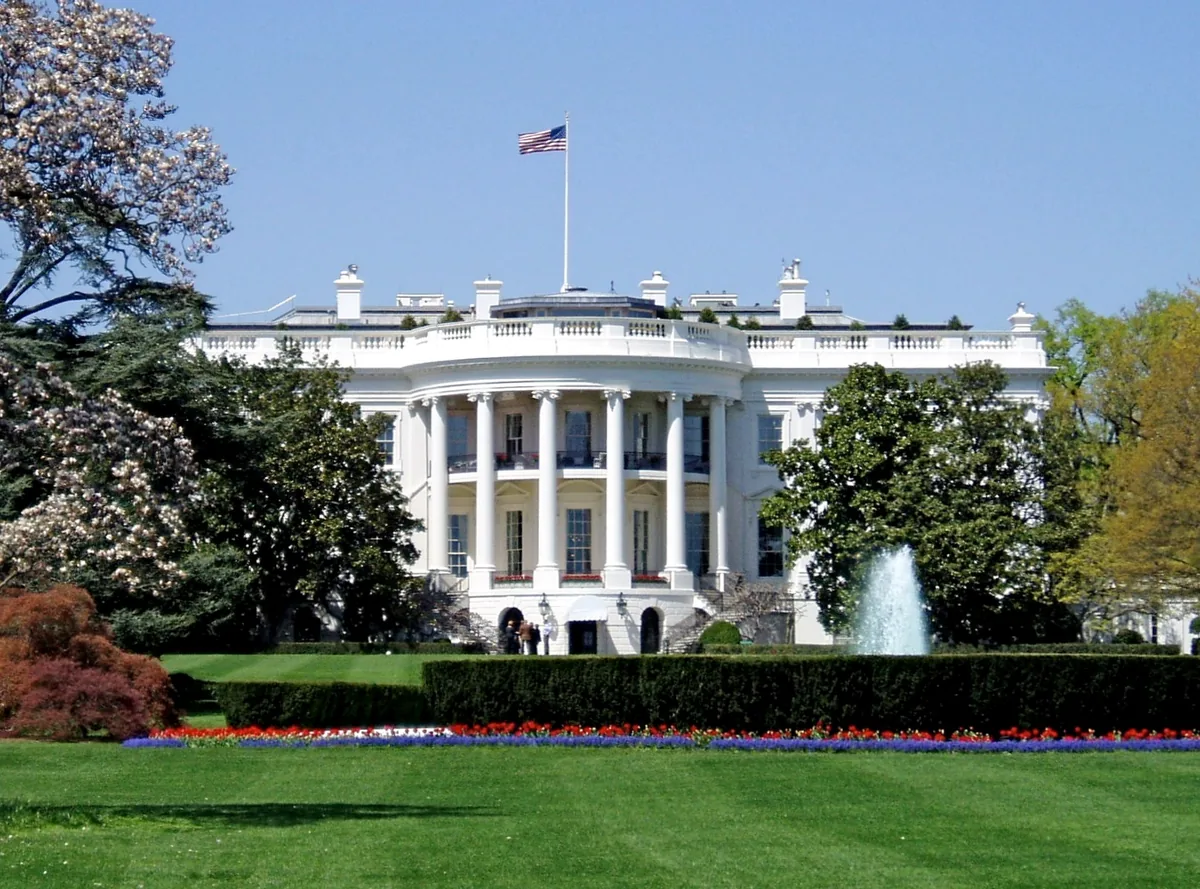
Chinese President Xi Jinping’s first Washington state visit in more than a decade closed Thursday with ceremony that outran substance. After a South Lawn arrival, military review, and Oval Office session, President Donald Trump called the bilateral “great” and declined to detail what, if anything, moved on tariffs, rare earths, soybeans, Taiwan arms sales, or artificial-intelligence rules.
What is settled on paper is mostly work finished before the photo line. Late Wednesday, Treasury Secretary Scott Bessent confirmed that the U.S.–China trade truce that paused triple-digit reciprocal tariffs will run through Jan. 10—about two more months past a mid-November cliff—after talks with Chinese Vice Premier He Lifeng. Thursday’s leaders did not announce a broader market-access or critical-minerals package on top of that extension.
Taiwan produced the sharpest public clash. China’s official Xinhua News Agency said Xi told Trump the United States must “adhere to the correct position of opposing Taiwan independence and handle the Taiwan issue with prudence”—language several outlets described as among Xi’s most explicit asks for a U.S. policy shift. The White House did not immediately publish a matching readout. Washington’s long-standing posture is that it does not support independence and opposes unilateral changes to the status quo; Trump has separately said a roughly $14 billion Taiwan arms package remains held as a “negotiating chip” since his May China trip.
Artificial intelligence sat near the center of the agenda and highlighted how far apart the capitals still are on regulation. Trump posted on Truth Social that “Super Intelligence (SI)” would be discussed but that he wants to “leave it exactly where it is,” casting the Justice Department as the U.S. guardrail and saying China shares that preference. Xi, in public remarks, said both countries have “the capability and responsibility to develop and manage AI for good” and to keep development “under human control.” Bloomberg reported that Bessent’s team has floated an emergency hotline for AI incidents—a process talk, not a ceiling on model capability.
The thin scorecard matters because both leaders arrived with leverage and constraints. Beijing retains rare-earth leverage and wants looser chip and market access; Washington wants agricultural openings and continues advanced-semiconductor export controls that Nvidia’s Jensen Huang—on Thursday’s state-dinner guest list alongside OpenAI’s Sam Altman, Apple’s Tim Cook, Amazon’s Jeff Bezos, Alphabet’s Sundar Pichai, and Tesla’s Elon Musk—still cannot fully sell into China. Analysts quoted across wires expected symbolism over enforceable AI or Taiwan deals, and the evening’s public record largely matched that forecast.
Domestic politics shadowed the pageantry. Trump is hosting Xi while gasoline and diesel costs tied to the Iran war weigh on midterm Republicans, and while some GOP senators have criticized the warmth of the welcome. Major U.S. television networks declined to carry the leaders’ remarks live after the White House barred CNN, MS NOW, and Politico—an access fight now under a temporary restraining order in separate litigation—so White House and Chinese cameras, not network pools, carried much of the visual feed.
The one concrete goodwill gesture Xi timed for American audiences was panda diplomacy. In opening remarks, he said male Ping Ping and female Fu Shuang “will come to their new home in Zoo Atlanta and meet with the American people” in “a few days,” framing the loan as friendship after China reclaimed Atlanta’s prior pandas in 2024. The Associated Press notes the spring conservation deal already pointed that way; Xi’s White House confirmation locked the near-term arrival window.
Who is affected: exporters and importers still pricing a two-month tariff pause rather than a reset; Taiwan and U.S. Asian allies watching whether arms-sale abeyance becomes bargaining coin; AI labs and chip firms scanning for hotline language versus any softening of export controls; and Atlanta’s zoo, which regains a high-profile conservation exhibit. Markets already extended the truce into pricing; they did not get a surprise mega-deal Thursday.
Uncertainty remains high. It is unclear whether private sessions produced side letters on fentanyl, detainee releases, military crisis channels, or limited tariff tweaks that officials have not yet briefed. It is also unclear how Trump will answer Xi’s Taiwan framing in public, or whether the state dinner softens—or hardens—the chip-control fight with Altman and Huang in the room. Competing views treat the day as either stabilizing theater that buys time, or proof that structural disputes are being deferred into a compressed midterm and Iran-war window.
What to watch next: any White House or Chinese ministry readout that fleshes out Taiwan, AI hotline, or tariff minutiae; follow-through on Zoo Atlanta’s panda arrival logistics; whether the Jan. 10 trade-truce date becomes a new cliff for rare-earth and EV talks; and whether advanced-chip export controls stay intact after the dinner guest list’s optics. Until those documents or concrete agency actions appear, Thursday’s summit is best read as relationship management with a panda headline—not a rewritten U.S.–China bargain.
Follow US Brief: Bluesky · X · RSS
Full interactive version requires JavaScript. https://us-brief.com/article/world-xi-summit-close
 Skip to content