
Taiwan's Lai says defense buildup aims to deter war; Beijing calls speech separatist
In his National Day speech Saturday, Taiwan President Lai Ching-te said the island cherishes peace but will not give up its freedom, and called on Indo-Pacific democracies to join forces to keep the status quo. China's Taiwan Affairs Office said the speech disregarded facts and showed a separatist mindset.
AI-assisted · US Brief desk · Sources listed below
What happened
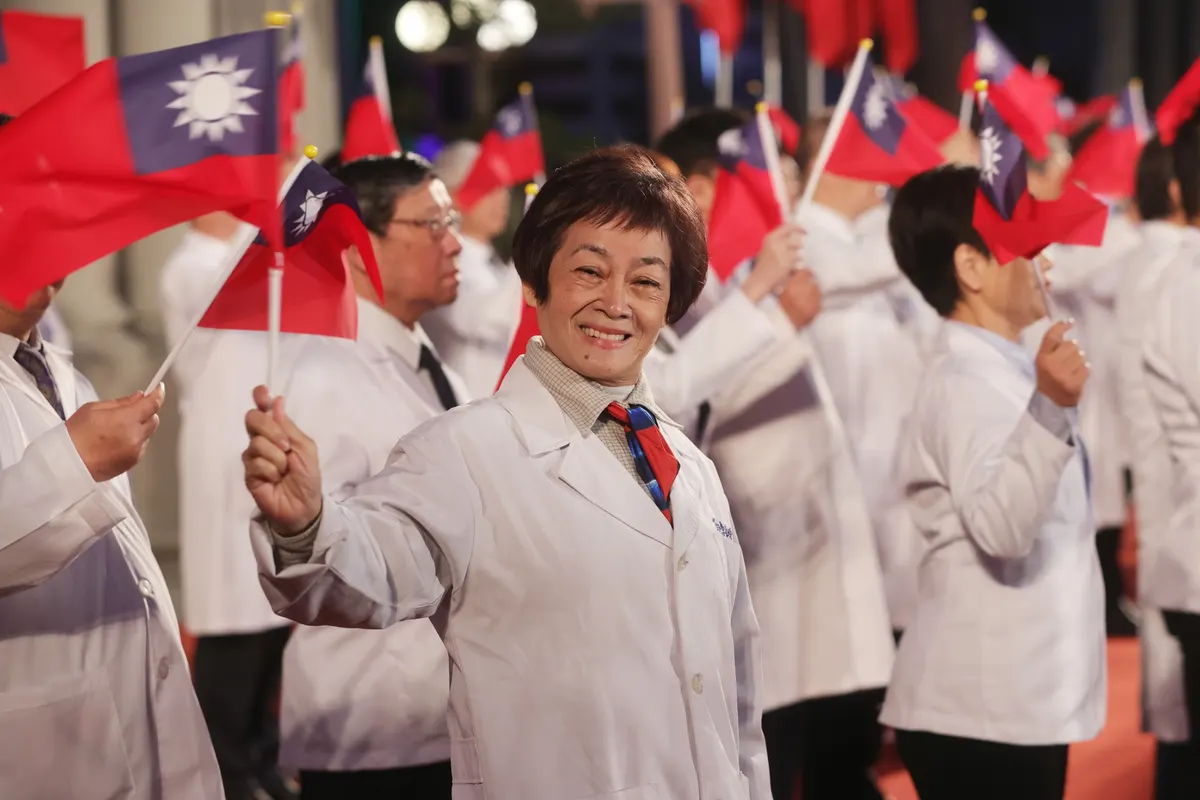
Taiwan President Lai Ching-te used his National Day address in Taipei on Saturday to argue that building up the island's military is meant to prevent a war, not provoke one. "Taiwan cherishes peace, but we will not give up our freedom," he said outside the Presidential Office, according to Reuters.
What he said: "Our aim by increasing investment in national defense is not to provoke; rather, it is to deter war," Lai said, according to the Presidential Office transcript. "And we are strengthening our self-defense not to abandon dialogue, but to ensure that dialogue can take place on the basis of parity and dignity." He said Taiwan welcomed the United States and China managing their competition through dialogue, and that "democracies in the Indo-Pacific must join forces to ensure the status quo of peace and stability in the region is not changed." A Taiwanese official told reporters the line about U.S.-China dialogue was a direct response to last month's China-U.S. summit in Washington, Reuters reported.
Lai also pointed to whole-of-society resilience drills meant to keep energy, communications, transport, finance, food and health systems running in a crisis. Al Jazeera reported that his government has set aside a record NT$1.1 trillion (about $34.5 billion) for defense in 2027, more than 3% of GDP.
Why it matters
The speech comes as Washington and Beijing try to steady relations after their summit, and as Taiwan waits on U.S. arms. Reuters reported that China's last war games near Taiwan were in late December, after an $11 billion U.S. arms package, and that President Trump has yet to approve a second package worth about $14 billion. Taiwan's Defense Ministry reported 21 Chinese military aircraft and seven navy ships around the island in the 24 hours ending Saturday morning, Al Jazeera said.
What’s next
Whether Beijing follows its verbal response with large-scale military drills, as it did after earlier Lai speeches, and whether the White House moves on the pending $14 billion arms package.
More context
How Beijing answered: Zhang Han, a spokesperson for China's Taiwan Affairs Office, said the speech "disregarded facts, distorted right and wrong, misled the public and harbored ulterior motives," according to Xinhua. Zhang said Lai was pursuing independence "through military buildup and reliance on external forces," and that Beijing would uphold the one-China principle and the 1992 Consensus. China views Taiwan as its territory, has never renounced the use of force to take it, and has rebuffed Lai's offers of talks.
5 listed sources
- Office of the President, Republic of China (Taiwan), Oct 10, 2026: President Lai delivers 2026 National Day Address
- NBC News (Reuters), Oct 10, 2026: Taiwan cherishes peace but will not give up freedom, president says
- Al Jazeera, Oct 10, 2026: Taiwan president says defence spending boost aims to 'deter war'
- Xinhua, Oct 10, 2026: Mainland slams Lai Ching-te's secessionist narrative
- AP, Oct 10, 2026: Taiwan's Lai urges Indo-Pacific democracies to 'join forces' in National Day speech
References listed by US Brief; a source count is not a verification score.
Editorial sourcing notes
Lai's quotes are from the Taiwan Presidential Office's English transcript. Beijing's response is quoted as reported by the state news agency Xinhua and by Al Jazeera. Figures on defense spending and Chinese military activity are as reported by Al Jazeera and NBC News and have not been independently verified by US Brief.
Like US Brief? You can support it with a tip.