
Israel says it can strike Iran alone; US tells Americans to leave
Israel's military spokesman said Thursday the army is ready to strike Iran "with force at any moment," including without the United States. The U.S. Virtual Embassy in Iran told Americans to leave immediately after Iranian attacks on U.S. assets in Bahrain and Kuwait and Houthi strikes on Saudi Arabia. No new strike has been announced.
AI-assisted · US Brief desk · Sources listed below
What happened
"We are monitoring the situation and are ready to strike with force at any moment, including on our own, without the Americans," Israeli military spokesman Effie Defrin told public broadcaster Kan on Thursday, Iran International and Gulf News reported. "Iran's vision of destroying Israel has not faded," he said. Prime Minister Benjamin Netanyahu was to convene his security cabinet Thursday evening, The Times of Israel reported. No decision to launch a new offensive has been announced.
Why it matters
A new Israeli strike, with or without U.S. help, could widen a nine-month war that has already hit Gulf oil sites and shipping. Americans still in Iran have no U.S. embassy; Switzerland handles U.S. interests in Tehran.
More context
Americans told to leave: "Do not travel to Iran for any reason. United States citizens should leave Iran immediately," the U.S. Virtual Embassy in Iran said, warning that hostilities could escalate fast. It said Iran, Yemen's Houthis and allied groups may target U.S. interests, companies and citizens in the region. The alert cited Iranian attacks on U.S. assets in Bahrain and Kuwait and a Houthi strike that wounded 11 people at a Riyadh tower, Euronews reported.
Attack on Saudi oil: The Houthis said Wednesday they attacked Ras Tanura, Saudi Arabia's largest refinery, and caused fires; satellite images showed thick black smoke, Reuters reported. Saudi Arabia's energy ministry said drones were intercepted with no damage and no disruption to supplies. Brent crude rose to about $95 a barrel on the news before easing, The National reported.
Washington's mixed message: U.S. envoy Jared Kushner said Wednesday that Israel "needs to get out of the constant wartime mindset and focus on economic diplomacy," Gulf News reported. Asked about new U.S. strikes, he said Trump "always keeps all his options on the table." Treasury Secretary Scott Bessent said Iran has not loaded a single tanker since the U.S. blockade began in August.
The case for striking now: Netanyahu believes Iran is rebuilding its missile stocks and air defenses and is vulnerable now, The Washington Post reported, as cited by Iran International. He has pressed Trump for renewed strikes and sent Mossad chief Roman Gofman to Washington this month.
The case for waiting: Former military chief Gadi Eisenkot, who is trying to form Israel's next government, said Monday, "I see no direct and immediate threat from Iran today that would require Israel to act before a new government is formed." Mossad researchers have found no immediate need for military action, the Israeli newspaper Haaretz reported. Eisenkot says the priority is Iran's remaining 440 kilograms of enriched uranium.
The politics: Netanyahu lost his majority in the Oct. 27 election and remains caretaker prime minister. Eisenkot's bloc holds 48 of the Knesset's 120 seats, and he has until Dec. 6 to form a government. Critics accuse Netanyahu of using the Iran threat to pressure rivals; Netanyahu accuses them of downplaying the danger for political reasons.
What would change the story: An Israeli or U.S. strike announcement, a decision from Thursday's security-cabinet meeting, a new Iranian or Houthi attack on Gulf oil sites, or a sign that talks with Iran have resumed. Kushner said he has met Iranian representatives several times but did not say when.
7 listed sources
- Iran International, Israel ready to strike Iran without US support, IDF spokesman says, Nov. 26, 2026 (Iranian opposition outlet)
- Gulf News (Stephen N R), Israel ready to strike Iran alone, but US has a message for Netanyahu: End the 'wartime mindset', Nov. 26, 2026
- Middle East Eye, Israeli army spokesperson says it's ready to attack Iran 'with force' without US backing, Nov. 26, 2026
- Euronews (Euronews Persian), US tells citizens to leave Iran, warns hostilities could escalate fast, Nov. 25, 2026
- Reuters via NBC News, Yemen's Houthi rebels attack Saudi Arabia's largest oil refinery, Nov. 25, 2026
- Saudi Press Agency, Ministry of Energy Official Source: Ras Tanura Refinery Targeted in Attempted Drone Attack with No Damage, Disruption to Supplies Reported, Nov. 2026 (Saudi state media)
- The National, Oil rebounds to $95 per barrel after Saudi refinery attack, Nov. 26, 2026
References listed by US Brief; a source count is not a verification score.
Editorial sourcing notes
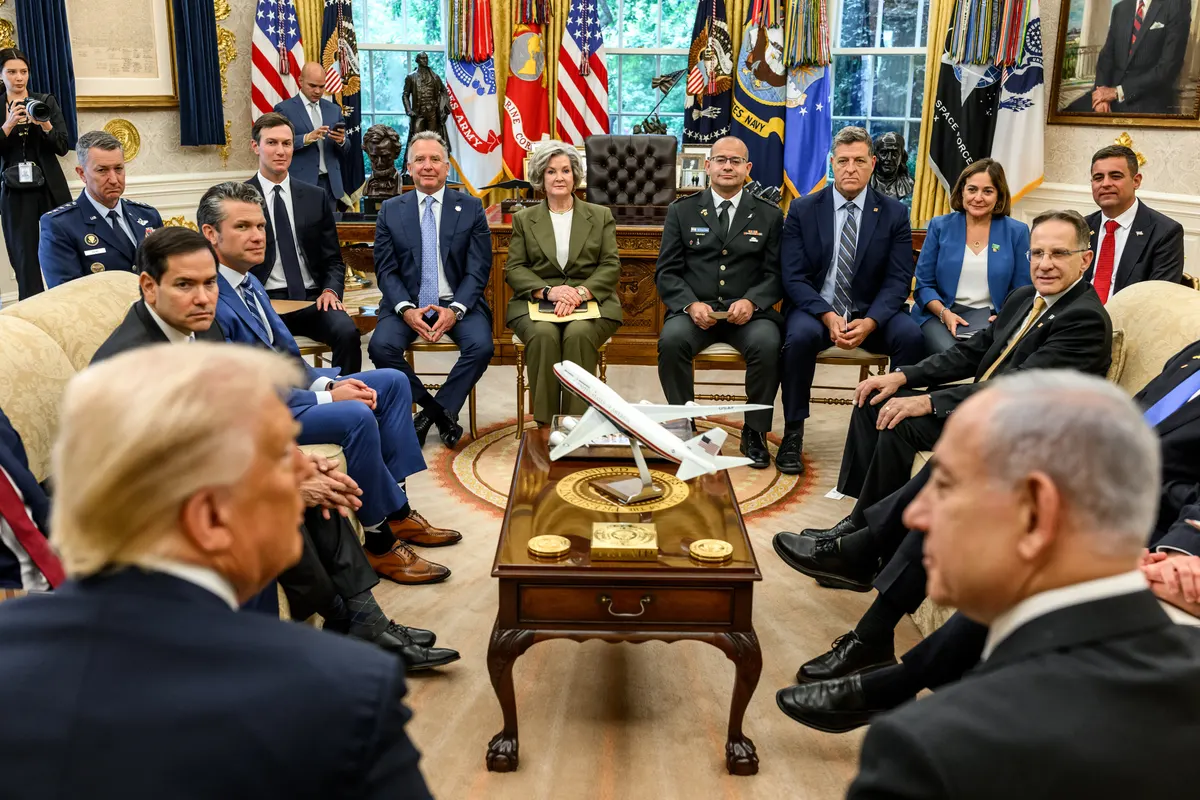
Defrin spoke to Israeli public broadcaster Kan; Iran International, Gulf News and Middle East Eye carried his quote. The Times of Israel first reported the security-cabinet meeting, as cited by those outlets. Saudi and Houthi accounts of the Ras Tanura attack differ. The hero photo shows Trump and Netanyahu meeting in the Oval Office on Sept. 29, 2025 (file photo).
Like US Brief? You can support it with a tip.