
Iran strikes damaged 26 US bases, causing billions in losses, AP finds
An Associated Press review of satellite imagery found that more than 115 Iranian or Iranian-backed drone and missile strikes through August damaged or destroyed structures at 26 bases and sites with U.S. equipment, starting with early-warning radars. The damage, which AP puts at billions of dollars, is not part of the Pentagon's $47.1 billion war-cost estimate, and it comes as President Trump weighs new strikes after Tuesday's midterms.
AI-assisted · US Brief desk · Sources listed below
What happened
Iran's drone and missile strikes on U.S. bases in the Middle East went after early-warning radars first, then aircraft hangars, warehouses and troop housing, causing billions of dollars in equipment damage, according to an Associated Press analysis published Saturday. AP verified the damage with satellite imagery from multiple providers and interviews with four regional officials. Through August, it found, more than 115 strikes claimed by Iran or Iranian-backed militias damaged or destroyed structures at 26 military bases and other sites holding U.S. equipment.
Radars came first. Within the first two days of the war in late February, AP found, Iran destroyed the protective enclosures around U.S. radar systems at Camp Arifjan in Kuwait and Naval Support Activity Bahrain, and hit portable radars at Prince Sultan Air Base in Saudi Arabia and Muwaffaq Salti Air Base in Jordan. One radar in Jordan was reported destroyed; manufacturer Raytheon said it was one of only 13 the Army has worldwide, and budget documents put each at about half a billion dollars. A Qatari radar bought in a 2013 deal valued at $1.1 billion was badly damaged. In the war's first month, Iran then landed more than 50 successful strikes on 18 sites with U.S. equipment, focusing on aircraft.
Kuwait took the most hits. Ali Al Salem Air Base was struck at least 30 times, damaging or destroying at least 15 aircraft hangars, many warehouses and 10 buildings near a residential area. At Camp Buehring, imagery showed more than 30 structures damaged or destroyed between early March and late August; its gym was destroyed in March and a base store was hit in July. The deadliest known strike on U.S. troops in the war, a March 1 drone attack at Port Shuaiba in Kuwait, killed six soldiers. Sites in Bahrain, Iraq, Jordan, Oman, Qatar, Saudi Arabia and the United Arab Emirates were also hit.
Why it matters
The Pentagon's $47.1 billion war-cost estimate, reported Oct. 28, leaves out repairs to these bases, so the final bill to taxpayers is likely higher. And the review lands as President Trump weighs whether to resume strikes on Iran after Tuesday's midterms, with Tehran vowing major retaliation that could hit the same bases again.
More context
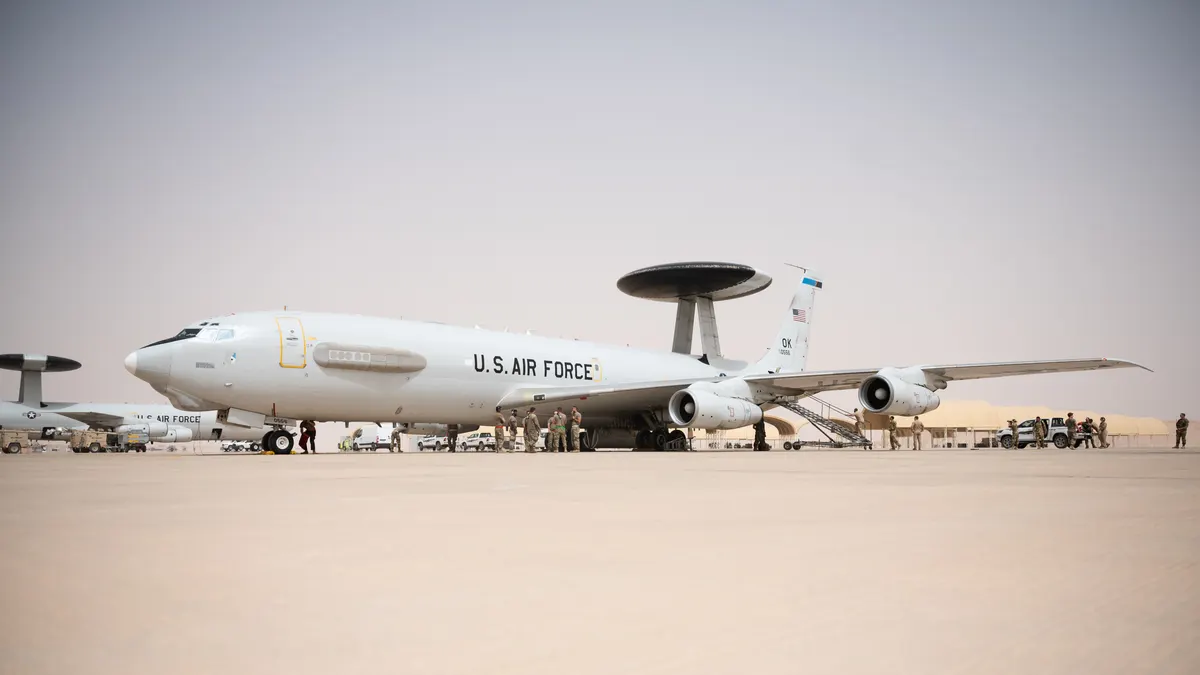
Two of the regional officials told AP the U.S. has moved many aircraft, air defense systems and communications gear out of the Persian Gulf because of the damage. They also described damage to refueling planes, fuel bunkers and troop quarters, and AP reported a March strike at Prince Sultan Air Base damaged the back half of an E-3 Sentry surveillance plane. Those base-level details come from officials speaking anonymously and have not been confirmed by the Pentagon.
The Pentagon disputes the picture of weakness. Spokesman Sean Parnell told AP that U.S. 'forces and bases are well protected and America's military is stronger than ever,' and that troops in the region 'have everything they need' to ensure Iran never gets a nuclear weapon. U.S. Central Command declined to comment, citing operational security, as it has throughout the war. Secretary of State Marco Rubio said Saturday in Atlanta that Trump 'hasn't made a decision' on new strikes and would prefer a diplomatic deal, adding, 'we can achieve military objectives if we seek to,' as Iranian envoys met Qatari mediators in Doha, Reuters and AFP reported.
From the primary document: The Congressional Research Service's Oct. 5 report counts 81 U.S. aircraft lost or damaged in the war, including drones, and cites Congressional Budget Office estimates of $1.9 billion to $3.3 billion to replace lost equipment as of Aug. 1. It cautions that 'some damaged aircraft may have been returned to active service' and that the count 'may remain subject to revision due to multiple factors, which may include classification, ongoing combat activity, and attribution.' Fifteen of the aircraft, including five KC-135 tankers and an E-3, were damaged on the ground at bases in Saudi Arabia and Jordan.
What's still unknown: No official dollar figure exists for the base damage; AP's estimate is 'billions,' and the Pentagon has not released its own. Imagery is also patchy. AP reports that major satellite providers with U.S. contracts blocked or delayed public release of images at U.S. officials' request, so high-quality imagery of Camp Buehring was not available from March until late August. Also open: whether the U.S. will rebuild the bases after the war, and how much more damage new fighting would add. 'This should be a wake-up call for the United States,' RAND analyst Raphael Cohen told AP, arguing that cheap drone attacks make fixed bases vulnerable.
9 listed sources
- AP, Oct. 31, 2026
- AP via ABC News, Oct. 31, 2026
- AP via The Washington Post, Oct. 31, 2026
- Congressional Research Service, 'U.S. Aircraft Combat Losses in Operation Epic Fury' (IN12692), Oct. 5, 2026
- CNN, Oct. 8, 2026
- Reuters via Devdiscourse, Oct. 31, 2026
- The Jerusalem Post, Oct. 31, 2026
- AFP via Arab News, Oct. 31, 2026
- US Brief, Oct. 28, 2026
References listed by US Brief; a source count is not a verification score.
Editorial sourcing notes
The 26-site count, the 115-plus strikes and the 'billions of dollars' damage estimate come from an Associated Press analysis published Oct. 31, 2026, which used satellite imagery from multiple providers, including Airbus's OneAtlas, and interviews with four regional officials who spoke on condition of anonymity. AP did not give an exact dollar figure. Details attributed to those officials (moved assets, damage at Camp Buehring and Prince Sultan Air Base) have not been confirmed by the Pentagon or U.S. Central Command, which declined to comment on base damage. The aircraft count comes from the Congressional Research Service's Oct. 5 report, which draws on public reports and notes some damaged aircraft returned to service. The hero photo is a 2022 file photo of an E-3 at Prince Sultan Air Base, and the body photo is a 2016 file photo of Camp Buehring; neither shows war damage.
Like US Brief? You can support it with a tip.