
Iran says Strait of Hormuz stays closed until its conditions are met
Iran’s parliament speaker said Sunday the Strait of Hormuz will not reopen until seven conditions from a June Islamabad memorandum with the United States are met. U.S. officials kept military and economic pressure options open while backchannel contacts continued.
AI-assisted · US Brief desk · Sources listed below
What happened
Iran’s parliament speaker said Sunday the Strait of Hormuz will stay closed until seven Iranian conditions tied to a June memorandum with the United States are met. Tehran said it would keep talking and keep fighting if needed. Washington kept military and economic pressure options open.
What Iran said: Mohammad Bagher Ghalibaf said U.S. proposals had come through a mediator even as public messages differed, The National and Nournews-reported accounts said. “Until our seven conditions based on the Islamabad memorandum of understanding are realised, the Strait of Hormuz will not be opened,” he said. He added that Iran would “both fight and negotiate.”
Conditions and diplomacy: Iranian officials have demanded steps that outlets summarize as ending the fighting, lifting a U.S. naval blockade, releasing frozen assets, and easing oil and other sanctions. Araghchi told diplomats in Tehran on Sunday that Iran's plan could reopen the strait within seven days if Washington accepts it, Arab News reported. He has also said there is “no military solution” and that only negotiations “based on justice and fairness” could end the conflict, Asharq Al-Awsat reported. Backchannel contacts through Qatar remain active, The National said, after inconclusive New York talks.
Why it matters
Hormuz is a critical oil route. A prolonged closure, or a new U.S.–Iran military round, would hit energy prices and shipping far beyond the Gulf. Each side is using leverage — Iran’s conditions for reopening, Washington’s blockade and force posture — while saying diplomacy is not closed.
What’s next
Watch whether Qatar-mediated contacts produce a written roadmap, any U.S. decision on carrier placement, and further verified incidents involving commercial ships.
More context
What Washington said: President Trump told reporters Iran faces an “easy way or the hard way,” Iran International reported. Defense Secretary Pete Hegseth said the Pentagon was preserving options and declined to say whether the USS Theodore Roosevelt strike group would go to the Middle East. Treasury Secretary Scott Bessent described a blockade and broader economic isolation he called “Operation Economic Outcast,” claiming Iranian oil shipments at sea had been cut off. Iran’s government says pressure has risen but has not achieved U.S. aims; President Masoud Pezeshkian said the “enemy’s plan” was to cut vital arteries, Iran International reported.
At sea: Commercial traffic through Hormuz remains contested. UKMTO said a tanker reported being struck by an unknown projectile, with the crew safe and no environmental impact recorded, Asharq Al-Awsat reported. Iranian media made separate claims about other vessel incidents that the United States had not publicly confirmed in these accounts.
6 listed sources
- The National, Oct 4, 2026: Iran says Strait of Hormuz will not reopen until its conditions are met
- Asharq Al-Awsat citing Nournews, Oct 4, 2026: Iran: Strait of Hormuz Will Not Reopen Until Conditions Are Met
- Iran International, Oct 4, 2026: Iran will both fight and negotiate, Ghalibaf says
- UKMTO via Asharq Al-Awsat, Oct 4, 2026: tanker in Hormuz reported struck by unknown projectile; crew safe
- Arab News, Oct 4, 2026: Iran says Strait of Hormuz will not reopen until conditions are met
- Sourcing note: Iranian positions from Ghalibaf, Araghchi, and Pezeshkian as carried by The National, Asharq/Nournews, and Iran International. U.S. military and economic pressure lines attributed to Trump, Hegseth, and Bessent via Iran International. Neither side’s claims about control of Hormuz traffic or oil revenue are treated as independently verified here. State-linked Iranian media used only with attribution. Re-check 5:38 AM PT Oct 4: added Arab News (Araghchi seven-day line). No same-day Reuters/AP or right-leaning U.S. write-up found.
References listed by US Brief; a source count is not a verification score.
Editorial sourcing notes
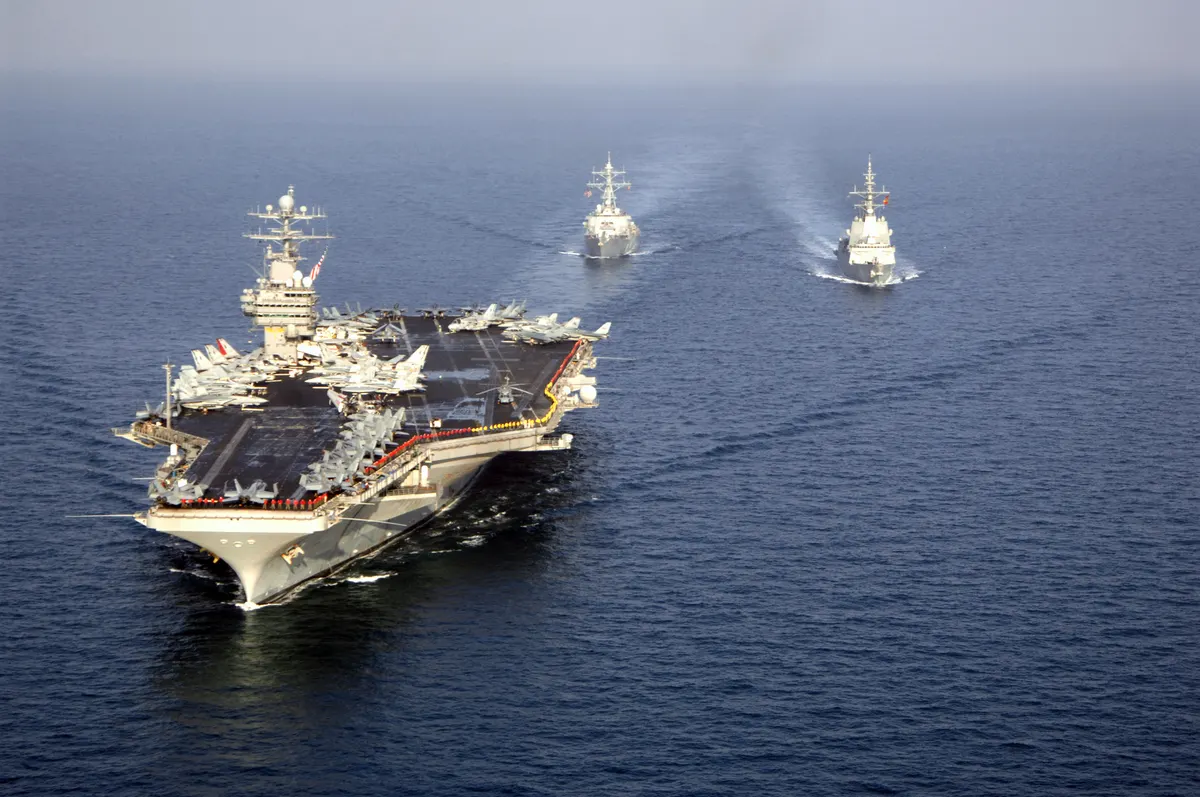
Primary: The National Oct 4 — Ghalibaf: Hormuz closed until seven Islamabad MoU conditions; fight and negotiate; Qatari backchannel; Araghchi UNGA 7-day/conditions proposal; uranium dilute offer via sources. Asharq Al-Awsat citing Nournews Oct 4 — same Ghalibaf quote; Araghchi: no military solution / only fair negotiations; Baqaei on US counterproposal; UKMTO tanker struck by unknown projectile (crew safe). Iran International Oct 4 — Ghalibaf dual track; Trump easy/hard way; Hegseth decision space / Theodore Roosevelt not confirmed for Mideast; Bessent Iron Wall blockade and Operation Economic Outcast; Pezeshkian pressure statement; Sobh-e No on Qatar roadmap. Caveats: seven conditions listed at high level (ceasefire, blockade end, frozen assets, sanctions relief) per outlets — do not invent a full numbered list beyond what sources state; carrier photo is 2005 file, not proof of current TR location; tanker attack attribution unsettled.
Like US Brief? You can support it with a tip.