
Police arrest 272 as cost-of-living protests turn violent across France
Students, Yellow Vest groups and unions marched in cities across France on Saturday over prices, fuel costs and school conditions. Police used tear gas and water cannon as clashes broke out, and the Interior Ministry said at least 272 people had been arrested by mid-afternoon.
AI-assisted · US Brief desk · Sources listed below
What happened
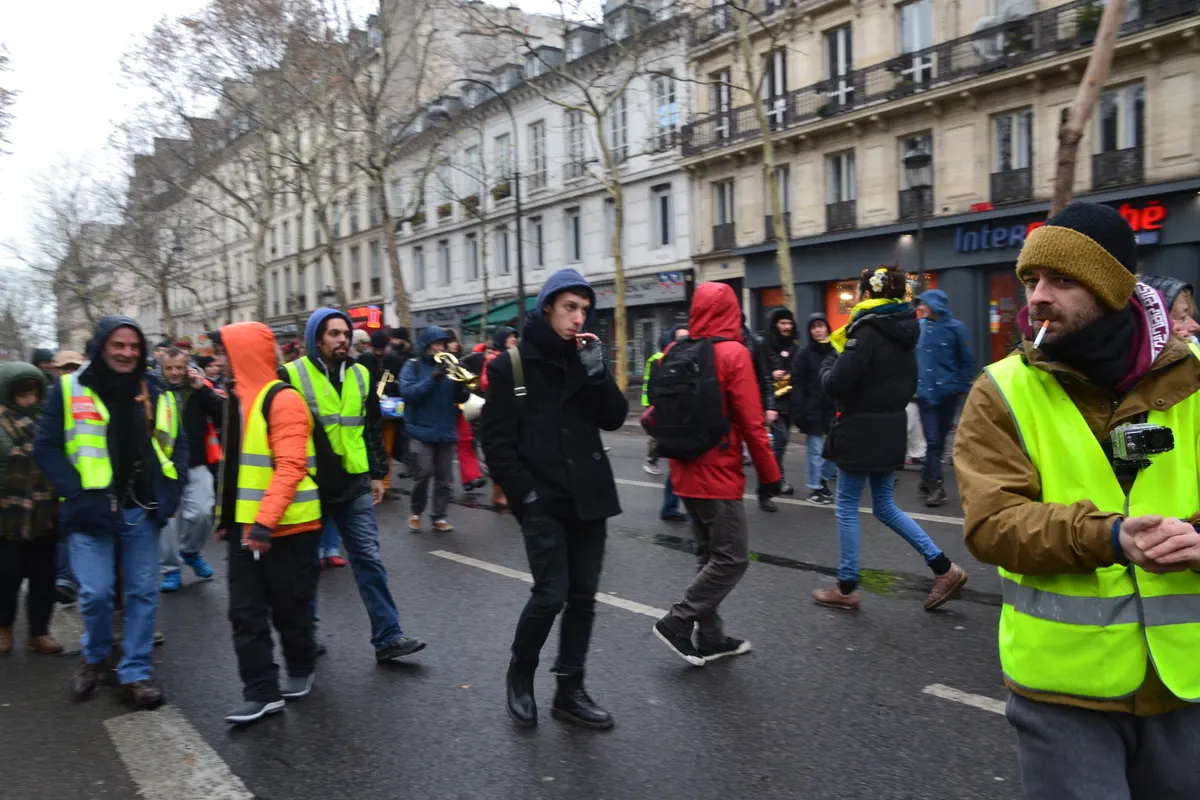
Tens of thousands of people marched in Paris and other French cities on Saturday in protests over the cost of living, fuel prices and public services, Reuters reported. Clashes broke out in Paris, Marseille, Rennes, Toulouse, Angers and elsewhere. France's Interior Ministry said at least 272 people had been arrested nationwide by mid-afternoon. Paris police said more than 130 of those arrests were in the capital, according to AFP.
Why it matters
The unrest comes six months before France's presidential election to replace Macron, and while the government struggles to cut public debt that AFP says is projected to top 120% of GDP next year. Reuters said French borrowing costs are at their highest in more than two decades. Prolonged street protests could make spending cuts harder to pass.
More context
In Paris, two marches set off from Place de la République: a student-led one in the morning and a Yellow Vest and union march in the afternoon, France 24 reported. A car and a newspaper kiosk were set on fire on the square as police used tear gas and water cannon on groups of masked protesters. Authorities banned protests near government buildings, the Champs-Élysées and train stations. AFP said protesters also broke windows at the Paris offices of broadcasters CNews and Europe 1.
Outside Paris: Masked youths set fire to a building housing a tourist office in Lyon, AFP reported. In Marseille, protesters forced their way into city hall, overturned a bust and smashed furniture before police pushed them out, and AFP said dozens of shops were looted nearby. Protesters also broke into Lille's town hall and left within minutes. In Saint-Étienne, a protester's hand was blown off by a police crowd-control grenade, a police source told AFP.
Who is marching: The movement began last month at high schools in Paris's poorer northern suburbs over teacher shortages and run-down buildings, Reuters said. Saturday's day of action added Yellow Vest groups, which first formed in 2018 against fuel tax increases, and the CGT union, which called for higher wages and pensions and lower prices. Many marchers cited inflation above 3%, which AFP tied to the Middle East war, and fuel prices that have soared since the U.S.-Iran war began.
Two counts: The CGT union said more than 500,000 people took part nationwide. The Interior Ministry's figures so far are partial: about 30,000 to 33,000 people at 140 protests outside the Paris region by midday, then about 20,000 each in Lyon and Nantes and 10,000 in Rennes, per BBC and France 24. Organizers listed more than 600 planned events, AFP said. A full official tally had not been released at the time of writing.
How each side framed it: President Emmanuel Macron on Friday urged "respect for people and property." National Rally's Marine Le Pen said rioters had "sullied" the demonstrations and that the far left had hijacked them. France Unbowed leader Jean-Luc Mélenchon said most marches were peaceful and accused TV news of focusing on images of violence. Paris Mayor Emmanuel Grégoire condemned the vandalism and said the "vast majority" were marching peacefully.
Policing questions: France's police watchdog is investigating at least two dozen allegations of police violence from the earlier student protests, Reuters reported. The government had suspended stun grenades during those demonstrations, but Interior Minister Laurent Nuñez said they could be used on Saturday. Prime Minister Sébastien Lecornu has said more than 900 police officers were injured in previous protests. Several hundred young people also clashed with police in Brussels, where Belgium's interior minister vowed to restore order.
What's still unknown: The final arrest and injury counts for Saturday, an official nationwide turnout figure, the condition of the injured protester in Saint-Étienne, and whether unions and student groups will call another national day of action. Watch for the Interior Ministry's evening totals and any government response on school funding or prices.
6 listed sources
- Reuters via Investing.com, French police clash with protesters as tens of thousands rally over cost of living, Oct. 17, 2026
- AFP, Clashes erupt in France as protesters vow to make government 'tremble', Oct. 17, 2026
- France 24 (with AFP, AP and Reuters), live coverage of Oct. 17 protests
- BBC News, live coverage of protests in Paris and across France, Oct. 17, 2026
- AP, Scuffles and fires break out as protesters rally across France, joining students, Oct. 17, 2026
- Background: US Brief, France detains nearly 2,000 as student school protests turn violent, Oct. 2, 2026
References listed by US Brief; a source count is not a verification score.
Editorial sourcing notes
Arrest and turnout figures are snapshots from Saturday afternoon and early evening in France and are likely to change. The 500,000 turnout figure comes from the CGT union; the Interior Ministry's published counts so far cover only parts of the day and country, so the two are not directly comparable. The Saint-Étienne hand injury was reported by AFP citing a police source and has not been confirmed by authorities on the record.
Like US Brief? You can support it with a tip.