
How the Strategic Petroleum Reserve works and when it is used
The Strategic Petroleum Reserve stores crude oil for severe supply disruptions. Here is how it works, who can release it, and what a release can and cannot do.
AI-assisted · US Brief desk · Sources listed below
What happened
The Strategic Petroleum Reserve (SPR) is a federal stockpile of crude oil held for serious supply disruptions. It is not a store of gasoline, and it is not a price-control program. The Department of Energy (DOE), which runs it, says the reserve exists to protect the U.S. economy from severe petroleum supply interruptions. President Ford signed the law that created it, the Energy Policy and Conservation Act, on Dec. 22, 1975, after the 1973–74 Arab oil embargo showed how a supply cutoff could hit the country.
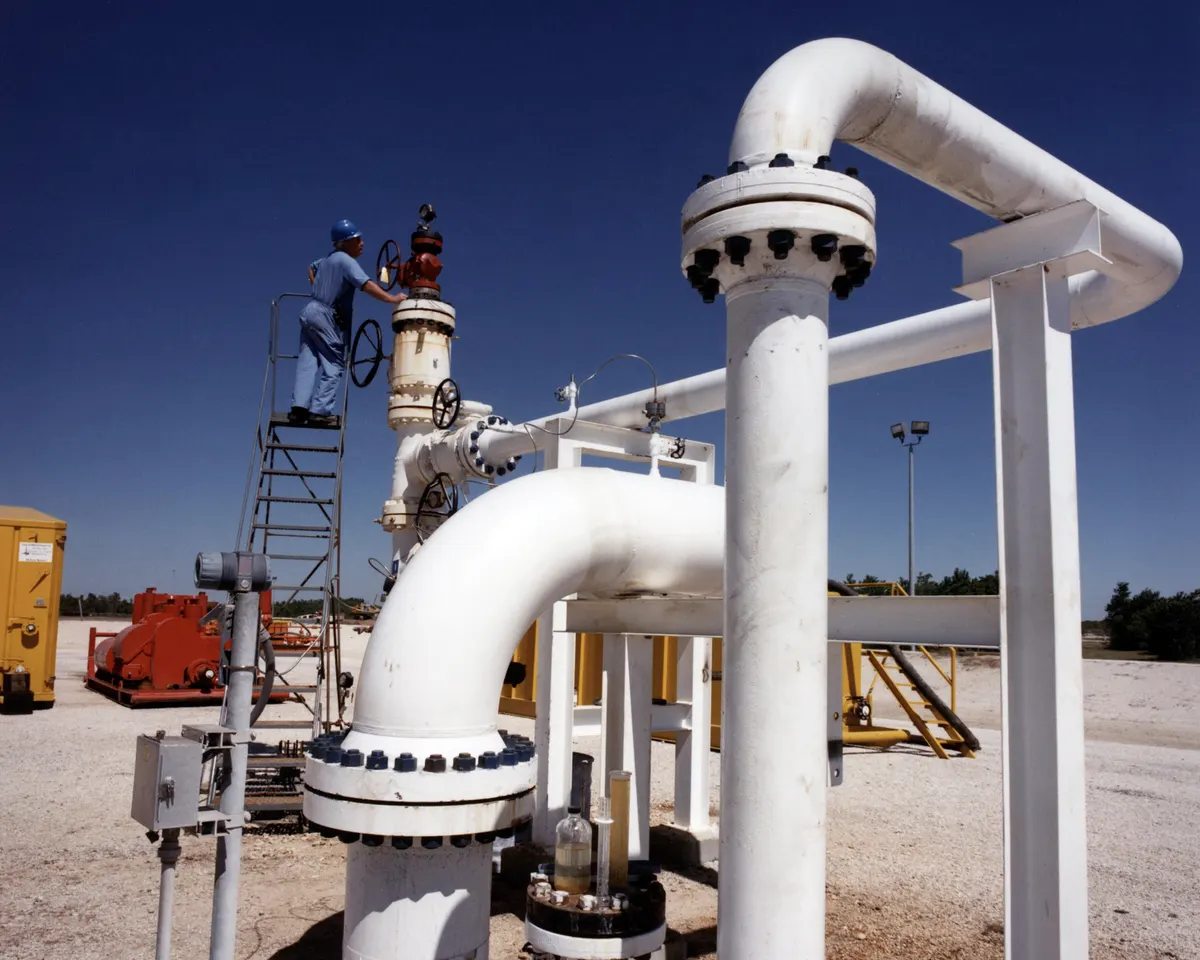
The oil sits in underground salt caverns at four Gulf Coast sites: Bryan Mound and Big Hill in Texas, and West Hackberry and Bayou Choctaw in Louisiana. The caverns were carved deep inside natural salt domes. DOE says this storage costs up to 10 times less than above-ground tanks. The sites connect to three pipeline systems, Seaway, Texoma and Capline, that reach major refining centers. DOE puts the reserve's authorized storage capacity at 714 million barrels.
That setup matters because the SPR holds crude oil, which refineries still have to process. It does not send gasoline to stations or households. A release adds crude to the market, but it cannot guarantee that pump prices fall by a set amount or on a set schedule. Pump prices depend on a wider market than the reserve alone.
More context
A president cannot tap the full reserve for any price rise. Under the Energy Policy and Conservation Act, a full emergency drawdown and sale requires a presidential finding of a "severe energy supply interruption," or a need to meet U.S. obligations under the International Energy Program. A sharp price jump can qualify only if it stems from an emergency that significantly cuts supply and is likely to cause major harm to the economy. Separate provisions allow smaller steps. A limited drawdown is capped at 30 million barrels and 60 days per shortage. Test sales or exchanges are capped at 5 million barrels. DOE's summary of the law lays out those conditions.
Once a sale is ordered, DOE runs it more like an auction than an open tap. It issues a notice of sale, takes competitive bids online, selects offers and awards contracts. DOE says it can be ready to begin deliveries within 13 days of a presidential emergency-sale order. Oil can be pumped out at up to 4.4 million barrels a day for up to 90 days, according to DOE. That is a readiness timeline, not a promise about when prices move.
A release can also be an exchange. In an exchange, a company, usually a refiner, borrows SPR crude for a short time and later replaces it in full, along with a premium of extra barrels, DOE says. That lets the government answer a short-term supply problem while adding oil back to the reserve later. A sale, by contrast, transfers oil for payment with no return.
DOE says presidents have authorized emergency releases four times. In 1991, during Operation Desert Storm, DOE sold 17.3 million barrels. In 2005, after Hurricane Katrina damaged Gulf of Mexico production and refineries, it sold 11 million barrels and loaned 9.8 million more. In 2011, during the Libyan civil war, the U.S. sold about 30.6 million barrels in a release coordinated with the International Energy Agency. In 2022, after Russia invaded Ukraine, DOE released 180 million barrels. Each answered a supply risk tied to war or a natural disaster.
The SPR is a government-held emergency buffer, not a substitute for commercial stocks or U.S. production. DOE says the reserve reached its full authorized capacity on Dec. 27, 2009. At the end of 2025 it held 411 million barrels, which DOE says equals about 125 days of U.S. net crude oil imports. The level changes as oil is sold, exchanged or bought back, so DOE's SPR pages are the place to check the current figure.
In short, the SPR stores crude in Gulf Coast salt caverns, and federal officials can release it through a sale or an exchange under defined legal authorities. The oil can help during a supply interruption, but moving crude through the market is different from directly lowering a household's gasoline bill. For anyone tracking a specific release, the useful questions are what legal authority was used, how many barrels are offered, whether it is a sale or an exchange, and when DOE expects deliveries.
9 listed sources
- U.S. Department of Energy: SPR Quick Facts
- U.S. Department of Energy: SPR Origins
- U.S. Department of Energy: SPR Storage Sites
- U.S. Department of Energy: SPR FAQs
- U.S. Department of Energy: Statutory Authority for an SPR Drawdown
- U.S. Department of Energy: SPR Sales and Exchanges
- U.S. Department of Energy: History of SPR Releases
- U.S. Department of Energy, Nov. 3, 2022: Final contract awards from the 2022 emergency release
- U.S. Department of Energy: Strategic Petroleum Reserve
References listed by US Brief; a source count is not a verification score.
Editorial sourcing notes
Evergreen explainer built from U.S. Department of Energy pages. Figures are dated to DOE's own snapshots (capacity, end-2025 inventory, past releases). Photos are undated DOE file photos of SPR sites.
Like US Brief? You can support it with a tip.