Briefs / US News / DOJ asks Supreme Court to restart third-country deportation flightsUS News briefing
DOJ asks Supreme Court to restart third-country deportation flights
After the First Circuit made a ban on third-country removals effective immediately, the Justice Department filed an emergency Supreme Court appeal Thursday, saying flights were canceled and more than 1,400 people with final removal orders remain in the U.S.
By US Brief desk · Updated 2026-09-24T14:56:00-07:00
Editor’s note: Facts follow Newsweek (Dan Gooding, Sep 24, ~5:33 p.m. ET) on the DOJ emergency filing, First Circuit stay dissolution, canceled flights, and DOJ’s 1,400 / 150 figures, plus The American Prospect (Gillian Brockell, Sep 24) on the First Circuit’s late-Wednesday clarification text and the John Doe / Central African Republic context. Treat DOJ crime and custody numbers as government assertions in the motion, not independently verified counts. Prospect flight-tracking claims about possible ongoing removals after the clarification are labeled as that outlet’s reporting, not as a court finding of contempt. Do not invent a Supreme Court ruling—only that an emergency appeal was filed.
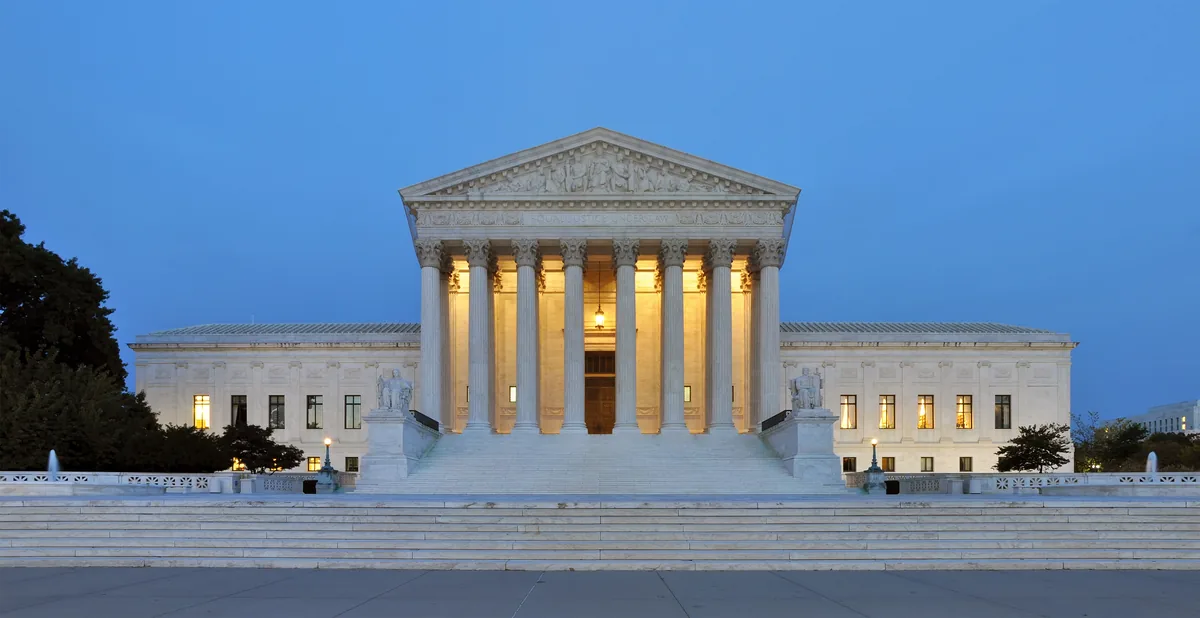
The Trump administration asked the Supreme Court on Thursday for emergency relief to resume deporting people with final removal orders to countries that are not their home nations, after a First Circuit ruling put that “third-country” practice back under a district-court ban and forced the cancellation of at least one removal flight.
What changed in the appeals court: On September 18, the First Circuit upheld a lower-court invalidation of the Department of Homeland Security’s third-country removal policy. Late Wednesday, after plaintiffs sought clarification that DOJ was still treating the ban as paused until a formal mandate issued, the appeals court answered in three sentences that its March 16, 2026, stay pending appeal was dissolved—making the district court’s prohibition effective immediately, The American Prospect reported.
What DOJ told the Supreme Court: In a 45-page emergency filing summarized by Newsweek, the Justice Department said the restored ban prompted canceled removal flights and left more than 1,400 people with final removal orders in the United States facing potential release from custody. The government said about 150 deportees had already been pulled from flights, with further departures at risk. Those figures are DOJ assertions in litigation, not independently audited counts.
Who the government says is affected: DOJ argued third-country agreements have been used across administrations when home countries refuse returnees, and that some people now stuck in the United States include people convicted of murder, attempted murder, rape, and other violent crimes whom no other country will take. Immigrant-rights groups representing the original plaintiffs—including the Northwest Immigrant Rights Project and Human Rights First—warn that deportees can face torture or persecution in countries where they have little or no prior connection.
How the legal fight evolved: The Supreme Court previously sided with DHS on an interim basis in related litigation in July 2025 and sent the case back to lower courts, Newsweek noted; Thursday’s filing is a new emergency ask after the First Circuit’s merits judgment and stay dissolution. Separately, a Massachusetts case over a Peruvian national identified as “John Doe,” who has protections against removal to Peru and faced transfer toward the Central African Republic, became a flashpoint when DOJ sought to lift a local stay—litigation The American Prospect said continued into a Thursday emergency hearing even after the clarifying order.
Why third-country removals matter beyond one docket: The policy lets DHS send people to “host” countries that have agreed to accept non-nationals. Advocates and some judges have required meaningful notice and a chance to raise Convention Against Torture and related fear claims before such removals. The administration casts court sequencing rules as operational sabotage of immigration enforcement; plaintiffs cast them as the minimum due process the statute and Constitution require.
Competing narratives on compliance: After Wednesday’s clarification, The American Prospect reported public flight-tracking data showing ICE-chartered aircraft continuing movements involving known African third-country hubs and other stops, raising questions—unresolved in court as of that reporting—about whether any third-country nationals were still being moved. DHS and ICE did not provide on-the-record answers in that article. US Brief treats those flight claims as Prospect’s reporting, not as a judicial finding that the government violated the order.
Who feels the stakes: People with final removal orders and no willing home country face either continued detention, release into the United States, or removal to a third state. Local jails and ICE facilities absorb custody pressure when flights cancel. Midterm politics layer onto the fight: the White House frames blocked removals as soft-on-crime obstruction, while rights groups frame third-country deals as exporting people into danger without a fair chance to object.
Uncertainty and what remains unknown: The Supreme Court has not yet acted on Thursday’s emergency application. It could grant a stay restoring removals, deny relief and leave the First Circuit framework in place, or seek further briefing. Whether any specific post-clarification flights carried third-country nationals is contested in press reporting and not settled here. Exact inventory numbers for the “1,400” cohort and the criminal-history mix will depend on whatever the parties put in sworn records.
What to watch next: A Supreme Court order on the emergency stay; formal First Circuit mandate timing; whether district courts nationwide treat third-country flights as frozen; updates in the Massachusetts John Doe matter and related Colorado return-order coverage already briefed on US Brief; and any DHS public guidance to field offices. For readers, the confirmed Thursday development is an administration emergency ask at the Supreme Court after appellate courts blocked third-country removals—not a new green light to restart those flights.
Follow US Brief: Bluesky · X · RSS
Full interactive version requires JavaScript. https://us-brief.com/article/us-scotus-third-country
 Skip to content