
Pentagon probes F-35 parts diverted to Hong Kong
The Pentagon and F-35 Joint Program Office are investigating a shipping mishap that sent unserviceable F-35 components—including a cockpit canopy and weapons-bay door—from Australia toward the United States and instead into Hong Kong. Bloomberg reported Wednesday that Chinese authorities have the parts; Australia’s defense minister says the items are not “sensitive,” and Lockheed Martin has called them low risk for exploitation.
AI-assisted · US Brief desk · Sources listed below
What happened
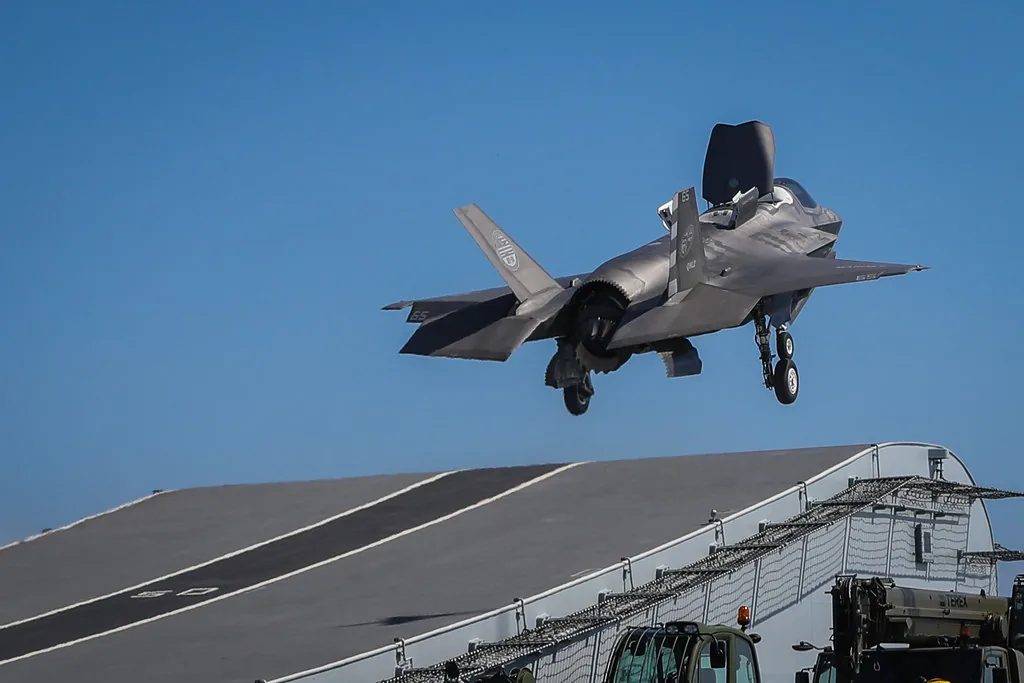
The Pentagon is investigating how components from the F-35 Lightning II—the U.S. military’s premier stealth fighter—ended up in Hong Kong after a shipment from Australia failed to reach the United States as planned.
The F-35 Joint Program Office said in a statement carried by the Associated Press that it and the Defense Department are aware of “a shipment issue” with F-35 components. Officials said they are “actively working with U.S. authorities and industry partners to retrieve these components, investigate the incident, and place safeguards to avoid a future occurrence.”
Bloomberg reported Wednesday that Chinese authorities have obtained the equipment: a cockpit canopy and a weapons-bay door from a shipment that was unexpectedly diverted to Hong Kong while en route from Australia to the United States for repair or disposal. CNBC, citing Bloomberg sources, said shipping giant UPS was moving the parts in late May and that both pieces carried radar-absorbing material used in the jet’s stealth signature. How the diversion happened has not been publicly explained.
More context
Australian Defense Minister Richard Marles acknowledged Tuesday that the components ended up in Hong Kong and said Canberra is working with the United States and Lockheed Martin, the F-35’s prime contractor. Marles also said his understanding is that the missing items are not “sensitive equipment,” a line he repeated to Australian reporters and that CNN-style accounts relayed to U.S. readers.
Lockheed struck a similar tone in comments to Breaking Defense earlier in the week, saying the missing components “are unserviceable and deemed low risk for exploitation” and that the company is complying with export-control rules while cooperating with the U.S. government. Politico first flagged the mishap around Sep 18 and reported a congressional inquiry over whether China could gain access to classified-adjacent stealth technology; the House Armed Services Committee has said it is receiving briefings and continuing oversight, according to Bloomberg’s earlier congressional story.
The timing lands on a sensitive diplomatic day. Chinese President Xi Jinping arrived in Washington on Wednesday for a state visit with President Donald Trump as the F-35 story circulated. AP reported that China’s Foreign Ministry said it was not aware of the incident and that the Hong Kong government declined to comment on specific cases. Lockheed did not immediately respond to AP’s Wednesday email seeking fresh comment.
Even “unserviceable” airframe pieces matter because the F-35’s value sits partly in coatings, sensors, and manufacturing tolerances that adversaries study for reverse-engineering and countermeasures. Analysts cited by AP note China has long been accused of cyber theft aimed at older F-35 design data; Beijing has dismissed those claims. Separately, a recently approved roughly $24 billion F-35 sale to Saudi Arabia has already drawn lawmaker warnings—Rep. Raja Krishnamoorthi among them, per CNBC—that advanced jets could put sensitive tech closer to Chinese reach through other channels.
Australia is among more than a dozen partner nations flying or ordering the jet. The global F-35 spare-parts pool is government-owned and Lockheed-managed across many facilities, a logistics web that a 2023 GAO report previously criticized for large numbers of unaccounted parts—an accountability backdrop Breaking Defense tied to this week’s diversion, without claiming the GAO tally caused this specific loss.
US Brief’s takeaway: Wednesday’s confirmed facts are a Pentagon retrieval probe, an Australia–U.S.–Lockheed coordination line, and multi-outlet reporting that a canopy and weapons-bay door reached Hong Kong. Whether Chinese authorities inspected or exploited any stealth coatings remains unverified in public statements. Watch for a JPO recovery notice, a classified brief to Congress made public in summary form, and any UPS or customs explanation of the May diversion.
6 listed sources
- Associated Press (Ben Finley and Konstantin Toropin) via WRAL / ABC News, Sep 23–24, 2026 — Pentagon probe, JPO statement, Marles comments, Bloomberg possession claim
- Bloomberg (via AP and CNBC summaries), Sep 23, 2026 — canopy and weapons-bay door; Australia-to-U.S. diversion; UPS late-May shipment detail
- CNBC (Lim Hui Jie), Sep 23, 2026 — radar-absorbing coating report; Saudi F-35 sale context
- Breaking Defense (Michael Marrow), Sep 22, 2026 — Lockheed “unserviceable / low risk” statement; Politico Sep 18 first report
- Politico (summarized in Breaking Defense / AP), Sep 18, 2026 — congressional inquiry and missing canopy framing
- CNN (via CNBC paraphrase), Sep 22, 2026 — Marles on non-sensitive parts
References listed by US Brief; a source count is not a verification score.
Editorial sourcing notes
Shipment facts and the Joint Program Office statement follow Associated Press reporting (Ben Finley and Konstantin Toropin) republished Sep 23–24, 2026. Bloomberg’s claim that Chinese authorities hold a canopy and weapons-bay door is attributed as Bloomberg reporting via AP and CNBC; US Brief has not independently verified possession. Australian Defense Minister Richard Marles’ “not sensitive” line and Lockheed’s “low risk” characterization are included as official pushback—treat stealth-coating risk assessments as contested until the Pentagon publishes a scope finding.
Like US Brief? You can support it with a tip.