
Dolores Huerta, farmworker organizer behind 'Sí, se puede,' dies at 96
Dolores Huerta, who co-founded the United Farm Workers with César Chávez and coined its rallying cry "Sí, se puede," died of cancer on Oct. 28 at her home in Bakersfield, Calif., her family said. She was 96.
AI-assisted · US Brief desk · Sources listed below
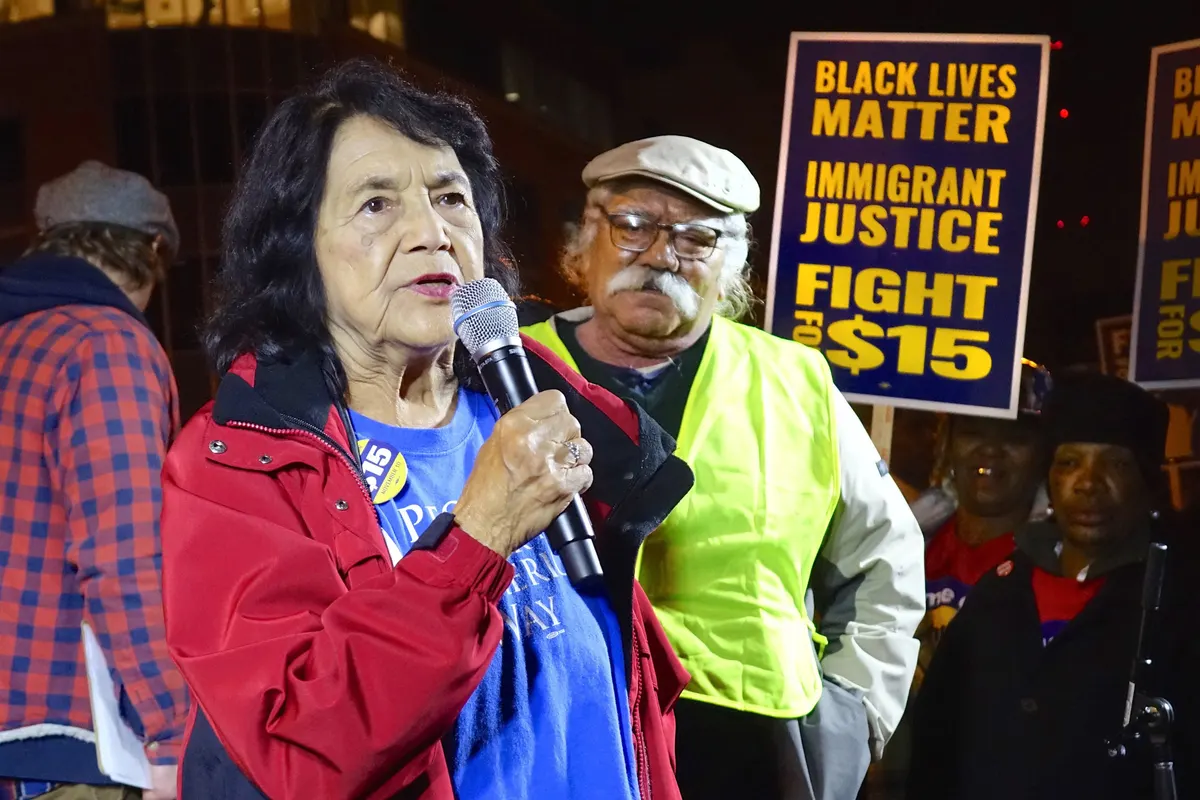
What happened
Dolores Huerta, the labor organizer who co-founded what became the United Farm Workers of America with César Chávez, died Wednesday, Oct. 28, at her home in Bakersfield, Calif., her family said. She was 96. Family spokesperson Erik Olvera said she died of cancer, surrounded by family. "As you can imagine, this is an incredibly difficult time for us, and we ask for privacy as we grieve," the family's statement said, adding that plans to celebrate her life would follow.
Born in New Mexico and raised by a single mother in Stockton, in California's San Joaquin Valley, Huerta first worked as a schoolteacher. She later turned to organizing and helped negotiate some of the first union contracts for farmworkers in North America, according to the BBC and the UFW.
Timeline: In the 1960s she co-founded the farmworkers' union with Chávez and helped lead the grape strikes and boycotts. In 1975 she helped push California's Agricultural Labor Relations Act, which gave farmworkers the legal right to organize. The UFW also credits her with work to end the Bracero guest-worker program and on the 1986 immigration law. In 1998 President Bill Clinton gave her the Eleanor Roosevelt Human Rights Award, and in 2012 President Barack Obama awarded her the Presidential Medal of Freedom, joking that he had borrowed her slogan for his 2008 campaign, ABC7 reported. Into her 90s she kept marching and speaking through the Dolores Huerta Foundation.
Why it matters
Huerta co-founded the farmworker movement that won union rights for some of the lowest-paid workers in the country. Her account of abuse by Chávez, made public months before her death, has also reopened questions about how the movement's history is told.
What’s next
Her family said plans for public memorials would be announced.
More context
Her slogan "Sí, se puede" (Spanish for "Yes, it can be done") became the UFW's motto and a rallying cry well beyond farm labor. Los Angeles Mayor Karen Bass credited her with work on overtime pay for farmworkers and the first comprehensive standards to prevent heat deaths in California.
Earlier this year, after a New York Times investigation, Huerta said publicly that Chávez, who died in 1993, had pressured her into sex and on another occasion forced her in the 1960s, and that the two encounters led to pregnancies she kept secret, arranging for the children to be raised by other families, the BBC and ABC News reported. She said she stayed silent to protect the movement. The Chávez family said at the time it was "devastated" and praised the women's "courage to come forward."
Tributes came from the UFW, former President Bill Clinton, California Gov. Gavin Newsom and the Congressional Hispanic Caucus, a group made up of Democrats, the BBC reported. Her later advocacy focused on immigration and voting issues, the BBC reported.
5 listed sources
- AP, Oct. 28, 2026
- BBC News, Oct. 28, 2026
- ABC7 Los Angeles, Oct. 29, 2026
- NPR, Oct. 28, 2026
- Dolores Huerta Foundation
References listed by US Brief; a source count is not a verification score.
Editorial sourcing notes
Sourcing: family statement through spokesperson Erik Olvera as reported by AP, BBC and ABC7, and the Dolores Huerta Foundation's memorial page, Oct. 28–29, 2026. Cause of death (cancer) per the family spokesperson and the BBC. The Chávez allegations are Huerta's own public account from earlier in 2026, as reported by the BBC and ABC News. Photos are file photos from 2015 and 2023, not from this week.
Like US Brief? You can support it with a tip.