
82% of Ashville, Ohio voters reject a data center deal
Voters in Ashville, Ohio, repealed a village agreement with data center developer EdgeConneX by 1,468 votes to 330 on Tuesday, one of at least 50 local data center measures on 2026 ballots. Texas elected a governor who backs a data center moratorium.
AI-assisted · US Brief desk · Sources listed below
What happened
Voters in the village of Ashville, Ohio, voted 1,468 to 330 (81.65% to 18.35%) on Tuesday to repeal Resolution 06-2026, the village's agreement with data center developer EdgeConneX, according to unofficial results with all four precincts reporting, the Scioto Post reported.
Why it matters
Data centers that run AI models need large amounts of land and power. In Ashville, the Scioto Post reported, the developer's donation did not overcome residents' skepticism about utility demands, on-site power generation and land use. For AI companies, the question is whether local and state limits slow where and how fast they can build.
More context
The deal: The project called for two data center buildings and an on-site natural gas power plant on about 195 acres, an investment of more than $100 million, the Scioto Post reported. Weeks before the vote, the village said it had accepted a $3.5 million donation from EdgeConneX for parks and sewer and wastewater work. The agreement would also have exempted the project from the village's data center moratorium. A local group, Pickaway Strong Advocacy, gathered 669 verified signatures to force the referendum, and the Ohio Supreme Court ordered it onto the ballot in August after village officials tried to pass the deal under an emergency clause.
The bigger picture: Ballotpedia counted at least 50 local ballot measures about data centers in 13 states this year. As of Oct. 30, six had been decided, and all six went the way of tighter limits on data centers. Tuesday's results add to that count.
Statewide stakes: Texas, where Democrat Gina Hinojosa unseated Gov. Greg Abbott, holds about 27% of planned U.S. data center capacity measured in gigawatts, according to Wells Fargo estimates cited by CNBC. Hinojosa has been outspoken in backing a moratorium on AI data centers, CNBC reported. Wells Fargo puts Georgia at 7% of planned capacity and Ohio and Pennsylvania at 5% each; Democrats won or kept the governorships in all three.
Market reaction: In premarket trading, SpaceX fell 4.6% and Tesla 4.4%, while Amazon rose 2.7% and Nvidia, Alphabet, Meta and Microsoft were up roughly 1% to 2%, CNBC reported. "There is no way to sugarcoat that Democrats taking control especially over the Senate will create some major hurdles for AI and tech legislation in the Beltway over the next 2 years," Dan Ives of Yorkville Ives & Co. wrote in a note. Elon Musk, who spent at least $474 million on the midterms, posted on X: "Data centers in space looking pretty appealing right now."
What's still unknown: Final certified results for Tuesday's local measures, whether EdgeConneX will seek new terms or another site, and whether Texas lawmakers take up any data center limits next session.
Weak spot: Repeal votes like Ashville's block one agreement, not data centers in general; developers can still seek other sites or new terms, and state-level moratoriums would need to pass legislatures that, in Texas, are expected to remain Republican-led.
4 listed sources
- Scioto Post, Ashville Voters Overwhelmingly Reject EdgeConneX Data Center Deal in Landslide Referendum, Nov. 3, 2026
- Ballotpedia, Data center-related ballot measures, 2026
- CNBC, SpaceX, Tesla fall over 4% on Democrats' big win; AI stocks mixed, Nov. 4, 2026
- CNBC, 5 things to know before the stock market opens, Nov. 4, 2026
References listed by US Brief; a source count is not a verification score.
Editorial sourcing notes
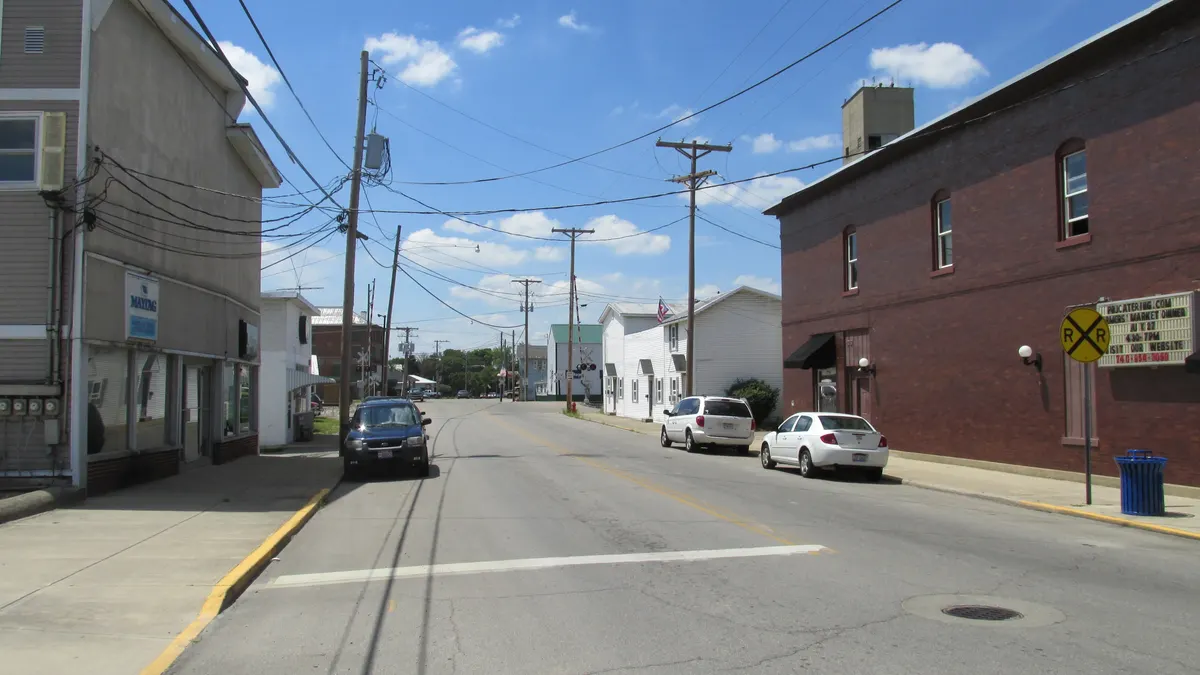
Ashville results are unofficial election-night totals with all four precincts reporting, per the Scioto Post. Ballotpedia's tally of decided measures was as of Oct. 30 and does not include Tuesday's results. Premarket stock moves come from CNBC early Wednesday, Nov. 4, and can change once regular trading opens. The photo is a file image.
Like US Brief? You can support it with a tip.