
Musk touts power of SpaceX's planned orbital AI data centers
Elon Musk said Thursday that each planned SpaceX "Star Mind" AI satellite will carry more than 250 kilowatts of solar power. SpaceX says it aims to fly its first orbital computing satellites in late 2027. Federal regulators have not approved the system, and critics doubt it can work at scale.
AI-assisted · US Brief desk · Sources listed below
What happened
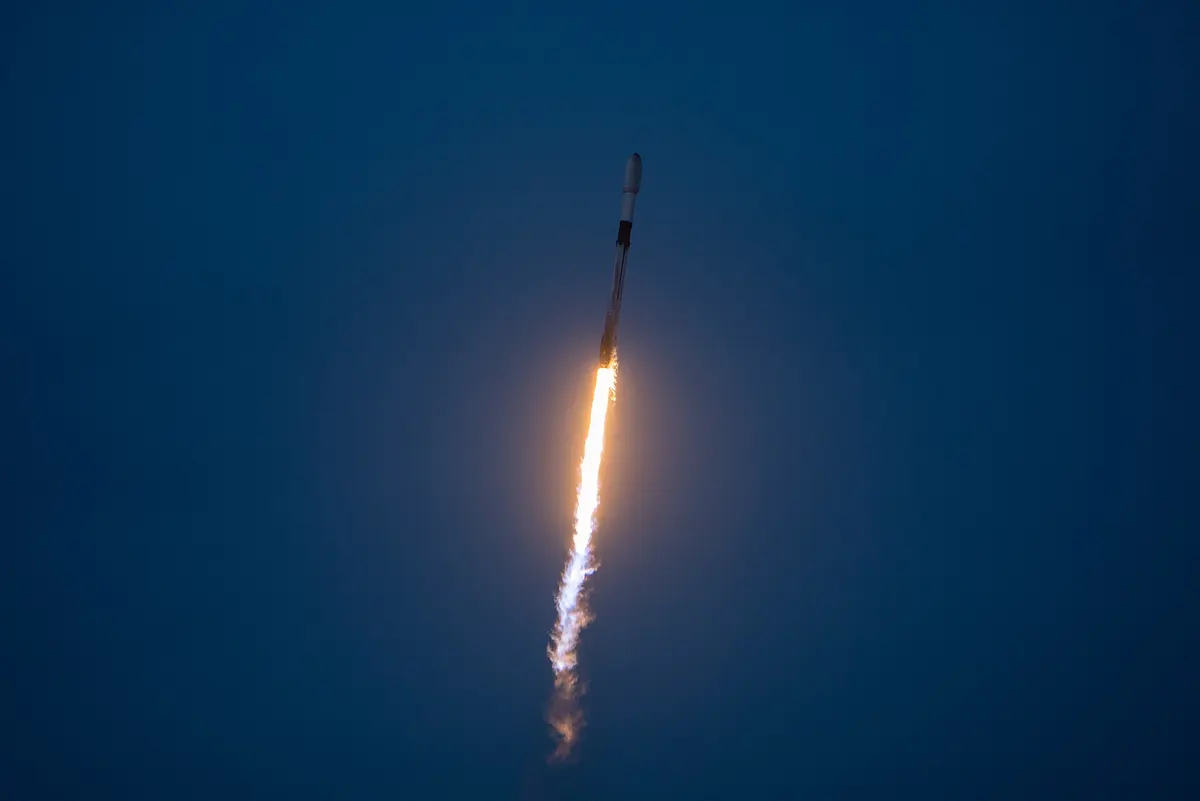
Musk made the claim in a post on X on Oct. 1, according to Benzinga and TeslaNorth. He also said he was "cautiously optimistic" SpaceX could run its version of an Nvidia server rack at close to 250 kilowatts on average. SpaceX's Starmind web page lists a smaller figure: up to 250 kilowatts peak and 175 kilowatts average for the computer payload. The same day, a SpaceX Falcon 9 launched a rival test satellite for Google's Project Suncatcher. Google said the prototype, built with Planet and carrying four of its AI chips, is working as expected.
Why it matters
AI companies need huge amounts of power for data centers on the ground. SpaceX and Google argue that constant sunlight in orbit could ease that demand. If it works, it would put SpaceX in the cloud computing business, not just launches and internet service.
What’s next
Watch for the FCC's decision on SpaceX's application and any NASA or FAA input on debris. Google plans a two-satellite laser-link test in 2027. SpaceX says its first orbital computing satellites could fly as soon as late 2027.
More context
Elon Musk said Thursday that each of SpaceX's planned "Star Mind" AI satellites will carry more than 250 kilowatts of solar power. He said that is about 20% more than the International Space Station. The satellites are meant to work as data centers in orbit. Federal regulators have not approved the system.
The plan: In January, SpaceX asked the Federal Communications Commission to approve an "Orbital Data Center system" of up to 1 million satellites. The FCC accepted the application for filing in February and asked for public comment. That step is not an approval. SpaceX says the satellites would run on solar power in sun-synchronous orbit and send results back through Starlink laser links. In September, SpaceX filed a debris and re-entry analysis for satellites of about 4,000 kilograms, SatNews reported.
Timeline: SpaceX executives told investors they aim for orbital computing tests by late 2027, Reuters reported in June. Bloomberg reported in August that Musk expects the first Nvidia-powered AI satellites to launch near the end of 2027. CFO Bret Johnsen said in September, "We're actually targeting to fly our first orbital compute satellites next year." NASA Administrator Jared Isaacman told Fox Business that SpaceX is targeting 2027.
Uncertainty: None of the power or size figures has been tested in orbit. Cooling, radiation, repairs and the cost of launching heavy hardware remain open problems. Critics, including the Breakthrough Institute, say large data centers in space remain science fiction for now. Space environmental groups have told the FCC that a million four-ton satellites could add serious debris risk.
15 listed sources
- Benzinga, Oct 2, 2026: Elon Musk Says SpaceX's Starmind AI Satellites Could Pack in More Power Than ISS
- TeslaNorth, Oct 2, 2026: SpaceX Star Mind AI Satellites to Pack Over 250kW of Solar Power
- SpaceX: Starmind (company product page)
- FCC Space Bureau, Feb 4, 2026: SpaceX Orbital Data Center system application accepted for filing (DA 26-113)
- Reuters, June 9, 2026: SpaceX aims to launch orbital AI computing tests by end of next year, sources say
- Bloomberg, Aug 24, 2026: SpaceX's Musk sees orbital data center launch near end of 2027
- Yahoo Finance, Sept 2026: SpaceX CFO Bret Johnsen at Goldman Sachs Communacopia ("We're actually targeting to fly our first orbital compute satellites next year")
- Fox Business (video), Sept 9, 2026: NASA Administrator Jared Isaacman on SpaceX's 2027 target for data centers in space
- SatNews, Sept 19, 2026: SpaceX files debris and re-entry analysis for Starmind satellites with the FCC
- Google (Travis Beals), Oct 1, 2026: Our Project Suncatcher prototype satellite is in orbit
- Space.com, Oct 1, 2026: SpaceX launches Google AI satellite, 129 other payloads on Transporter-18
- Fox Business (video), Oct 1, 2026: SpaceX to launch Google data center satellite into orbit
- Breakthrough Institute, Feb 17, 2026: Data Centers Won't Be In Space Anytime Soon
- Center for Space Environmentalism, Sept 2026: response to SpaceX ex parte on the 1-million-satellite orbital data center application
- Sourcing note: Musk's Oct 1 power figures come from his X post as reported by Benzinga and TeslaNorth; US Brief has not independently verified any satellite specification. The FCC notice, SpaceX's Starmind page and Google's blog are primary documents. Timelines come from Reuters and Bloomberg reporting and from SpaceX executives' public remarks. Fox Business is included for its Oct 1 and Sept 9 coverage. Critic views come from the Breakthrough Institute and the Center for Space Environmentalism. No Reuters, AP or Bloomberg write-up of the Oct 1 Musk post was found at draft time (~9:09 p.m. PT Oct 2).
References listed by US Brief; a source count is not a verification score.
Editorial sourcing notes
Alternate Technology story. News hook: Musk's X post on Thu Oct 1, 2026 about Star Mind (Starmind) satellite power (Benzinga, TeslaNorth), and the same-day Falcon 9 Transporter-18 launch of Google's rival Project Suncatcher prototype (Google blog, Space.com, Fox Business video). Background from primary documents: SpaceX FCC application of Jan 30, 2026 for up to 1 million satellites, accepted for filing Feb 4 (FCC DA 26-113) — not authorized; SpaceX Starmind page; Sept 18 debris filing (SatNews). Timelines from Reuters (June 9), Bloomberg (Aug 24), Yahoo Finance (CFO Bret Johnsen, Sept 2026), Fox Business (NASA chief Jared Isaacman, Sept 9). Critics: Breakthrough Institute; Center for Space Environmentalism FCC comments. All plans, specs and dates are attributed SpaceX/Musk claims. Drafted ~9:09 PM PT Oct 2.
Like US Brief? You can support it with a tip.