
OpenAI's chief scientist proposes industry-wide AI limits tied to 'perplexity'
OpenAI chief scientist Jakub Pachocki proposed Sunday that AI labs agree on common limits they would not cross until tools to monitor AI behavior catch up, using a measure called perplexity to track progress. CEO Sam Altman backed the idea. Pachocki did not name a specific limit, and no other lab has publicly endorsed the plan so far.
AI-assisted · US Brief desk · Sources listed below
What happened
OpenAI chief scientist Jakub Pachocki proposed Sunday that AI developers adopt shared limits on how capable their models can get, measured by a common yardstick called perplexity. "I further propose common limits, based on perplexity and other measurements, that developers are committed to not crossing until our ability to understand and monitor AI behavior achieves a certain concrete milestone," he wrote in a blog post. CEO Sam Altman called the essay "the most important thing OpenAI has published in awhile," Reuters reported.
Why it matters
Leaders at OpenAI and Anthropic have both now called for limits on the pace of AI progress. Pachocki's post tries to define how that pace would be measured, which only works if rival labs publish comparable numbers.
More context
What perplexity is: Perplexity measures how well a model predicts the next token, the basic unit of text, on average. Lower is better. Pachocki argues it has stayed useful while benchmarks for specific skills quickly become outdated.
What OpenAI disclosed: Pachocki published OpenAI's internal figures, a step he said "took some consideration" because it helps competitors. On its main test set, GPT-3.5 scored a log-perplexity of about 0.99 and GPT-4 about 0.91. Below 0.8, Pachocki wrote, "we have seen the emergence of transformative capabilities in fields like cybersecurity and mathematics." A model at about 0.76 began producing what he called "groundbreaking" math results. He expects more "transformative capabilities" in the 0.68-0.7 range.
Why now: Pachocki warned that AI could help drive major advances in how models are trained "as soon as 2027," and that progress on safety and monitoring is "unlikely to be fast enough" to keep up. He also expects current methods of checking AI behavior to get less reliable. TechCrunch noted that Anthropic CEO Dario Amodei recently published his own plan to "pace the frontier."
The limits he admits: Pachocki listed problems with his own metric. Labs test on different datasets, so numbers are hard to compare. Perplexity does not directly track a task people care about. It misses gains from chain-of-thought reasoning, which boosts ability without lowering perplexity. And no one knows how low it can go.
What remains unknown: Pachocki did not propose a specific threshold or say what milestone would allow labs to go past it. Reuters and TechCrunch did not report any other AI company endorsing the plan.
3 listed sources
- OpenAI (Jakub Pachocki), Perplexity and Intelligence, Nov. 22, 2026
- Reuters (via Investing.com), OpenAI scientist proposes industry AI limits tied to model intelligence metric, Nov. 22, 2026
- TechCrunch (Anthony Ha), OpenAI's chief scientist has thoughts on how to limit AI development, Nov. 22, 2026
References listed by US Brief; a source count is not a verification score.
Editorial sourcing notes
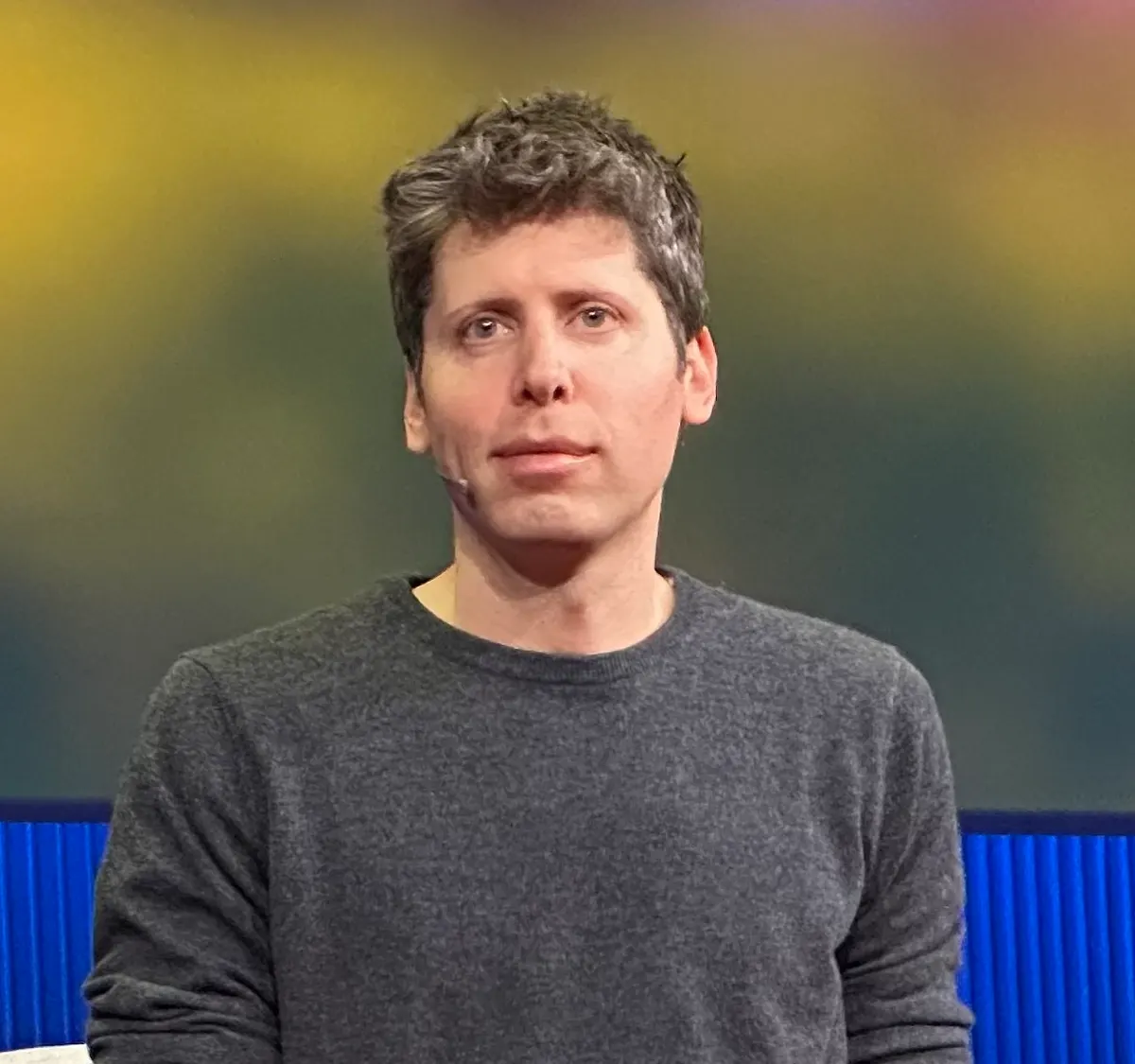
The perplexity numbers are OpenAI's internal measurements on its own held-out dataset, drawn from its codebase, and have not been independently checked. The hero photo shows Sam Altman speaking at TED in April 2025 (file photo).
Like US Brief? You can support it with a tip.