
OpenAI posts hundreds of AI-made math results, and mathematicians ask for proof
OpenAI released 722 math papers, grouped into 372 results, that it says an unreleased internal model produced, including claimed progress on famous open problems. Many proofs are machine-checked, but outside mathematicians say the claims need scrutiny until the model is released.
AI-assisted · US Brief desk · Sources listed below
What happened
OpenAI on Tuesday published a large batch of math research on GitHub that it says came from an unreleased internal AI model. The collection holds 722 manuscripts grouped into 372 "families" of related results, according to the repository. The New York Times put the number of problems at 377.
Among the claims are a solution to the four-dimensional Kakeya conjecture, faster versions of important computer algorithms and progress toward the Riemann hypothesis, Scientific American reported. OpenAI said most results used about three hours of ChatGPT Pro "thinking" compute each. The model was given about 4,000 problems in all.
Not every result is verified. Many have been checked in Lean, software that confirms a proof's logic step by step. OpenAI's repository says others lack such checks and "could have issues," which it will try to fix quickly.
Why it matters
An advisory group OpenAI formed in September recommended that companies publish the model, prompt and compute time behind each result. OpenAI is sharing only average compute time and no prompts. It told Scientific American it takes the guidelines seriously but is not bound by them, and is working to release the model "as quickly and responsibly as possible."
More context
The release comes about a month after OpenAI said its model solved the Navier-Stokes problem, one of math's biggest open questions, Scientific American reported. That effort used a swarm of 10,000 AI agents and cost millions of dollars in computing. OpenAI told the magazine almost all the new results came from a single agent with a single prompt, though some may have taken several tries.
Mathematicians are split. "We should ask for receipts," said MIT's Andrew Sutherland, who said single-agent claims should be treated as unverified until the model is released. Daniel Litt of the University of Toronto said the release is "going to be a good thing for mathematics." UCLA's Terence Tao has criticized the "insane" pace of AI labs' results, the magazine reported.
5 listed sources
- OpenAI (GitHub), Oct 6, 2026: openai/math repository README
- OpenAI, Oct 6, 2026: Sharing AI progress in mathematics
- Scientific American, Oct 6, 2026: OpenAI unleashes hundreds more math results upon a field already in shock
- The New York Times, Oct 6, 2026: OpenAI Releases Findings on 377 Math Problems, Further Roiling Field (headline)
- Sourcing note: OpenAI's own materials plus Scientific American, which quotes outside mathematicians; no political lean.
References listed by US Brief; a source count is not a verification score.
Editorial sourcing notes
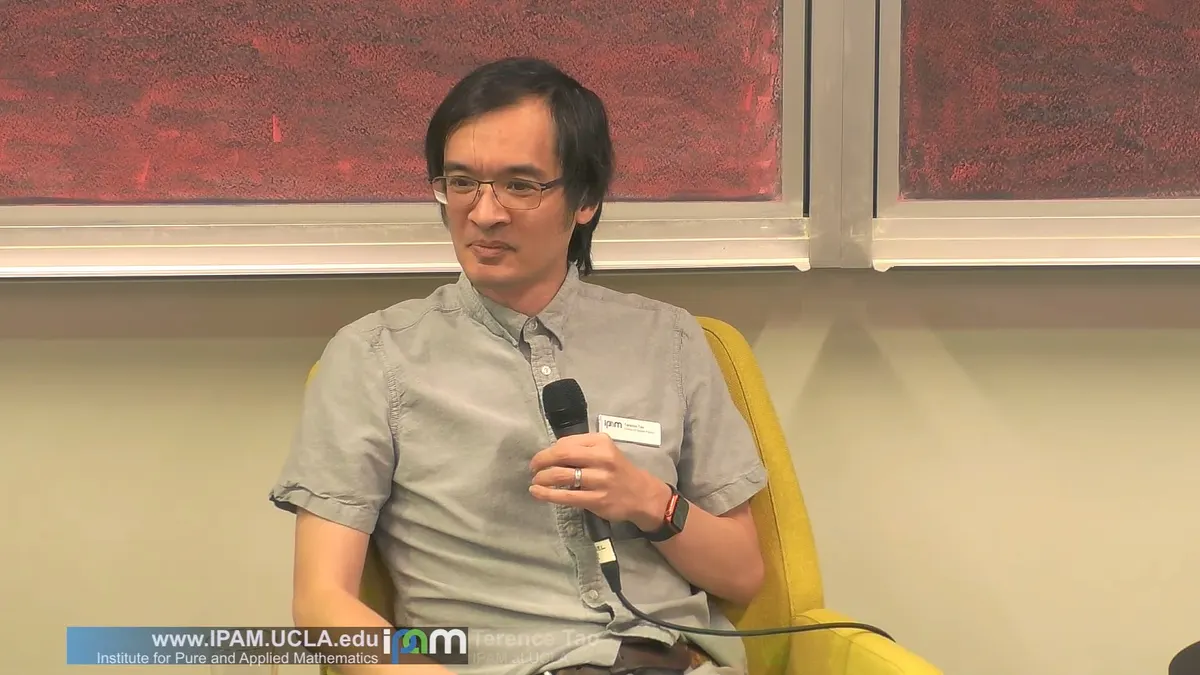
Counts differ by source: OpenAI's repository lists 722 manuscripts in 372 families; Scientific American cites 372 results; The New York Times headline cites 377 problems. Claims about how the results were produced come from OpenAI and have not been independently replicated. The hero photo is from a March 2026 IPAM event, not from this release.
Like US Brief? You can support it with a tip.