
OpenAI says new defenses cut model-copying success from 54% to 0.2%
OpenAI says updated safeguards in its GPT-6.2 Astra model cut the success rate of attempts to extract its hidden reasoning from 54% to 0.2% in an internal test. The company says rivals use this kind of "distillation" to copy capabilities without safety limits, and it has linked past campaigns to China's DeepSeek and to people tied to Moonshot AI.
AI-assisted · US Brief desk · Sources listed below
What happened
OpenAI published a post on Friday, Nov. 20, describing how it detects and blocks "adversarial distillation," in which someone uses a frontier AI model's outputs without permission to train another model. OpenAI says the copy can end up with similar skills but without the safety limits, which it called a particular risk for cybersecurity and biology. Its new defenses focus on protecting a model's hidden step-by-step reasoning, known as its chain of thought, which can be especially valuable training data.
Why it matters
Copying a leading model's outputs can let a rival catch up for a fraction of the cost, which makes distillation a front in the U.S.-China AI race. Anthropic said in October that its own new safeguards cut the data harvested in distillation attacks by about 90% to 99%, Reuters reported.
More context
Key numbers: In an internal test where automated attackers adjusted their methods, the average success rate for pulling out reasoning a model had produced for an earlier prompt fell from 54.0% against GPT-6 Astra with its original safeguards to 0.2% against GPT-6.2 Astra with the updated ones, OpenAI said. In a second test simulating an outside user, success was below 1% for each type of attack. OpenAI said its weekly enforcement actions against distillation campaigns have ranged from thousands to tens of thousands of accounts, with the pace rising sharply this past summer.
How the defenses work: OpenAI says it trains models to refuse attempts to reveal protected reasoning and uses classifiers to catch leaks, including inside tool calls. Its API now ties a model's protected reasoning to the conversation that produced it, and older model families can no longer read GPT-6.2's protected reasoning. OpenAI said it also closed a pathway that could have exposed another user's encrypted reasoning. It said it is applying some of the fixes to GPT-6 Astra and shares warning signs with other AI providers.
The China angle: OpenAI said that in February it told Congress about activity indicating that DeepSeek was trying to distill U.S. frontier models, and that in September it attributed a core part of one extraction campaign to people associated with Moonshot AI, the maker of Kimi. In October, The Information reported that both companies relied heavily on GPT-6 Astra outputs to train their latest models, citing people with knowledge of the matter, according to Reuters. OpenAI, DeepSeek and Moonshot did not immediately respond to Reuters then.
What OpenAI wants from Washington: The company said it supports legislation giving the U.S. government more tools to identify and sanction foreign actors that illicitly extract capabilities from American AI models. It said it has told Congress it backs the Chip Security Act, the AI OVERWATCH Act and the MATCH Act.
What's still unknown: The success rates come from OpenAI's own tests, not an outside audit, and OpenAI did not say how much data distillers have already collected. It said it plans to share more soon about recent campaigns it has disrupted.
4 listed sources
- OpenAI, Combatting adversarial distillation, Nov. 20, 2026
- Reuters via Investing.com, DeepSeek, Moonshot used OpenAI's GPT-6 Astra to train latest models, The Information reports, Oct. 28, 2026
- The Indian Express (Reuters), DeepSeek, Moonshot used OpenAI's GPT-6 Astra to train latest models: Report, Oct. 28-29, 2026
- The Next Web, DeepSeek and Moonshot trained new models on GPT-6 Astra, report says, Oct. 29, 2026
References listed by US Brief; a source count is not a verification score.
Editorial sourcing notes
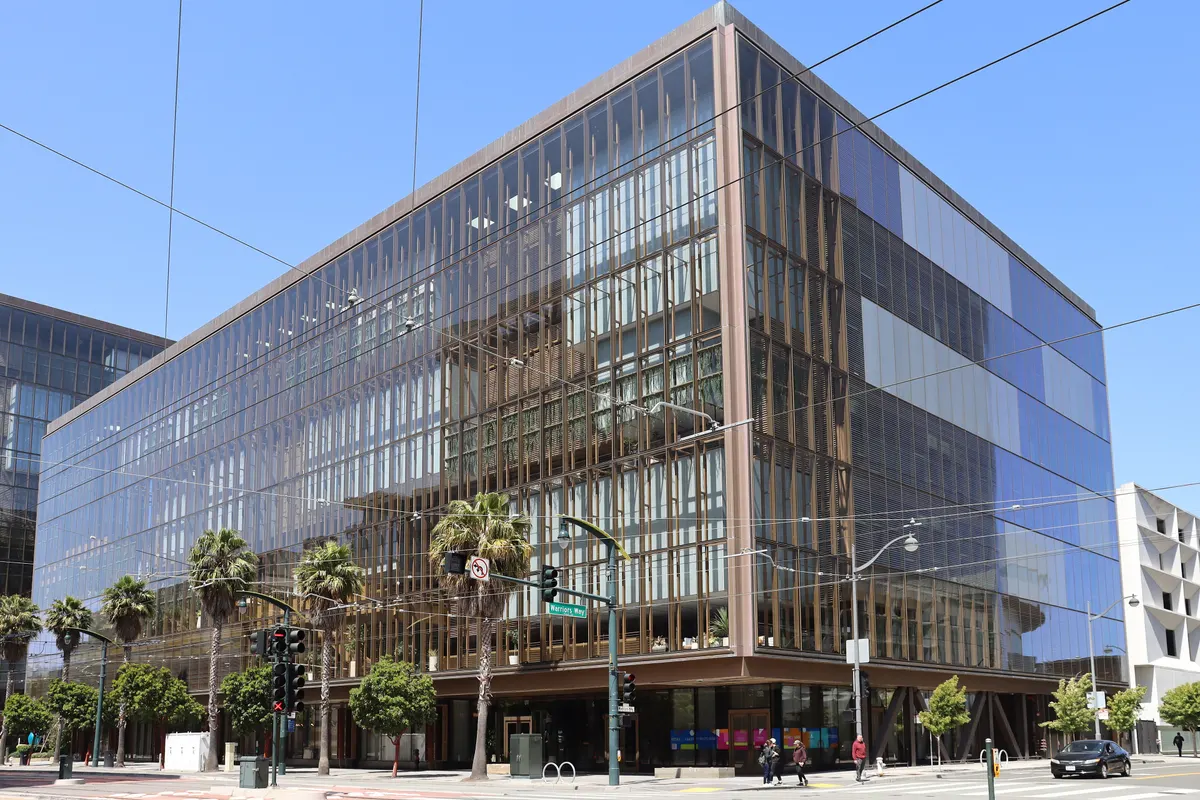
The attack-success figures come from OpenAI's own internal evaluations and have not been checked by an outside party. The report that DeepSeek and Moonshot trained models on GPT-6 Astra outputs is from The Information (Oct. 28), relayed by Reuters, citing unnamed people; the companies did not respond to Reuters at the time. The hero photo shows 1515 Third Street in San Francisco, OpenAI's headquarters when the photo was taken in June 2025.
Like US Brief? You can support it with a tip.