
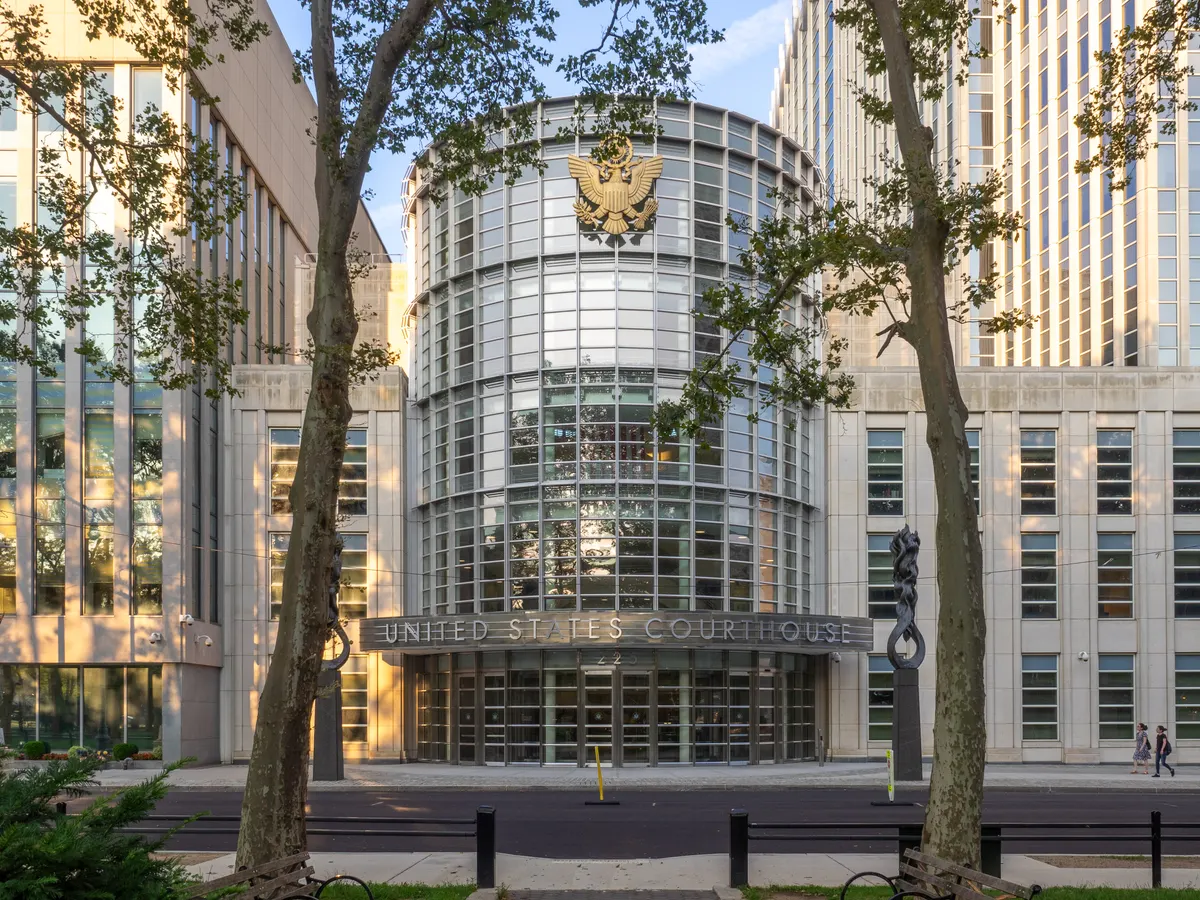
Huawei convicted on 10 of 12 US counts, cleared of racketeering
A Brooklyn federal jury on Tuesday convicted Chinese tech giant Huawei of bank fraud, sanctions violations and conspiring to steal US trade secrets, but acquitted it of racketeering conspiracy and obstruction of justice. Huawei expects to appeal; sentencing is set for Sept. 14, 2027.
AI-assisted · US Brief desk · Sources listed below
What happened
After an 11-week trial and about four days of deliberations, a federal jury in Brooklyn found Huawei Technologies guilty on Tuesday of 10 of the 12 criminal counts the company faced, Reuters and Bloomberg reported. The convictions include bank fraud, wire fraud, conspiracy to steal trade secrets, conspiracy to violate US sanctions law and conspiracy to launder money, according to Courthouse News. Jurors acquitted Huawei of racketeering conspiracy, the top charge, and of conspiracy to obstruct justice.
Why it matters
The case is a rare US criminal prosecution of a foreign corporation, Bloomberg noted, and it targets China's largest technology company. Huawei has been barred from selling equipment to US carriers for years over security concerns and has also been shut out by allies including Canada and Britain, AP reported. It has since expanded into chipmaking and become an important alternative in China to chips from companies such as Nvidia.
More context
The government's case: Prosecutors called more than 60 witnesses, and the defense called 15, according to Reuters. Prosecutors told jurors Huawei copied Cisco source code for its routers, took Quintel's antenna technology and hired a professor to gain access to a circuit board developed by CNEX. Jurors saw a video that prosecutors said showed a Huawei employee slipping a piece of a T-Mobile testing robot into his backpack, and heard about a Huawei engineer who sneaked into a Fujitsu booth at a trade show to photograph a device. Prosecutors also said Huawei misled HSBC, Standard Chartered and BNP Paribas about its business in Iran. "The tone was set at the top by Huawei leaders and executives who themselves engaged in criminal conduct," prosecutor Meredith Arfa told the jury, according to AP.
Huawei's defense: Lawyer Brian Heberlig argued that prosecutors "cherry-picked" isolated incidents involving a few of Huawei's more than 200,000 employees to build a 20-year conspiracy that did not exist. He said much of the allegedly stolen material was already public ("You can't steal a secret that isn't a secret") and that Huawei has paid billions of dollars in licensing fees, 75% of it to US companies, AP reported. After the verdict he called the racketeering acquittal "a profound rejection of the United States' narrative about what Huawei is," and said, "We fully expect to appeal."
What each side said: Huawei said in a statement that the racketeering acquittal "confirms that these allegations lack factual basis and vindicates our consistent position over the past eight years," and called the remaining charges "equally without legal or factual merit." The Brooklyn US Attorney's office, the White House and China's embassy in Washington did not immediately respond to requests for comment, Reuters reported. Chinese officials have previously accused the US of "economic bullying" and of using national security as a pretext against Chinese companies, according to AP.
Timeline: December 2018: Huawei CFO Meng Wanzhou, the founder's daughter, is detained in Canada on a US warrant tied to Huawei's Iran business. 2019: the US announces criminal charges and puts Huawei on a trade blacklist. Feb. 13, 2020: a superseding indictment adds racketeering conspiracy and trade-secret theft charges (Justice Department). 2021: Meng signs a deferred prosecution agreement, returns to China, and her charges are later dropped. Nov. 16, 2026: closing arguments. Nov. 24, 2026: verdict. Sept. 14, 2027: sentencing before US District Judge Ann Donnelly.
What's still unknown: The penalty. Reuters said it was not immediately clear what Huawei will face at sentencing, and Heberlig said it was premature to discuss an amount, though he argued the racketeering acquittal could make a significant difference. Experts cited by Reuters have said the case has not undermined Huawei's business, which operates in about 170 countries.
8 listed sources
- AP (Michael R. Sisak, Larry Neumeister), Chinese tech giant Huawei is guilty of conspiracy to steal trade secrets, US jury finds, Nov. 24, 2026
- Reuters via Investing.com (Karen Freifeld), China's Huawei convicted in sprawling US criminal trial over Iran business, Nov. 24, 2026
- Bloomberg via Bloomberg Law (Patricia Hurtado), Huawei Found Guilty of US Criminal Charges in Landmark Case, Nov. 24, 2026
- BBC (Rachel Clun), Huawei found guilty of stealing trade secrets but acquitted of racketeering, Nov. 24, 2026
- Courthouse News Service (Nina Pullano), Huawei found guilty of stealing trade secrets in US trial, Nov. 24, 2026
- New York Post (AP), Jury finds Chinese tech giant Huawei guilty of conspiracy to steal trade secrets, Nov. 24, 2026
- Huawei, Statement on the Jury Verdict in the U.S. District Court for the Eastern District of New York, Nov. 2026
- US Department of Justice, Chinese Telecommunications Conglomerate Huawei and Subsidiaries Charged in Racketeering Conspiracy and Conspiracy to Steal Trade Secrets, Feb. 13, 2020
References listed by US Brief; a source count is not a verification score.
Editorial sourcing notes
Verdict details are from AP, Reuters, Bloomberg, the BBC and Courthouse News reporting from the Brooklyn courthouse on Nov. 24, 2026. The Brooklyn US Attorney's office, the White House and China's embassy did not immediately comment, Reuters reported. Penalties have not been set. The hero photo shows the Brooklyn federal courthouse (file photo, 2019); the body photo was taken at Huawei's Shenzhen headquarters in 2014.
Like US Brief? You can support it with a tip.