
Google's Suncatcher satellite runs AI in orbit, beams back a haiku
Google says its Project Suncatcher prototype satellite answered its first prompt from orbit, using an AI chip of the kind built for data centers to write a haiku about space. Next come radiation and heat tests, then two linked satellites in 2027.
AI-assisted · US Brief desk · Sources listed below
What happened
Google says its Project Suncatcher prototype satellite has produced the first AI response from a data-center-class AI chip in orbit. During a pass over a ground station, engineers sent a prompt to Gemma 4, an open AI model Google had loaded onto the satellite, asking for a haiku about being in space. As the satellite passed over Svalbard, Norway, it sent back: "Blue marble below / Data streams in silent grace / Starlight feeds my core."
Why it matters
Google's long-term bet is that satellites in constant sunlight could power AI computing without drawing on crowded power grids on the ground. That matters because AI data centers use large amounts of electricity, which has become a fight in many US communities.
What’s next
Google plans thermal and radiation tests, then two satellites in 2027 with more power and laser links between them so they can share work.
More context
The hardware, in plain words: The satellite launched Oct. 1 on a SpaceX Falcon 9 with more than 100 other spacecraft. It carries four of Google's Tensor Processing Units, or TPUs, the custom chips Google uses in its data centers to run AI. Its solar panels make up to 1 kilowatt of power, about what a microwave oven uses, so it can run only one TPU at a time, for about 20 minutes, TechCrunch reported. Commissioning, the checklist of turning systems on one by one, took about three weeks.
Timeline: Sept. 24, Google announces the launch; Oct. 1, the satellite reaches orbit; late October, early machine-learning tests; this week, the first prompt and the haiku, followed by space-themed limericks and prompts asking the satellite to report on its own condition. A Google spokesperson told TechCrunch it is "operating nominally," meaning working as planned.
Weak spot: A haiku shows the chip can switch on and answer; it does not show space computing can compete on cost. Google itself calls Suncatcher a "moonshot" on a "long road ahead." Suncatcher researchers estimated in a peer-reviewed analysis that SpaceX would need to fly its still-unfinished Starship rocket about 1,800 times to bring launch costs down enough, TechCrunch reported.
What's still unknown: How the chips handle radiation and heat over time. Radiation can cause "bit flips," where a stored 1 turns into a 0 or the reverse, quietly corrupting data. Ground tests suggested this matters less for running a finished model than for training one, TechCrunch reported, but orbit is the real test.
3 listed sources
References listed by US Brief; a source count is not a verification score.
Editorial sourcing notes
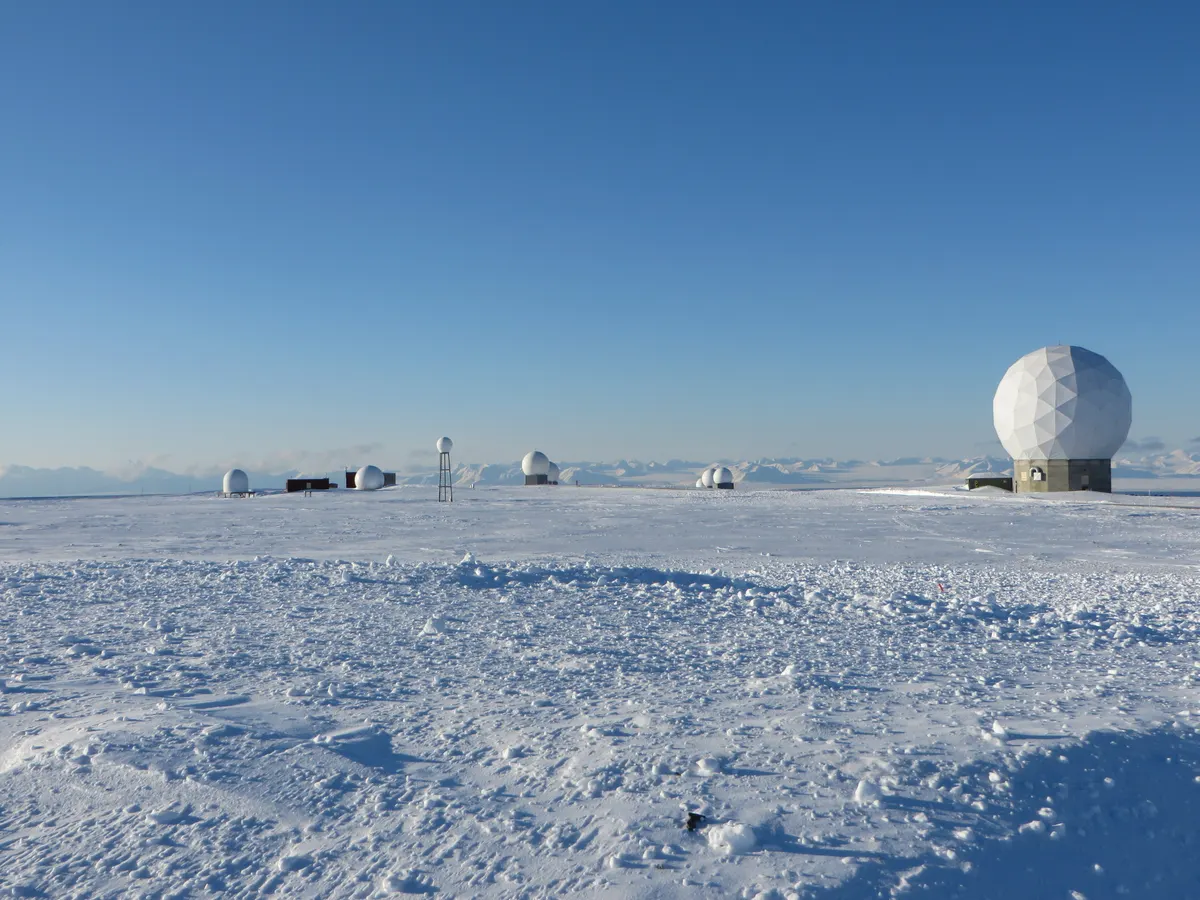
Details of the test come from Google's Oct. 30 blog post and reporting by TechCrunch and The Verge; Google has not published performance data. The photo is a 2015 file photo of Svalbard Satellite Station in Norway; Google says the haiku arrived as the satellite passed over Svalbard but did not name the ground station it used.
Like US Brief? You can support it with a tip.