
Google smartwatch AI caught 66% of high blood pressure cases in study
A Google AI that reads a smartwatch's pulse and motion sensors, with no cuff, flagged 65.8% of high blood pressure cases in a 196-person U.S. study in Nature, versus 55.3% for a first office reading. Nature says the gap wasn't statistically significant.
AI-assisted · US Brief desk · Sources listed below
What happened
Google Research published a peer-reviewed study in Nature on Thursday, Nov. 5, describing an AI system that looks for signs of high blood pressure using only a consumer smartwatch's optical pulse sensor and motion sensor, with no arm cuff needed to calibrate it. The work was done with Beth Israel Deaconess Medical Center and Harvard Medical School. Google said the findings "helped inform" the blood pressure trends feature in Health Guardian in the Google Health app.
Why it matters
Google's blog says hypertension affects more than a billion people worldwide and more than half of affected adults don't know they have it. A watch that passively nudges people toward a cuff check could catch some of those cases earlier. Google and the authors say it is not meant to replace arm cuffs or give a standalone diagnosis.
More context
The results: In a study at five U.S. sites, 196 adults with no known heart disease and no blood pressure medication wore the watch for seven days of normal life. Their true status was set by 24-hour ambulatory blood pressure monitoring, the clinical gold standard. As a first screen, the watch flagged 65.8% of people who had hypertension, versus 55.3% for an initial office cuff reading. Both correctly cleared 90.0% of people who did not have it, and when the watch flagged someone it was right 80.6% of the time, versus 77.8% for the office check.
How it works: Rather than estimating an exact blood pressure number, the system reads pulse wave shapes and the tiny wrist vibrations from each heartbeat over several days and outputs a likelihood of hypertension. Google said the model first learned from 492,347 hours of unlabeled sensor data from 2,109 people.
Confirming a diagnosis: Among the 48 participants whose first office reading was high, the watch confirmed sustained hypertension in 78.4% of true cases with 90.9% specificity. A return office visit caught 67.6% with 63.6% specificity. Multi-day home cuff monitoring still caught the most, 89.2%, with 81.8% specificity.
What the numbers mean: The watch still missed about one in three people with hypertension (34.2%), and about one in ten people without it would get a false flag. Nature's own press summary says the 10.5-point edge over office readings "was not statistically significant." Everyone tested was in the U.S. and not on blood pressure drugs, so the results may not carry over to people already being treated.
What's still unknown: The Nature paper names no specific watch. Google's blog calls the work "early feasibility research" that is "not indicative of any existing or upcoming commercial product feature," even as it says the findings shaped the Google Health app's blood pressure trends feature; AndroidPure noted Google doesn't reconcile the two statements. Google has not said whether the feature has, or will seek, regulatory clearance, and tbreak reported it is unclear which watches can run it.
5 listed sources
- Nature (Di Achille, Poh et al.), Opportunistically Detecting Signs of Hypertension on a Consumer Smartwatch, Nov. 5, 2026
- Google Research blog (Paolo Di Achille and Ming-Zher Poh), Detecting signs of hypertension using wearable sensors, Nov. 5, 2026
- Nature Portfolio press release, Technology: Smartwatches that can clock high blood pressure, Nov. 2026
- AndroidPure, A Smartwatch Caught Two in Three Hypertension Cases in Google Study, Nov. 7, 2026
- tbreak, Smartwatch high blood pressure detection: Google's AI, Nov. 7, 2026
References listed by US Brief; a source count is not a verification score.
Editorial sourcing notes
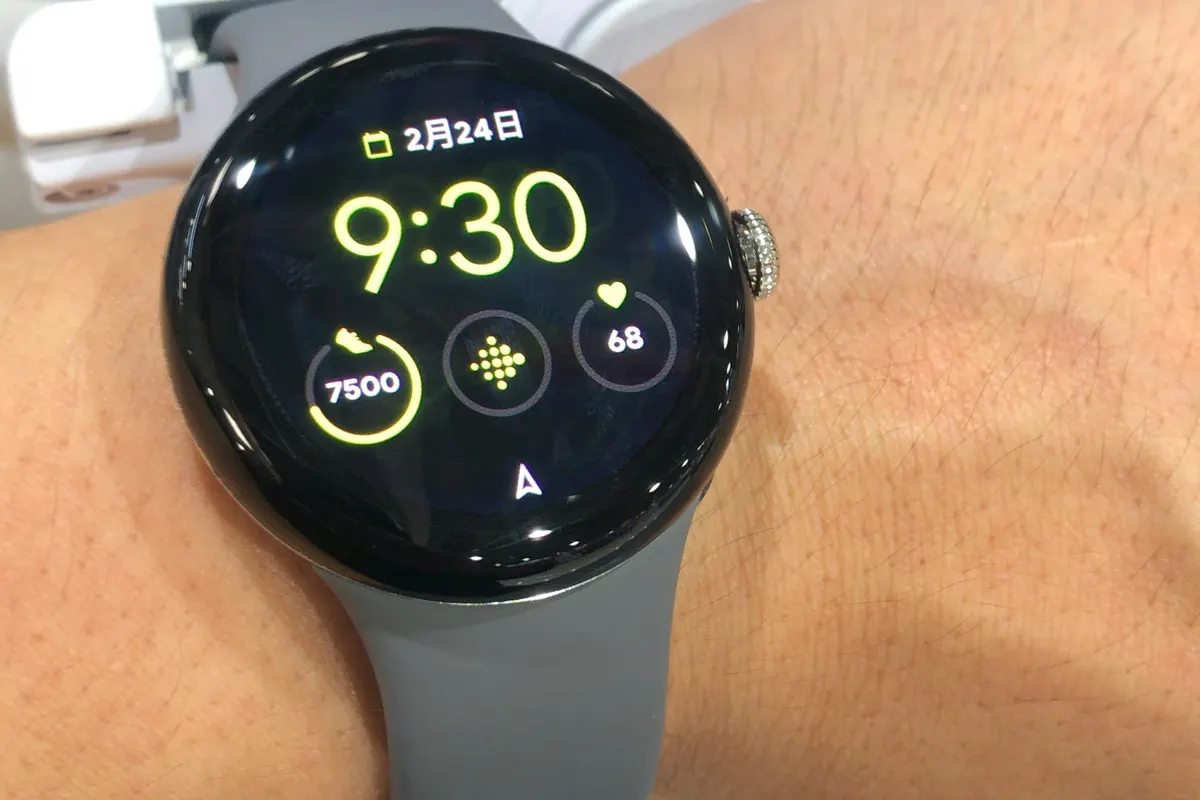
All study figures come from the peer-reviewed Nature paper (published Nov. 5, 2026) and Google Research's blog post by two of its authors. The paper describes the device only as "a widely available consumer smartwatch" and does not name it; the Pixel Watch in the photo is a 2022 file image, not the study device. Nature's press summary says the smartwatch's edge over office readings was not statistically significant. Google is the developer of the system and employs most of the authors.
Like US Brief? You can support it with a tip.