
Cyberattack hits supermarket freezers in at least 7 European countries
A second wave of cyberattacks pushed fridges and freezers at dozens of supermarkets in Belgium, Ireland, Sweden and other European countries into warm defrost mode on Monday. No one has claimed responsibility.
AI-assisted · US Brief desk · Sources listed below
What happened
Refrigeration systems at supermarkets in seven European countries (Belgium, Luxembourg, Sweden, Ireland, the Netherlands, Estonia and Finland) were hit by a cyberattack on Monday, the second such wave in a month, according to the BBC and The Guardian. Freezer temperatures were pushed as high as 50C (122F), forcing stores to throw out food.
How it worked: Stephan Moelans, chief executive of Sabcobel, which runs Delhaize's refrigeration systems, told the Belga news agency that the units' evaporators were switched to defrost mode, making them warm up, the BBC reported. His company had been "working all night and morning to disconnect the affected units," he said, and the units need physical modifications, not just software updates, to be protected.
Who was hit, as reported: In Belgium and Luxembourg, about 40 Delhaize stores were affected, the BBC said, and one Delhaize store in Hoeilaart reported losing €100,000 of stock. Carrefour Belgium reported problems at about 15 of its 700 shops, Intermarché at 15 and Colruyt Group's Spar at five, The Guardian reported, along with an Ikea store in Mons. In Ireland, SuperValu said 13 of its 223 stores were affected and that the problem involved one specific equipment model. In Sweden, ICA said a "small number" of its stores were hit; Coop gave six of its roughly 800 stores to some news agencies and seven to others, The Hacker News reported. In the Netherlands, a spokesperson for the Danish controller maker Danfoss told public broadcaster NOS that at least 17 companies, mostly butchers and small local shops, were attacked. One Selver supermarket in Estonia was hit, and Finland's Kesko said its experts were investigating problems at some stores. The Hacker News also lists seven Intermarché stores in Portugal.
Why it matters
The attacks target the small controllers that run commercial fridges and freezers, equipment few people think of as connected to the internet. European officials are treating it as a threat to the food supply. EU food and agriculture commissioner Christophe Hansen called the repeated attacks "a deliberate attempt to disrupt our food supply chain and undermine consumers' confidence in it," The Guardian reported.
More context
Timeline, per the BBC and The Guardian: In August, refrigeration malfunctions hit a number of U.S. military bases; U.S. authorities are investigating and working with French officials on whether the incidents are linked. In early October, hackers took control of cooling units in as many as 700 French supermarkets, mostly through Danfoss controllers, with food losses estimated in the tens of millions of euros; the Paris prosecutor opened an investigation. Overnight into Monday, Nov. 2, the second wave hit stores across seven more countries, and Belgium's federal prosecutor has opened a criminal case, The Hacker News reported, citing VRT.
What is still unknown: who is responsible. No group has claimed the attacks, and Belgium's Centre for Cybersecurity said the culprit "may never be determined," according to The Hacker News. With no financial demands made, Tom Hegel of the security firm SentinelOne said the attacks point to sabotage, The Guardian reported. Patrick Lamplmair of the security firm Tributech warned, "Thousands of these controllers were still reachable from the internet after the French attack."
Bottom line: Counting France, supermarket refrigeration in at least eight European countries has now been hit, and stores are disconnecting units from the internet until they can be secured.
3 listed sources
References listed by US Brief; a source count is not a verification score.
Editorial sourcing notes
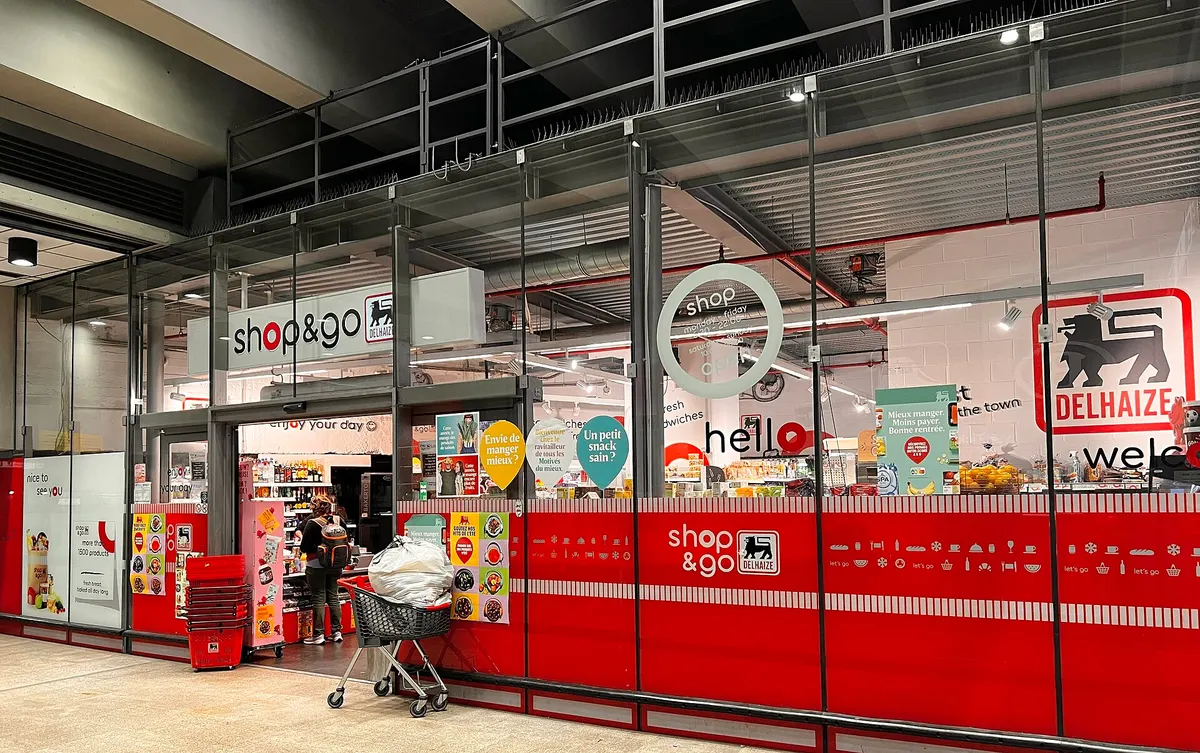
Sourcing: BBC and The Guardian for affected chains, store counts and comments from officials, technicians and security researchers; The Hacker News for its store-by-store tally, the Portugal report and the Belgian investigations. Store counts differ between outlets (for example, Coop in Sweden gave six stores to some agencies and seven to others), so each figure is attributed. No group has claimed the attacks, and officials have not named a suspect. Photos are file images of Delhaize stores, not of affected locations.
Like US Brief? You can support it with a tip.