
Six Chinese AI models carry banned Nvidia chip fingerprints, study says
A former OpenAI researcher says six AI models from DeepSeek, Moonshot AI, MiniMax and Ant Group bear traces of Nvidia Blackwell chips that U.S. rules bar from export to China. The method can't show where the chips were, so it doesn't prove rules were broken.
AI-assisted · US Brief desk · Sources listed below
What happened
Six AI models released by Chinese companies carry a hardware "fingerprint" matching Nvidia's Blackwell chips, which U.S. rules bar from export to China, according to a report by former OpenAI researcher Will DePue. The models come from DeepSeek, Moonshot AI, MiniMax and Ant Group and include DeepSeek's V4 models, Moonshot's Kimi K3 and MiniMax's M3, TechCrunch and The Register reported.
Why it matters
Export controls are meant to keep the most powerful AI chips away from Chinese labs, wherever the chips are installed. Lawmakers in both parties are pushing bills to tighten them. Sens. Jim Banks (R-Ind.) and Elizabeth Warren (D-Mass.) cited Huang's case this week in backing the AI Overwatch Act, The Register reported.
More context
How the test works: When a model is first set up, its starting values are laid out in a pattern that depends on the exact chip, DePue said. "Traces of that pattern survive training into the published model," he wrote. He said he searched more than six trillion combinations of chip layout and seed number. Four of the six models matched Nvidia's flagship Grace Blackwell systems, the GB200 and GB300, he said, according to The Register.
What it does not show: The method points to the hardware used to create a model's starting weights, not where the chips sat or how the labs got access. TechCrunch noted the chips could have been in an offshore data center, a common route for Chinese firms. DePue himself said that using Blackwell does not prove the chips were in China. So the report does not by itself show that export rules were broken.
Context: White House technology adviser Michael Kratsios said earlier this year that Moonshot had used export-banned Nvidia chips, citing U.S. intelligence, TechCrunch reported. Research group Epoch AI estimates about two million advanced chips entered China in 2024 and 2025 through schemes that hid their destination. The report lands days after Jensen Huang resigned as Nvidia's CEO amid scrutiny of Megaspeed, a company reportedly under U.S. investigation over alleged chip smuggling.
What's still unknown: Whether other researchers can reproduce the findings, and how the labs reached the chips. DePue published seed values so others can check his work, and he says senior researchers, including some at OpenAI and Anthropic, confirmed the result. US Brief did not find public responses from the four Chinese companies or Nvidia to the report.
3 listed sources
- TechCrunch (Tim Fernholz), Export-banned Nvidia chips are behind China's most powerful AI models, Nov. 13, 2026
- The Register (Thomas Claburn), Chinese AI labs are training models on Nvidia's Blackwell despite export controls, says ex-OpenAI engineer, Nov. 13, 2026
- Unite.AI, Unemployment Labs Reports Blackwell Patterns in Chinese AI Models, Nov. 2026
References listed by US Brief; a source count is not a verification score.
Editorial sourcing notes
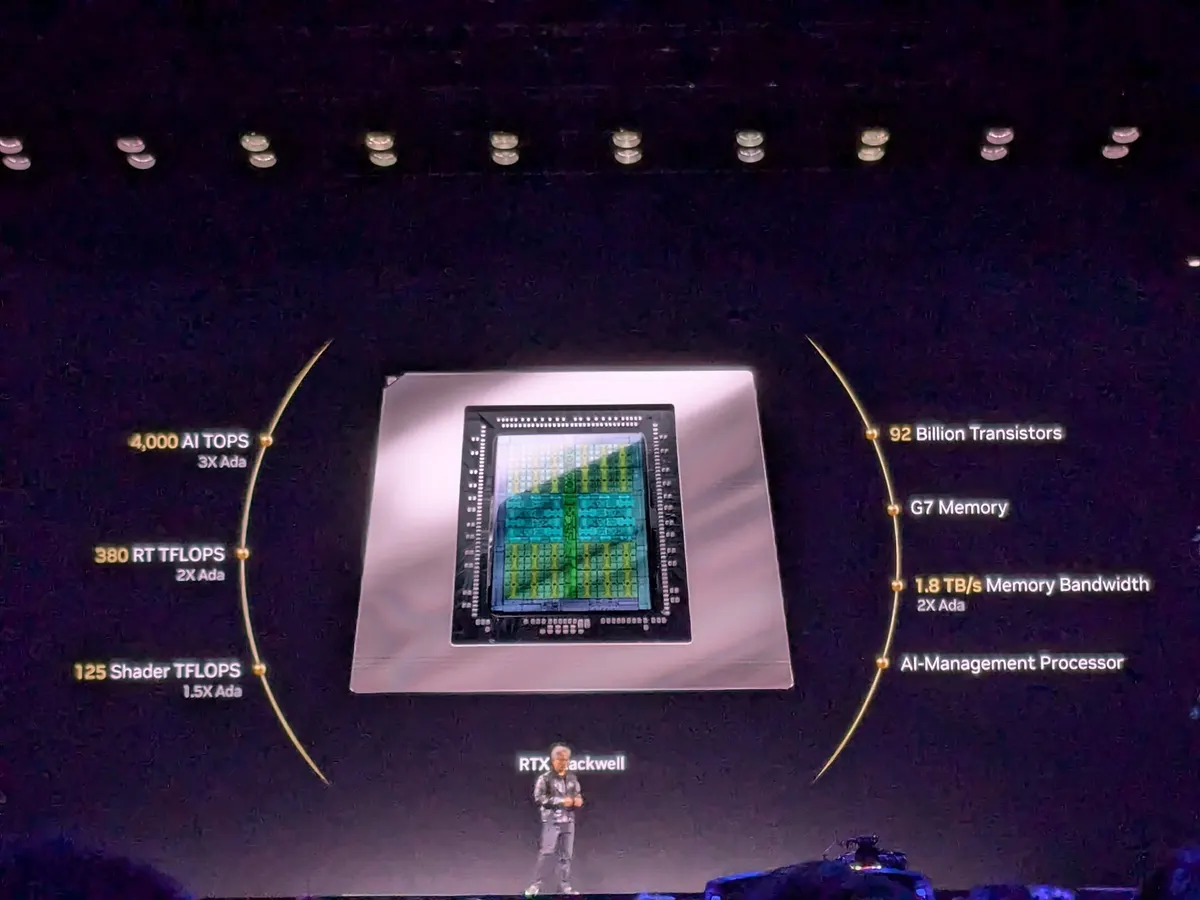
The findings come from one researcher's published analysis and have not been confirmed by U.S. officials. Lead photo: Jensen Huang presenting Blackwell graphics chips at CES 2025 (file photo, January 2025).
Like US Brief? You can support it with a tip.