
China proposes export controls on AI models, agents and chip designs
China proposed adding 23 AI technologies, including large models, agents, computing clusters and advanced chip designs, to its export-control list on Oct. 16. Exporters must register transfers now; open-source work and API or app access are excluded, and comments close Nov. 15.
AI-assisted · US Brief desk · Sources listed below
What happened
China's Ministry of Commerce and Ministry of Science and Technology on Friday proposed adding 40 technologies to the country's catalogue of technologies prohibited or restricted from export. Twenty-three are in artificial intelligence, covering large models, AI agents, computing clusters and information processing. The rest are five biomedicine and 12 solar-manufacturing technologies.
Why it matters
Chinese AI labs such as DeepSeek, Alibaba and Moonshot have won users abroad with cheaper models and openly shared weights. The rules could let them keep selling access worldwide while giving Beijing a say over transfers of its most capable models and chip designs. Washington already limits China's access to advanced American AI chips.
More context
What it would cover: Bloomberg reported that the draft would restrict exports of model weights and source code above set performance thresholds, including models trained on "important data" with at least 2 trillion parameters or ranking in the world's top 10. It would also cover design technology for AI chips made at 14 nanometers or finer, or using 2.5D or 3D advanced packaging. Deploying a covered model overseas would count as an export.
What is excluded: Reuters said overseas users reaching Chinese models through APIs, websites, apps or software-as-a-service would not be covered. Open-source technology would get simplified licensing, and Chinese firms running their own computing centers abroad could qualify for automatic licensing.
Primary document (excerpt, US Brief translation): Announcement No. 48 says technologies "that have already entered the public domain through open-source release, publication of academic papers or other means are not included in the scope of management." It also says exporters must register listed technologies before export from the date of the notice, and that "exports that have begun but have not been completed" are covered.
How each side frames it: The commerce ministry said the revision is routine, does not target any country, region or entity, and aims to prevent misuse, including AI that can write malicious software. Ryan Etzcorn of Ankura China Advisors told Bloomberg it is "more than routine maintenance," signaling that steadier relations with the West "do not mean it will stand still."
What remains unknown: which existing models would cross the thresholds once the annex is finalized; how strictly the interim registration will be enforced; and how Washington will respond. The reports reviewed did not include a U.S. government reaction. Public comments close Nov. 15, after which the ministries will issue final rules.
6 listed sources
- Ministry of Commerce and Ministry of Science and Technology of China, Announcement No. 48 of 2026 (Chinese), Oct. 16, 2026
- Reuters (via Yahoo News), Oct. 16, 2026
- Reuters (via Devdiscourse), Oct. 16, 2026
- Bloomberg (via The Straits Times), Oct. 16, 2026
- The Wall Street Journal, Oct. 16, 2026
- AI Affairs, Oct. 16, 2026
References listed by US Brief; a source count is not a verification score.
Editorial sourcing notes
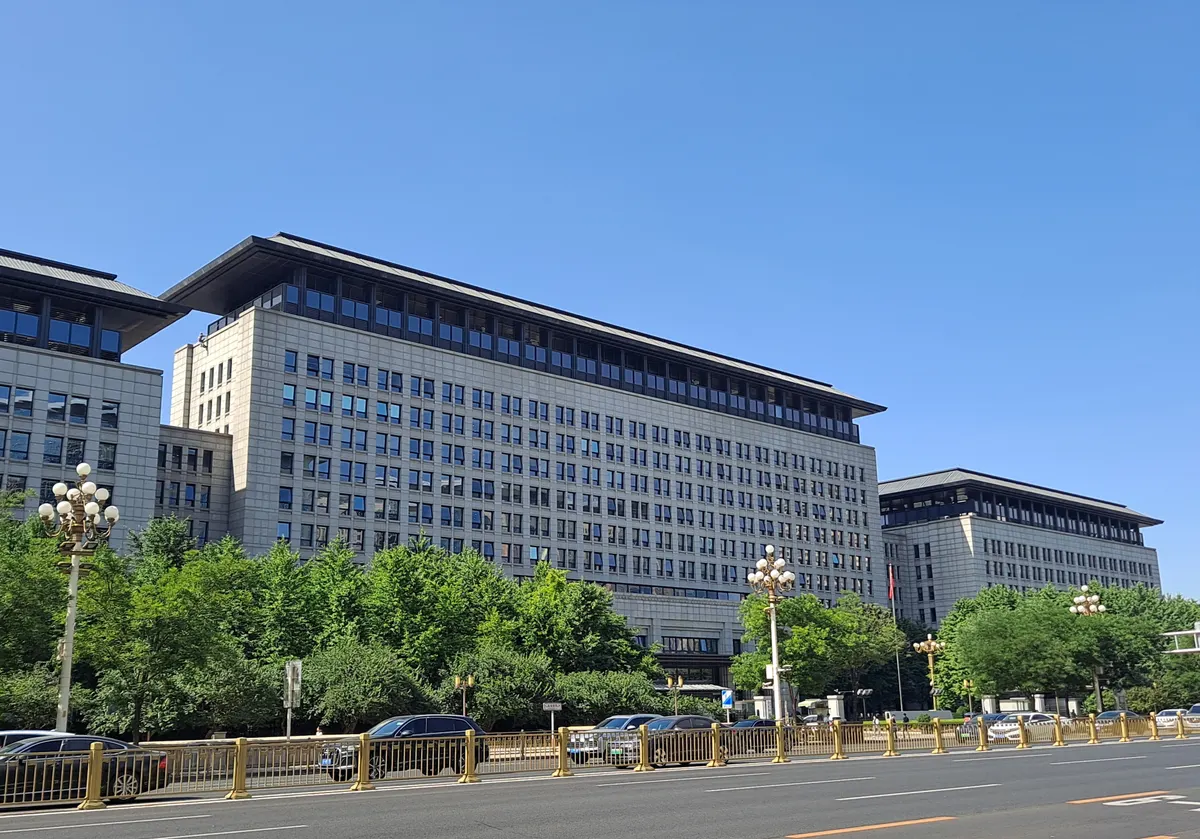
The catalogue changes are a draft open for public comment; only the interim registration rule is in force. Specific thresholds come from Bloomberg's reading of the draft annex, which US Brief has not reviewed in full. The excerpt from Announcement No. 48 is a US Brief translation of the Chinese text. Photos are file images of the ministry, not from Friday's announcement.
Like US Brief? You can support it with a tip.