
OpenAI made 200-plus police referrals; ChatGPT will now end violent chats
OpenAI says it referred more than 200 ChatGPT cases to law enforcement in July through September, and over the next few weeks ChatGPT will cut off chats fixated on violence, give everyone less detail about past mass attacks and keep weapons and security-system know-how from teens.
AI-assisted · US Brief desk · Sources listed below
What happened
OpenAI said on Oct. 30 that it referred more than 200 cases from ChatGPT to law enforcement in the third quarter of 2026, and announced a set of new limits on how the chatbot handles violence. The company said the changes roll out "in the next few weeks."
Why it matters
Reuters reported the move comes amid growing scrutiny of the risks chatbots pose to young users. Earlier this month OpenAI said teens spend an average of under 15 minutes a day on ChatGPT, a figure it supplied itself.
More context
For everyone: ChatGPT will give less detail about past mass attacks, such as the weapons or equipment used, how they were obtained, and comparisons of how many people were hurt. OpenAI said this applies "regardless of a user's age or reason for asking." ChatGPT will also be able to end a conversation on its own when it shows a fixation on violence or on seriously harming another person, and several ended chats can lead to a temporary pause on the account.
For teens: OpenAI said ChatGPT will hold back "practical information about weapons and security systems that could be misused to facilitate violence, even when there's no sign of violent intent." Teens can still use it to get help calming a situation down, avoiding violence or finding support. Since July, parents with linked accounts are told if their teen's account is shut down for breaking the violence rules, and OpenAI said it is working on alerts for when a teen's account is paused for repeatedly discussing violence.
How ChatGPT knows who is a teen: OpenAI uses age prediction, which guesses a user's age from signals in how the account is used. The company said it now checks those signals continually rather than once. Adults who get wrongly placed in the teen experience can prove their age through Persona, an outside identity-verification company.
New public report: OpenAI said it will publish a Community Safety Report every six months. The first is due in early 2027 and will cover the second half of 2026.
The case for the changes: OpenAI's argument is that a chatbot this widely used will sometimes be asked for help planning harm, and that cutting off those chats, limiting attack details and flagging serious cases to police can stop some of it before it happens, while still letting teens use the tool to get help.
The case from critics: Child-safety groups have said OpenAI's teen protections are promises the company grades itself on. In August, Josh Golin of the advocacy group Fairplay told Engadget "there's no accountability mechanism," and Torney of Common Sense Media noted OpenAI had not published how often its age prediction gets ages wrong. In January, Aliya Bhatia of the Center for Democracy & Technology told Decrypt the approach "raises tough questions about the accuracy of the tool's predictions and how OpenAI is going to deal with inevitable misclassifications." Privacy-minded adults also face a trade-off: proving their age to get out of the teen mode means handing ID to a third party.
What's still unknown: OpenAI did not say what happened after its 200-plus referrals, such as whether any led to an arrest or prevented an attack. It has not published error rates for age prediction. It did not list which weapons or security questions will now be refused, or how many chats it expects to end automatically. The first safety report, due in early 2027, may answer some of this.
4 listed sources
- OpenAI, "Community safety report and new protections for teens," Oct. 30, 2026
- Reuters via CNA, "OpenAI to limit weapons information for teens on ChatGPT in violence prevention push," Oct. 30, 2026
- Engadget, child-safety experts on ChatGPT's teen protections, Aug. 21, 2026
- Decrypt, "OpenAI deploys age prediction to restrict teen access on ChatGPT," Jan. 21, 2026
References listed by US Brief; a source count is not a verification score.
Editorial sourcing notes
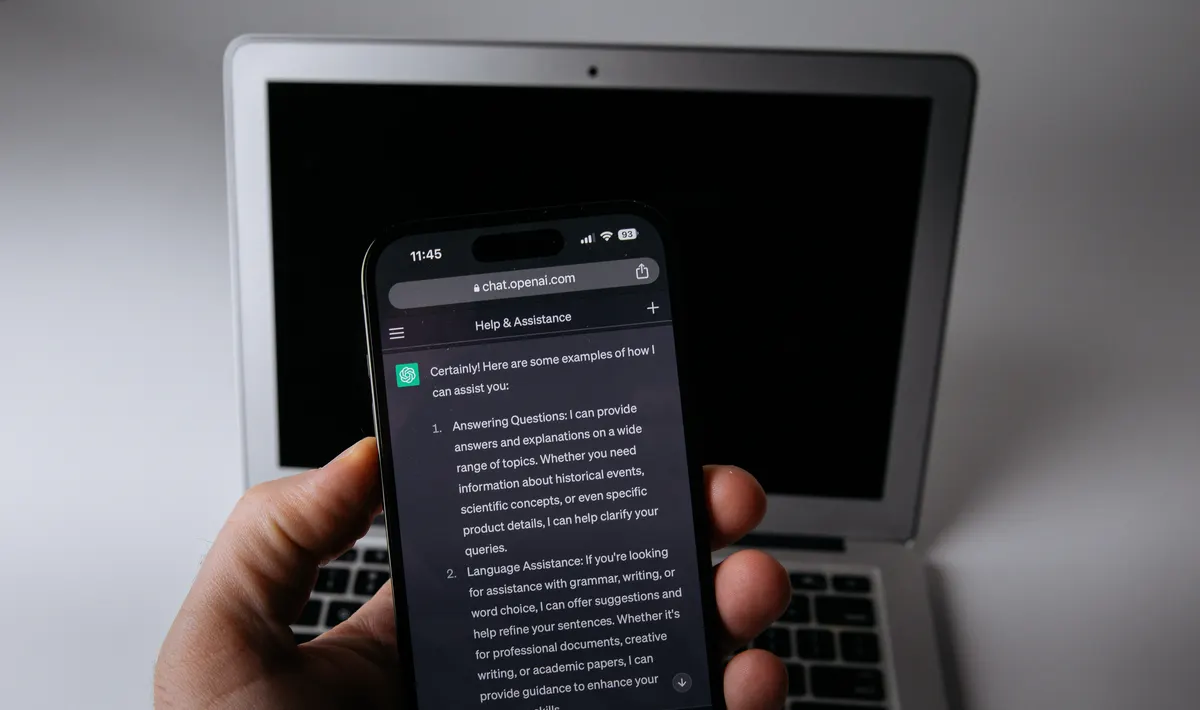
Sourcing: OpenAI's Oct. 30, 2026 announcement (primary document) and Reuters' report the same day. The referral count and teen-usage figure are OpenAI's own numbers and have not been independently checked. Critics' comments come from earlier 2026 coverage of OpenAI's teen protections, not this announcement. Photo is a 2023 file image.
Like US Brief? You can support it with a tip.