
Anthropic mathematician's Claude-assisted Riemann hypothesis proof passes machine checks
Anthropic's Levent Alpöge says he used Claude to prove the 1859 Riemann hypothesis. Lean and Mathlib experts said Saturday they have "full confidence" his 17-million-line computer proof is correct, but understanding it will take time, and Clay still lists the problem as unsolved.
AI-assisted · US Brief desk · Sources listed below
What happened
Levent Alpöge, a mathematician on Anthropic's technical staff, said Friday that he used the company's Claude AI to find a proof of the Riemann hypothesis. "I believe I have, working with Claude, discovered a proof of the Riemann Hypothesis," he wrote in a four-page paper posted on his website, Science and Scientific American reported. He released about 17 million lines of code in Lean, a programming language that checks each step of a proof by machine, Science reported. He said the AI-generated explanation runs more than 250,000 pages.
Why it matters
Many results in math are proven only on the assumption that the Riemann hypothesis is true, so a confirmed proof would settle them at once, Science noted. Scientific American said it has no immediate real-world use and "won't upend global banking." It is the second time in recent months that an AI company or someone tied to one has claimed to crack a famous problem, after OpenAI's Navier-Stokes claim in September, the AP noted.
What’s next
With the machine checks done, researchers are starting the long work of reading the argument; Rubinstein has posted a 164-page working draft that explains part of it. Any prize decision rests with the Clay Mathematics Institute.
More context
The problem: Bernhard Riemann proposed the hypothesis in 1859. It says the prime numbers, which look randomly scattered, follow a hidden order tied to the zeros of a function now named for him. The Clay Mathematics Institute picked it in 2000 as one of seven Millennium Prize Problems, with a $1 million reward, the AP reported.
What the checks show: Independent mathematicians, including MIT's Andrew Sutherland, compiled the Lean proof without errors. "Honestly the chance that anything is fishy here is approximately zero," Sutherland told Scientific American. On Saturday, the Lean and Mathlib communities, in a joint statement endorsed by the Lean FRO and the Mathlib Initiative, said, "We have full confidence that Alpöge's proof of the Riemann Hypothesis is correct." They said dozens of people had compiled the code, two independent tools confirmed it proves Mathlib's standard statement of the hypothesis, and several independently written proof checkers accepted it. University of Waterloo mathematician Michael Rubinstein reported a separate check with no errors.
The doubts: Andrew Granville, a number theorist at the University of Montreal, said of Alpöge's write-up, "What he released is garbled," Nature reported, and he linked its timing to Anthropic's falling stock. Alpöge wrote that the "obvious cynical view, to do with the timing" is false. NYU's Maksym Radziwill told Science that headline results without digestible explanations offload "the actual work" onto people "who won't get credit." Clay Mathematics Institute president Martin Bridson called it "an announcement of historic significance" but said "the journey from today's announcement to a place of real understanding will be long and difficult," the AP reported.
What a machine check does and doesn't settle: A Lean proof that compiles shows each logical step follows from the last. It does not explain why the result is true. Science reported that mathematicians expect it could be years before humans can digest the code. Alpöge himself wrote that he is "presenting the world with a complete argument before having mastered a massive neighbourhood around its mathematics." As of Sunday morning, the Clay institute's website still listed the problem as unsolved. Its rules require publication and at least two years of scrutiny before a prize can be considered.
Reaction: "If this fully checks out, it is clearly a historic milestone in mathematics," Oxford's James Maynard, a Fields Medal winner, told Nature. Rutgers department chair Alex Kontorovich told the AP: "Navier-Stokes fell and now the Riemann Hypothesis." Separately, Stanford's Brian Conrad and Rome-based mathematician Alessandro Masullo released an unfinished 940-page proof developed without AI, Science reported.
The timing: Alpöge said the breakthrough came late Sunday and that he asked Anthropic CEO Dario Amodei about announcing it as the company prepared for its stock market debut, the AP reported. Anthropic did not respond to requests for comment from the AP or Nature.
10 listed sources
- Science (Zack Savitsky), AI may have solved math's greatest mystery. Can humans understand the answer?, Nov. 20, 2026
- Scientific American (Joseph Howlett), Anthropic mathematician claims to prove Riemann hypothesis, most famous problem in all of math, Nov. 20, 2026
- Scientific American (Clara Moskowitz), The AI Riemann hypothesis proof is almost certainly true, independent mathematicians attest, Nov. 20, 2026
- AP via ABC News, Anthropic worker claims to have solved a Holy Grail of math problems with AI's help, Nov. 20, 2026
- Nature, Mathematician says he and AI solved Riemann hypothesis — the field's biggest outstanding challenge, Nov. 20, 2026
- Andrew Sutherland (MIT), Verification files for the Lean proof of the Riemann Hypothesis, updated Nov. 21, 2026
- Lean and Mathlib communities (joint statement), Lean verification of the Riemann Hypothesis, Nov. 21, 2026
- Michael Rubinstein (University of Waterloo), Alpöge/Claude proof of the Generalized Riemann Hypothesis, Nov. 21, 2026
- Clay Mathematics Institute, Unsolved problems (checked Nov. 22, 2026)
- Clay Mathematics Institute, Millennium Prize rules
References listed by US Brief; a source count is not a verification score.
Editorial sourcing notes
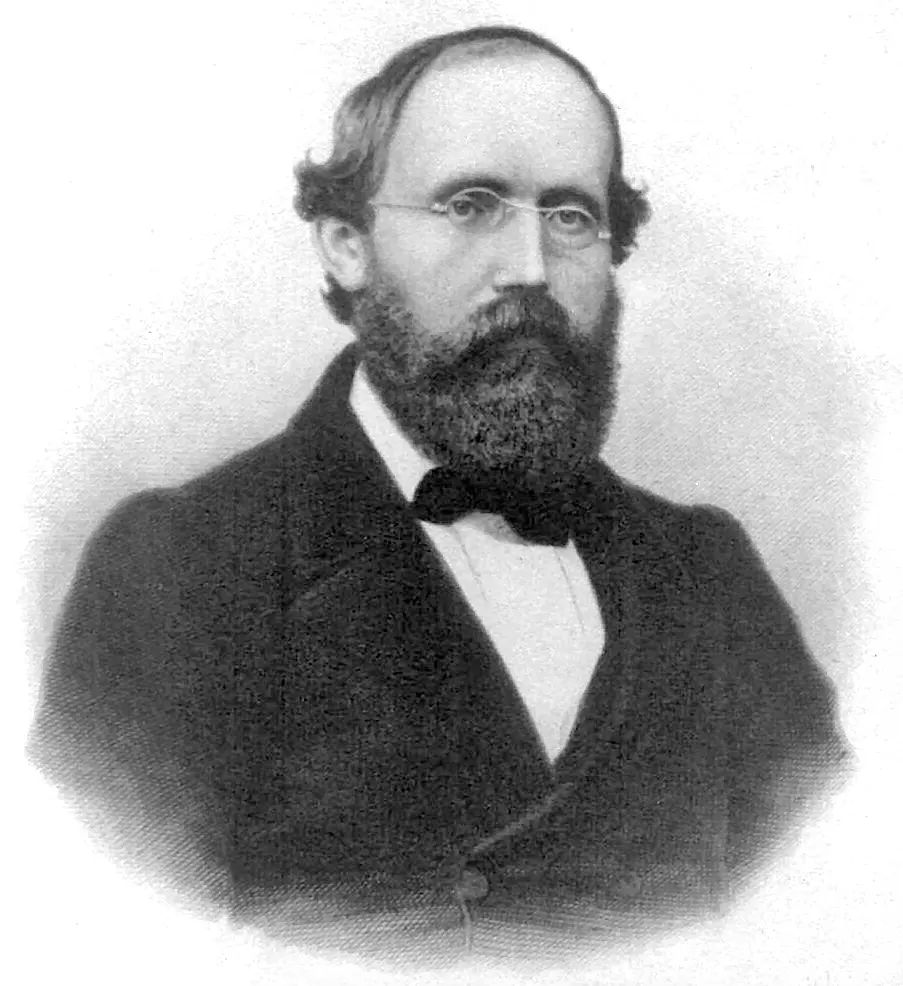
Updated Nov. 22 to add the Lean and Mathlib communities' Nov. 21 statement certifying the machine-checked proof. A machine check confirms the logic of each step; no human has yet worked through the full argument, and the Clay institute has not ruled. The hero photo is a public-domain 1863 portrait of Bernhard Riemann.
Like US Brief? You can support it with a tip.