
An AI search helped save his mother. Now AI is spotting hidden cancers, too
A British doctor says an AI tool pointed him to a vitamin deficiency that was driving his mother's nonstop seizures; an IV dose stopped them within minutes, her neurologist told the BBC. Separately, a study in Nature Medicine found an AI model could flag esophageal cancer on routine chest CT scans, including cases first missed.
AI-assisted · US Brief desk · Sources listed below
What happened
Ed Patrick, an anaesthetist from Oxfordshire, was called to a Nottinghamshire hospital in May, the BBC reported. His mother, Ann, who has Parkinson's disease, was unconscious and having continuous fits. Staff told him anti-seizure drugs had failed and she was dying.
Why it matters
Esophageal cancer killed an estimated 445,000 people worldwide in 2022, and only 18.5% of U.S. patients survive five years, the study said. Most cases are found late. A tool that reads scans people already get could catch more early, without extra tests.
What’s next
Watch for B6 research in Parkinson's patients, which Parkinson's UK says it supports, and for larger, independent trials of CT-based cancer screening.
More context
An NHS doctor in England says an AI tool helped him find why his mother was having nonstop seizures. A vitamin dose stopped them within minutes, her neurologist told the BBC. The case lands as new research shows AI flagging cancers on scans patients already get.
Patrick said he used Google's Gemini to summarize recent medical journal articles. It pointed him to a rare link: a vitamin B6 deficiency, possibly caused by her long-term Parkinson's drug, carbidopa-levodopa. He took the idea to her neurologist, and staff gave her B6 by IV.
"Within minutes of administering vitamin B6, Ann's seizure activity stopped," said Dr. Bruno Gran of Nottingham University Hospitals. He said his team is changing practice, noting only 14 similar cases have ever been reported. Ann has since fully recovered from the seizures, the BBC said.
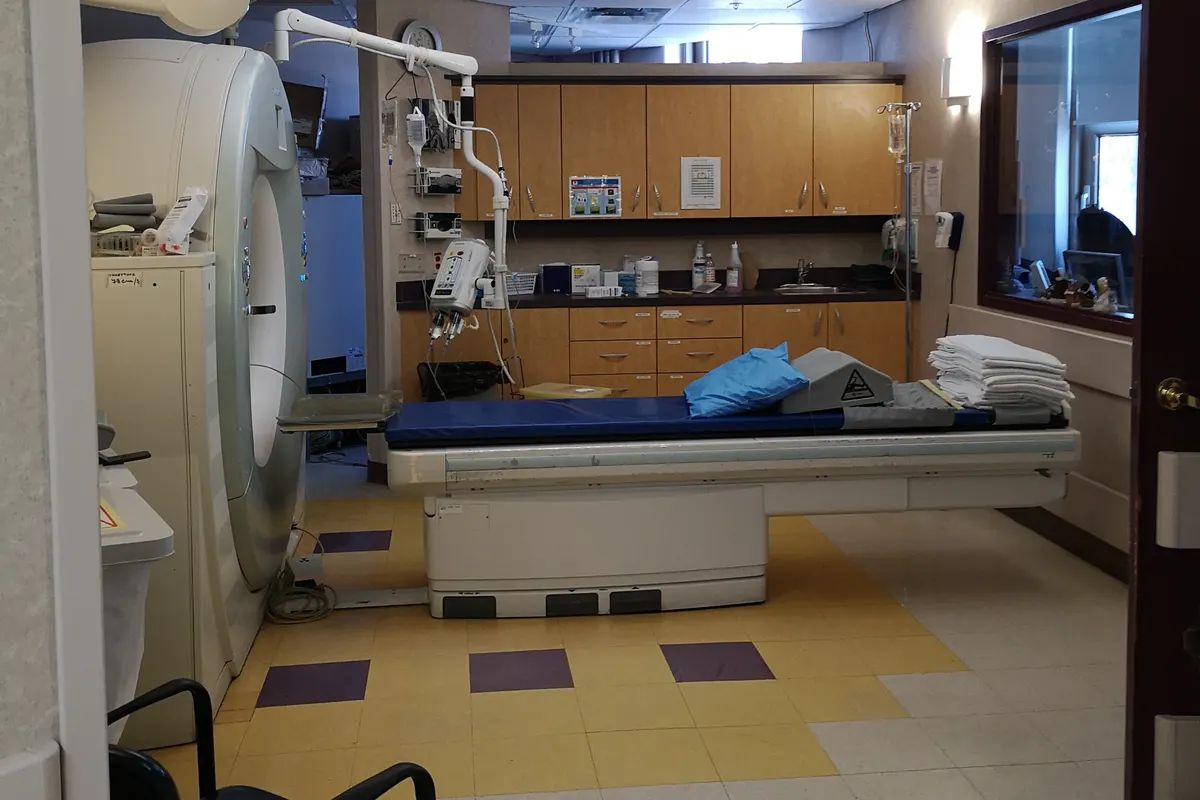
Not just one case: A study published Sept. 22 in Nature Medicine tested an AI model called EAGLE on routine chest CT scans. It was checked against 80,612 patients at 12 centers in China, the Czech Republic and Australia. In outside hospitals it caught 90% of esophageal cancers while correctly clearing 98.5% of healthy patients. With its help, 17 radiologists' cancer detection rose from 71.9% to 85.7%. In a real-world review it found three cancers first missed, one 21 months before the usual diagnosis.
The debate: Health Secretary Robert F. Kennedy Jr. said Sept. 29 that AI can give patients a second opinion "much better informed than any doctor in the country," the Washington Examiner reported. Six physician groups, including the American Medical Association, replied the next day that AI has "tremendous potential" but should not be pitted against doctors.
Caveats: Doctors warned patients not to change medicines or take high-dose B6 without a blood test and medical advice. One case is not proof, and Parkinson's UK wants trials. The study's authors say EAGLE needs wider testing outside China and longer follow-up. Several authors work for Alibaba's DAMO Academy, which helped build it.
5 listed sources
- BBC (Tim Johns), Sept 30, 2026: Son who used AI to help save mum's life hopes case offers Parkinson's clues
- Nature Medicine (Zhou, Guo, Yao et al.), Sept 22, 2026: Large-scale esophageal cancer screening through noncontrast computed tomography and artificial intelligence
- Washington Examiner (Mabinty Quarshie, Gabrielle M. Etzel), Sept 29, 2026: Vance and RFK Jr. tout AI's ability to double-check health experts
- Medical Economics (Austin Littrell), Oct 1, 2026: Six physician groups push back on claims that AI is better informed than doctors
- Sourcing note: The Parkinson's case rests on the BBC's interviews with Ed Patrick and his mother's neurologist; no wire service or right-leaning outlet covered it that we found. Study figures come straight from the peer-reviewed Nature Medicine paper, whose authors include Alibaba employees. The Washington Examiner (right-leaning) is cited for Kennedy's remarks and Medical Economics (trade press) for the physician groups' response. Re-checked 8:34 PM PT Oct 3: still no Fox, NY Post, Daily Mail, Telegraph or wire coverage of the Patrick case found; BBC story timestamped Oct 1, 00:52 GMT (Sept 30 PT).
References listed by US Brief; a source count is not a verification score.
Editorial sourcing notes
Lead: BBC (Tim Johns), about Sept 30, 2026 — Ed Patrick, NHS anaesthetist, used Google's Gemini to summarize journal articles; suggested vitamin B6 deficiency possibly linked to long-term carbidopa-levodopa; IV B6 given; neurologist Dr Bruno Gran (Nottingham University Hospitals) quoted on response 'within minutes' and '14 similar cases'; Parkinson's UK and Prof Tom Foltynie cautions; BBC reports an FDA memo this year on B6 warnings (not independently checked). Research: Nature Medicine, Zhou et al., published Sept 22, 2026 — EAGLE model; figures taken from the paper's abstract and results; limitations and Alibaba competing interests from the paper. Balance: Washington Examiner (Sept 29) on Kennedy's MAHA remarks; Medical Economics (Oct 1) on the Sept 30 joint statement by six physician groups including the AMA. Caveats: one patient's case is not proof; EAGLE needs broader international validation. Re-check 8:34 PM PT: no new right-leaning coverage of the Parkinson's case; Washington Examiner remains the right-leaning source. removeIds re-confirmed (tech-hawley-murphy-ai-liability still oldest).
Like US Brief? You can support it with a tip.