
OpenAI and Anthropic say their AI disproved a major math conjecture
OpenAI and Anthropic each released proofs this week that they say refute the Exponential Time Hypothesis, a decades-old conjecture that hundreds of computer science papers rely on. Leading researchers are taking the work seriously, but neither result has been peer-reviewed.
AI-assisted · US Brief desk · Sources listed below
What happened
OpenAI said Monday that one of its AI models found a disproof of the Exponential Time Hypothesis (ETH) on Oct. 16 and that the proof was checked in the Lean proof assistant on Oct. 17. Hours later Anthropic released its own refutation, a paper titled "A 2^o(n) Time Algorithm for 3-SAT" credited to "Claude, Anthropic," TechCrunch reported.
Why it matters
Williams told TechCrunch the proof has "two or three alien-looking parts" and that "every computer scientist should probably put a little more weight on the plausibility of P = NP," the field's biggest open question. That is a notable shift from a researcher who earlier called a flood of AI math claims a "DDOS attack on mathematicians." OpenAI said it checked whether the result breaks common encryption and was "reasonably confident" it does not.
More context
What ETH is: The hypothesis, proposed by UC San Diego's Russell Impagliazzo and Ramamohan Paturi with Francis Zane, says a classic logic puzzle called 3-SAT can't be solved much faster than brute force as it grows. OpenAI says ETH "has been used in hundreds of papers"; Anthropic's paper counts more than 800 that rely on it or on stronger assumptions, according to Skimwire. If ETH is false, many of those results lose their footing.
Who is checking it: OpenAI says Impagliazzo, Paturi and MIT's Ryan Williams are shepherding the ETH result. It also released two other AI results, on local smoothing and on the Yang–Mills problem in physics, the latter overseen by a group led by Nobel laureate David Gross. OpenAI says it will make raw data public, fund a conference, require no NDAs and claim no academic credit.
What it doesn't mean: Anthropic's paper says the result "says nothing about solving formulas in practice" and is unlikely to help on problems with fewer than about 10 million variables, according to Skimwire. Its own README warns that "Lean checks the proofs, but no machine checks that this file says what the paper says."
What's still unknown: Whether the proofs survive peer review; how much each lab built on earlier human work, which Anthropic's Levent Alpöge suggested about OpenAI's result, TechCrunch reported; and whether the two proofs use the same idea. What would change the story: a reviewer finding a gap, or independent mathematicians confirming the argument in published papers.
5 listed sources
- OpenAI, Oct. 26, 2026
- OpenAI on GitHub (preprint), Oct. 2026
- TechCrunch, Oct. 27, 2026
- Skimwire, Oct. 27, 2026
- Ryan Williams on Bluesky, Oct. 2026
References listed by US Brief; a source count is not a verification score.
Editorial sourcing notes
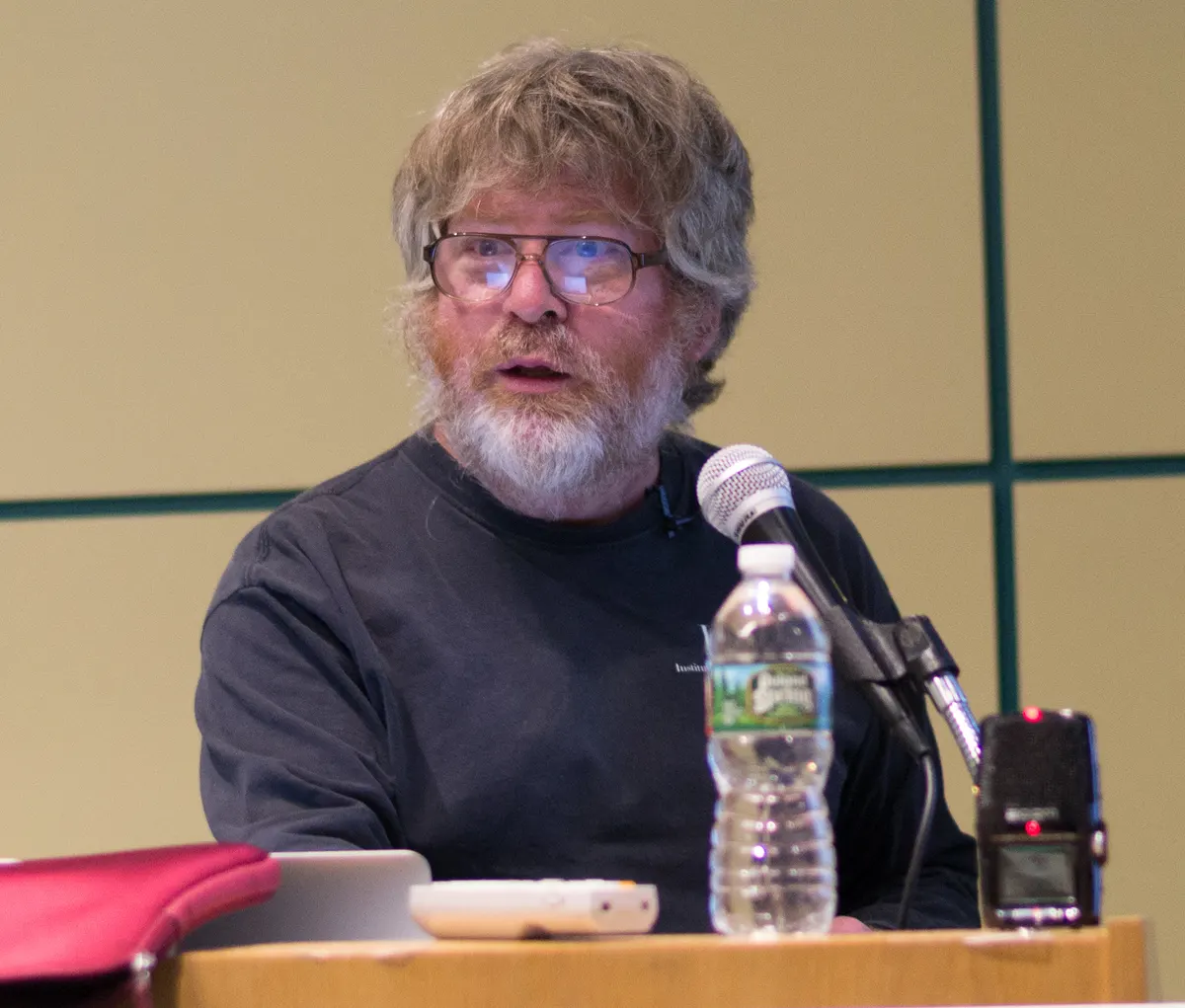
Sourcing: OpenAI's Oct. 26 announcement and GitHub preprint, TechCrunch's Oct. 27 report, Ryan Williams' public post, and Skimwire's summary of Anthropic's paper. Neither proof has been peer-reviewed; claims are attributed to the companies. Hero is a 2016 file photo of Russell Impagliazzo, who co-proposed the hypothesis and is helping review OpenAI's result.
Like US Brief? You can support it with a tip.