Trump–Xi White House summit day: talks, pageantry, and a state dinner
After a rare personal welcome at Joint Base Andrews on Wednesday, President Trump hosts Chinese President Xi Jinping for Thursday’s formal South Lawn arrival, bilateral talks, and an East Room state dinner. Agenda items include the newly extended trade truce, AI, Taiwan, Iran leverage, and rare earths—with markets watching every readout.
AI-assisted · US Brief desk · Sources listed below
What happened
Chinese President Xi Jinping’s Washington state visit is underway Thursday after President Donald Trump gave him a personal welcome at Joint Base Andrews on Wednesday evening—an uncommon military-base greeting that set a high-pageantry tone for the three-day program.
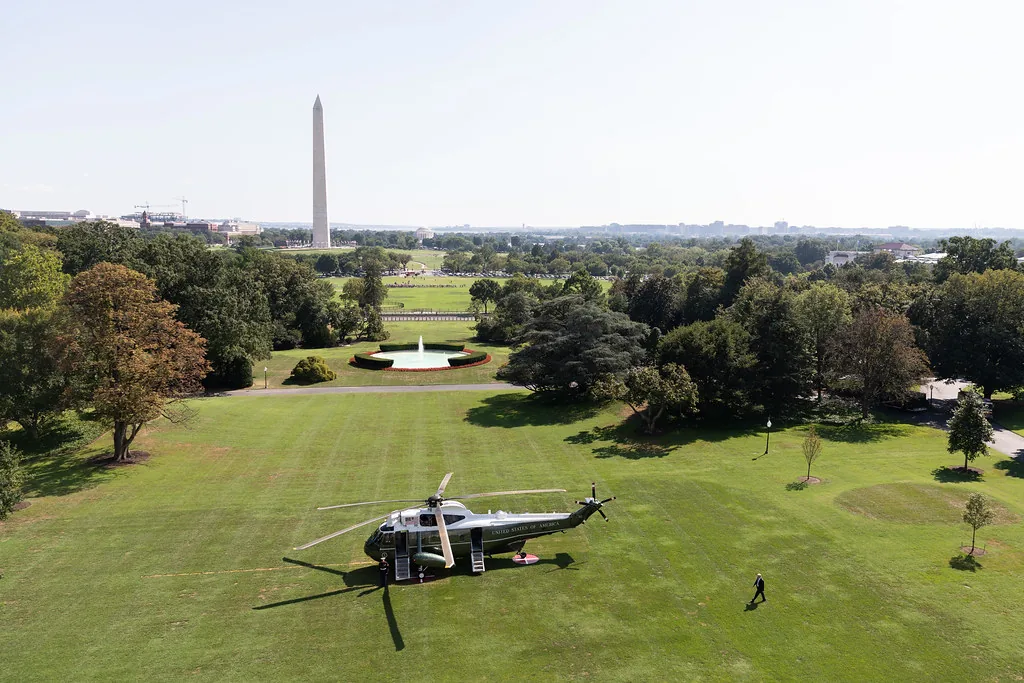
What happens today: White House guidance and pool schedules point to a formal arrival ceremony spanning the South Lawn, State Floor, and Rose Garden, with hundreds of military personnel, leader remarks, demonstrations, and a flyover that briefers said would include a B-2 and F-22s. Bilateral meetings follow. In the evening, Trump and First Lady Melania Trump host Xi and Madame Peng Liyuan for a state dinner in the East Room. Friday’s program, as previously outlined, includes South Portico tea and a National Archives visit before farewell.
Context: Xi skipped the UN General Assembly stage in New York to prioritize the Washington visit—his first to the U.S. capital in more than a decade, and the leaders’ second interaction this year. Treasury Secretary Scott Bessent said Wednesday the two sides will extend their Busan trade truce through Jan. 10, rolling past the prior Nov. 10 cliff. Deutsche Bank analysts, cited by Reuters, called the extension shorter than some U.S. officials had floated but still useful negotiating room.
Why it matters
The summit is the clearest bilateral reset attempt since tariff war escalation risks returned to market models. Beyond tariffs, briefers and analysts flag artificial-intelligence competition and possible “AI dialogue,” Taiwan arms and status sensitivities that worry Asian allies, China’s economic links to Iran amid the wider Middle East war, and rare-earth supply leverage—areas where China still dominates mining and refining.
What’s next
Thursday readout language on tariffs, agriculture, financial services, and rare earths; whether Iran or Taiwan appear in public remarks; attendance by U.S. tech and auto CEOs at related meetings, as Reuters previewed; and Friday’s Archives choreography for signaling.
More context
Who is affected: U.S. farmers and exporters hoping for purchase commitments; chip and AI firms watching export-control language; Taiwan and regional allies parsing any soft wording on defense; energy and shipping markets reading Iran-related coordination; and midterm-season Republicans seeking trade optics.
Uncertainty: No joint communiqué was locked in morning reporting. Symbolic photo-ops can outrun substance. Anthropic CEO Dario Amodei’s recent warning about Chinese AI dominance—and Beijing’s dismissal of it—shows how little trust underpins any AI language. Congressional hawks will scrutinize any Taiwan-related concession narratives.
Domestic politics frame the optics: Republicans want farm and manufacturing wins before the midterms; Democrats will attack any Taiwan soft-pedaling or empty tariff theater. Energy traders, meanwhile, will read every Iran clause against Hormuz insurance rates already elevated by UNGA-week threats.
Bessent’s Jan. 10 extension also resets the clock for rare-earth licensing talks and any farm-purchase packages that lobbyists have previewed. If Thursday produces only ceremony, markets may fade the visit as pageantry; if it produces enforceable purchase or licensing text, the midterm trade narrative gets sharper overnight.
US Brief’s takeaway: Morning’s hard facts are schedule and tone—Andrews welcome, White House ceremony and dinner, Jan. 10 truce extension already banked—while the deal sheet is still being written behind closed doors. Treat market moves as caution, not confirmation of outcomes.
4 listed sources
- White House / First Lady Melania Trump briefing statement on Xi–Peng visit details, Sep 2026
- AFP; Yonhap, Sep 23–24, 2026 — Andrews welcome and summit-eve framing
- The Hindu (with Reuters inputs), Sep 23, 2026 — itinerary and agenda (trade, AI, Taiwan, Iran, rare earths)
- Reuters markets coverage, Sep 24, 2026 — investor caution ahead of talks; Bessent Jan. 10 extension
References listed by US Brief; a source count is not a verification score.
Editorial sourcing notes
Schedule and agenda synthesis draws on White House/First Lady visit details, AFP/Yonhap arrival coverage, The Hindu’s itinerary explainer with Reuters inputs, and Bessent’s Jan. 10 truce extension reported Wednesday. Outcomes of Thursday’s closed talks were not yet available at morning-edition lock.
Like US Brief? You can support it with a tip.