
Justices press both sides in Boulder climate suit against Exxon, Suncor
The Supreme Court opened its term Monday hearing whether Boulder, Colorado, can sue Exxon Mobil and Suncor in state court over climate costs. Conservative and liberal justices pressed both sides, and some asked whether it is too early to rule. A decision is expected by June.
AI-assisted · US Brief desk · Sources listed below
What happened
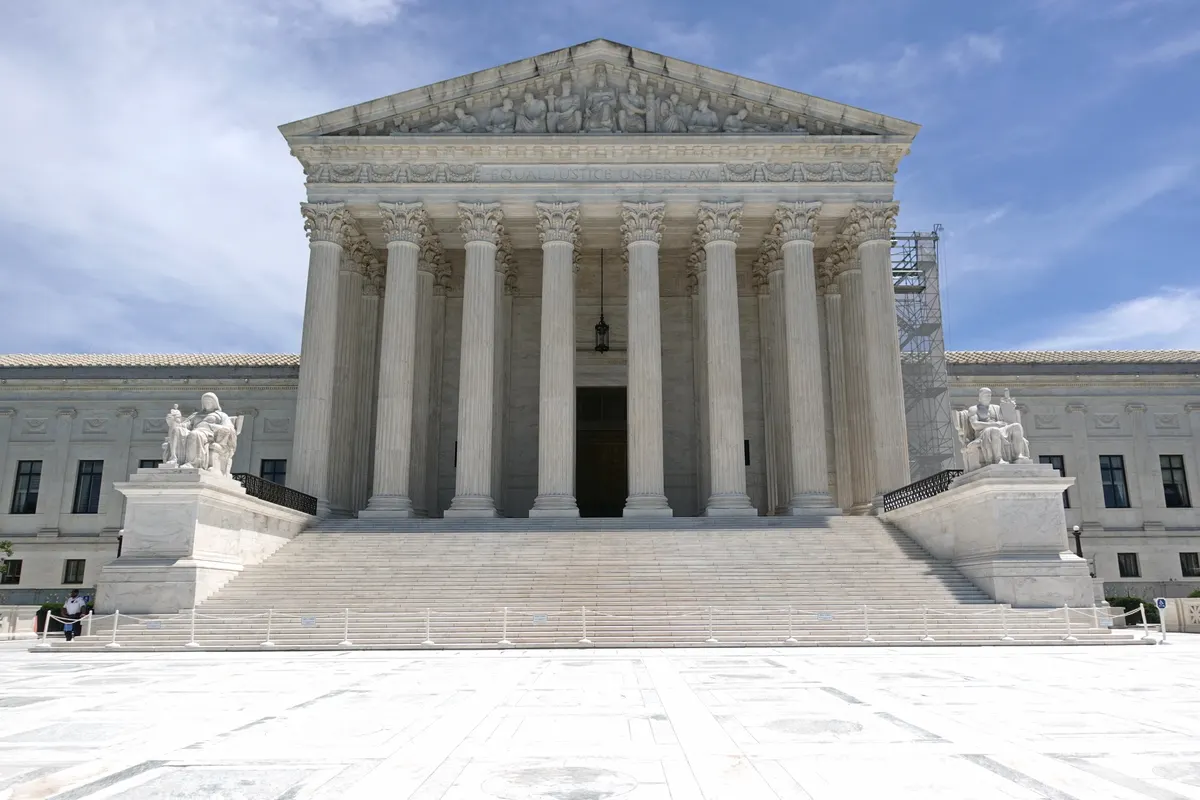
The Supreme Court opened its new term Monday by hearing whether Boulder, Colorado, can sue Exxon Mobil and Suncor Energy in state court over local costs it blames on climate change. Justices on both sides of the court raised doubts, and some asked whether it is too early to decide.
The case: Boulder's city and county sued the two companies in 2018 under state law. They say the companies' fuel production and deceptive marketing helped cause extreme heat, wildfires and other damage. The Colorado Supreme Court let the suit go forward, and the companies appealed. The suit has not gone to trial.
The companies' argument: "This case involves an unprecedented effort to use state law to regulate global conduct," company lawyer Kannon Shanmugam told the justices, Reuters reported. Justice Department lawyer Sarah Harris, arguing for the Trump administration, said interstate air pollution is "an inherently federal area."
Why it matters
Nearly 60 state and local governments have filed similar suits, the companies told the court. A win for the companies could end many of them. A win for Boulder would only let its case go to trial.
What’s next
A decision is expected by the end of June 2027.
More context
Boulder's argument: Boulder's lawyer, Kevin Russell, said states have long handled harms that start elsewhere, like defamation on national TV or a computer virus. "It has never been thought that only federal law can provide a remedy," he said, The Colorado Sun reported.
From the conservative justices: Justice Brett Kavanaugh said past rulings make it "crystal clear" that interstate pollution is for federal law unless Congress says otherwise. But Chief Justice John Roberts asked what makes this case different from others where such suits were allowed. Justice Amy Coney Barrett called one company answer "a little slippery," the Washington Examiner reported.
Can anyone sue?: Justice Neil Gorsuch asked whether, with the EPA saying it lacks authority and Congress silent, "nobody can sue at all." "I think that's correct," Harris replied, the Washington Examiner said.
From the liberal justices: Justice Elena Kagan said she didn't see why state nuisance suits allowed under the Clean Water Act would be barred under the Clean Air Act. Justice Ketanji Brown Jackson said the case felt "sort of premature." Shanmugam answered that suits seeking billions need an answer "sooner rather than later."
Alito sits out: Justice Samuel Alito recused himself last week. He later told Bloomberg he "thought recusal was the prudent step," the Washington Examiner reported. With eight justices, a 4-4 tie would leave Colorado's ruling in place and let the suit continue.
Sources across the spectrum This story cites right-leaning and mainstream or left-leaning outlets. Every source is listed below.
7 listed sources
- Reuters (John Kruzel, Andrew Chung) via My 95.7, Oct 5, 2026: US Supreme Court wrestles with oil companies' bid to scuttle climate lawsuit
- The Colorado Sun (Michael Booth), Oct 5, 2026
- Washington Examiner (Callie Patteson), Oct 5, 2026
- NPR (Carrie Johnson), Oct 5, 2026
- CBS News (Melissa Quinn), Oct 4, 2026
- SCOTUSblog case page: Suncor Energy Inc. v. County Commissioners of Boulder County
- Sourcing note: Wire (Reuters), public radio (NPR), network (CBS), Colorado's Colorado Sun and the right-leaning Washington Examiner. Arguments from the companies, the Trump administration and Boulder are each quoted, along with questions from conservative and liberal justices.
References listed by US Brief; a source count is not a verification score.
Editorial sourcing notes
Updated after Monday's oral argument. Quotes from the argument are as reported by Reuters, The Colorado Sun and the Washington Examiner. Justices' questions do not show how they will vote. A ruling for Boulder would only let the suit proceed, not decide it.
Like US Brief? You can support it with a tip.