
Both Sides: Trump's Russian diesel deal
President Trump said Friday that Russia will release millions of tons of diesel to world markets, and the Treasury paused sanctions on Russian diesel until April 7. Supporters call it relief from record diesel prices; critics in both parties say it eases pressure on Moscow and cuts against a sanctions law Trump signed three weeks ago.
AI-assisted · US Brief desk · Sources listed below
What happened
After what he called a "highly successful discussion" with Russian President Vladimir Putin, Trump wrote on Truth Social Friday that Russia will immediately supply more than 300,000 tons of diesel, then 500,000 tons in November and 1 million tons after that, with 3 million more depending on the condition of Russian refineries, CNBC reported. The Treasury's Office of Foreign Assets Control then issued a temporary general license allowing Russian diesel sales until April 7. Putin confirmed the call and said Russia is willing to supply oil products to the U.S. and global markets, without naming amounts, the BBC reported.
Why it matters
U.S. diesel averaged $6.28 a gallon this week, down from a record $6.53 at the end of September, according to AAA figures cited by the BBC. High fuel prices since the Iran war began in February have weighed on the economy less than a month before the Nov. 3 midterms. The move also reverses course from sanctions the administration placed on Russian oil companies less than a year ago.
More context
The case for the deal: Trump argues more supply will bring prices down quickly. "We need oil for the world, and this is diesel, which is what we need," he said Friday, thanking Putin, according to CNBC. Putin envoy Kirill Dmitriev said U.S.-Russia energy cooperation "will benefit the world."
The case against: Ukrainian President Volodymyr Zelensky said easing sanctions "without a clear and lasting de-escalation agreement" is "an obvious weakness" and "an investment in a war that must be ended, not prolonged." Rep. Michael McCaul (R-Texas) said he understood the desire to lower diesel prices but worried it "will only fund the Kremlin's war machine." Sen. Richard Blumenthal (D-Conn.) called it "directly contrary to Congress's intent" in the bipartisan Lindsey O. Graham Sanctioning Russia and Iran Act, which Trump signed about three weeks ago, CNBC reported.
Will it lower prices? Some analysts doubt it. Tim Armitage of Quilter Cheviot told the BBC the first tranche equals about 2.25 million barrels, against U.S. use of about 3.8 million barrels of diesel a day, "so it won't make a material difference to pump prices." Analysts also question whether Russia, which banned diesel exports earlier this year and whose refineries Ukraine has been striking, can deliver the full amounts.
How outlets framed it: CNBC led with the conflict with the new sanctions law; the BBC led with Zelensky calling it a gift to Putin; NPR and CBS framed it as an effort to ease prices before the midterms. Russian officials framed it as cooperation.
What's still unknown: The White House had not said what, if anything, Russia gets in return, and did not immediately answer CNBC's or the BBC's questions. It is also unclear whether Congress will try to block the license.
Sources across the spectrum This story cites right-leaning and mainstream or left-leaning outlets. Every source is listed below.
6 listed sources
- CNBC, Oct 9, 2026: Trump's diesel agreement with Putin accused of contradicting Russia sanctions law
- BBC News, Oct 10, 2026: Trump announces deal for Russian diesel as Zelensky calls it a gift to Putin
- NPR, Oct 9, 2026: Trump says U.S. to get diesel from Russia, relaxing pressure on Moscow to ease prices before midterms
- CBS News, Oct 9, 2026: Trump announces Russia will release millions of tons of diesel to help with costs
- Fox Business, Oct 9, 2026: Trump says Putin has agreed to supply over millions of tons of diesel fuel
- Sourcing note: Fox Business carried the president's case that the deal will bring diesel prices down; CNBC, BBC, NPR and CBS carried the sanctions-law criticism. Quotes from Republican and Democratic lawmakers, Ukraine, Russia and the president.
References listed by US Brief; a source count is not a verification score.
Editorial sourcing notes
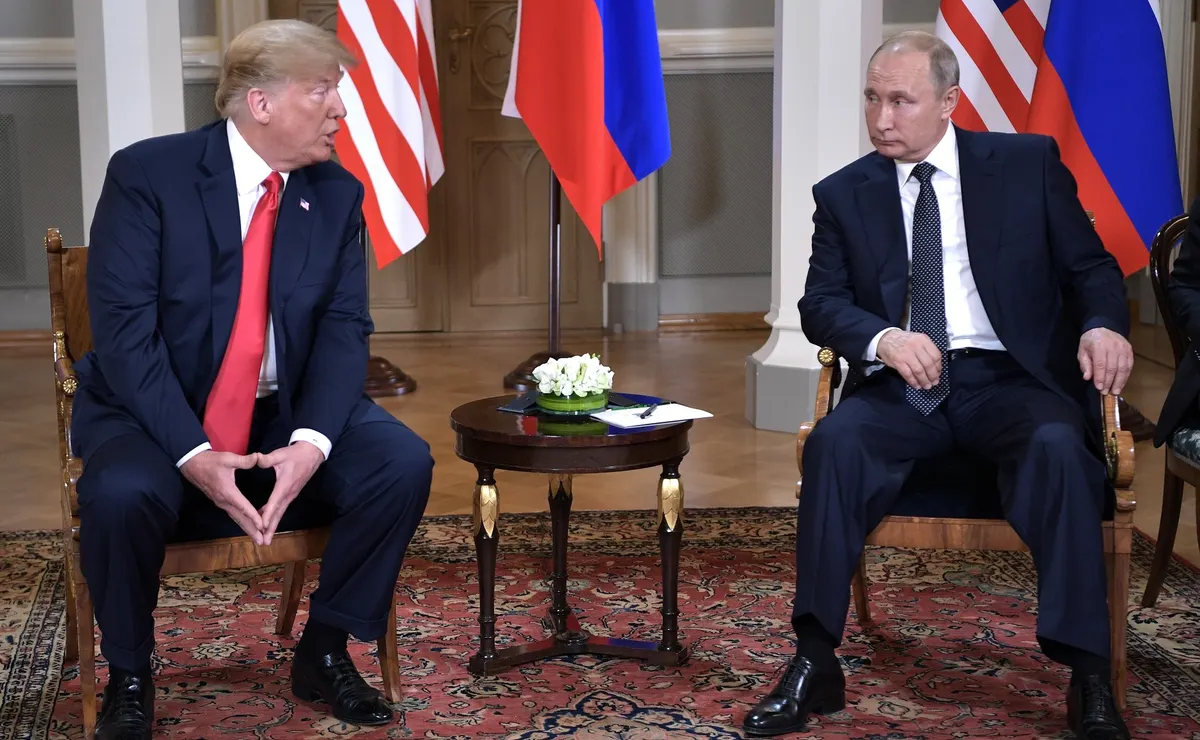
Diesel tonnages come from Trump's Truth Social post as reported by CNBC and the BBC; Russia has not confirmed amounts. The hero photo is a 2018 file photo from the Helsinki summit, not from Friday's call.
Like US Brief? You can support it with a tip.