
DNC sues to stop taxpayer-funded ads promoting Trump
The Democratic National Committee sued the Trump administration Wednesday, saying $20 million in border agency money was illegally used for TV ads that promote the president before the midterms. The White House says the spots are patriotic public service announcements like those past administrations ran.
AI-assisted · US Brief desk · Sources listed below
What happened
Update, Nov. 15: A federal judge sided with the DNC before Election Day. On Oct. 28, U.S. District Judge Loren L. AliKhan issued a 14-day temporary restraining order staying the Office of Management and Budget's $20 million apportionment for the ad campaign and barring OMB and the Department of Homeland Security from developing or airing the challenged ads. She found the DNC had shown "a substantial likelihood of success" on its claim that the agencies violated the Administrative Procedure Act. The order was extended through Nov. 11, The Washington Sun reported. A related order in a separate New York case brought by Common Cause was extended through Nov. 20. Status of the Washington case after Nov. 11 was not independently confirmed in this update. The administration has said the spots were public service announcements.
The Democratic National Committee sued President Donald Trump and his administration Wednesday in federal court in Washington. The suit says taxpayer money was illegally used for TV ads that promote Trump a month before the midterm elections. It names Trump, the White House Office, the Office of Management and Budget and the Department of Homeland Security.
The claim: The DNC says the budget office moved $20 million in Customs and Border Protection funds to pay for more than a dozen spots that began airing in late September. Each ends with "Paid for by the U.S. Government." The suit says that breaks a federal ban on using appropriated money for "publicity or propaganda purposes." Fox News reported the money went into a CBP "Commemorative Events" line that congressional reports tied to line-of-duty death memorials and agency ceremonies.
Why it matters
The midterms are Nov. 3, and early voting is underway in some states. AdImpact estimated at least $10 million had been spent on airtime through Monday, NBC News reported. Trump has not said whether the government will be repaid for ads that already ran.
More context
From the filing: "In late September 2026, advertisements began to appear on broadcast television, touting President Trump and his midterm messaging, including one that is virtually identical to a 2024 campaign ad," the complaint says. In one spot, Trump vows to "demolish the deep state." Another asks viewers to "pretend I'm on the ballot," Fox News reported.
The switch: After more than a week of criticism from both parties, Trump said Monday that he and his super PAC, MAGA Inc., would pay for the ads from now on. The DNC says ads with the government disclaimer still aired Tuesday and Wednesday. A person familiar with the ads told NBC News the government-paid buy ends this week. The watchdog group Common Cause filed a similar suit.
How the White House and allies see it: A White House spokesperson told Fox News that presidential public service announcements "are nothing new." The spokesperson pointed to Bush-era Medicare drug-benefit ads, Obama-era health-law enrollment ads and Biden's "We Can Do This" COVID campaign. Trump called the spots "a positive promotion for our Great U.S.A." House Speaker Mike Johnson said the one he saw "looked like a public service announcement."
How Democrats and critics see it: DNC Chair Ken Martin called them "pure propaganda ads" paid for with money "intended for memorials for Americans killed in the line of duty." Common Cause said no president, "regardless of party," should use public funds "to fund political self-promotion without congressional approval."
Where they split: The core question is whether the spots explain government policy, as past announcements did, or promote a candidate and his party before an election. Some Republicans side with the critics on the money. Sen. John Kennedy of Louisiana said officials should not use public money for ads promoting themselves. Sen. Thom Tillis of North Carolina said, "I hate it."
What's still unknown: How much of the $20 million is left, and whether the court will turn the temporary order into a longer-term ruling, and whether the government will be repaid for ads that already aired. Asked about the suit, the White House pointed reporters to Trump's Monday post. DHS and the budget office did not immediately comment.
Sources across the spectrum This story cites right-leaning and left-leaning outlets. Every source is listed below.
7 listed sources
- DNC v. Trump, complaint, U.S. District Court for the District of Columbia, No. 1:26-cv-03506, filed Oct 7, 2026
- Fox News, Oct 7, 2026: DNC lawsuit accuses Trump administration of diverting $20M in federal funds for 'propaganda' ads
- POLITICO, Oct 7, 2026: DNC sues to stop taxpayer-funded Trump ads ahead of midterms
- NBC News, Oct 7, 2026: DNC sues administration over taxpayer-funded pro-Trump TV ads
- Sourcing note: Fox News carried the White House's full defense; POLITICO and NBC News carried the suit details and Republican criticism. The complaint is a partisan court filing; its claims are allegations.
- D.D.C., DNC v. Trump, No. 1:26-cv-03506, Doc. 26 (TRO)
- The Washington Sun, Judge's block on Trump taxpayer-funded campaign ads
References listed by US Brief; a source count is not a verification score.
Editorial sourcing notes
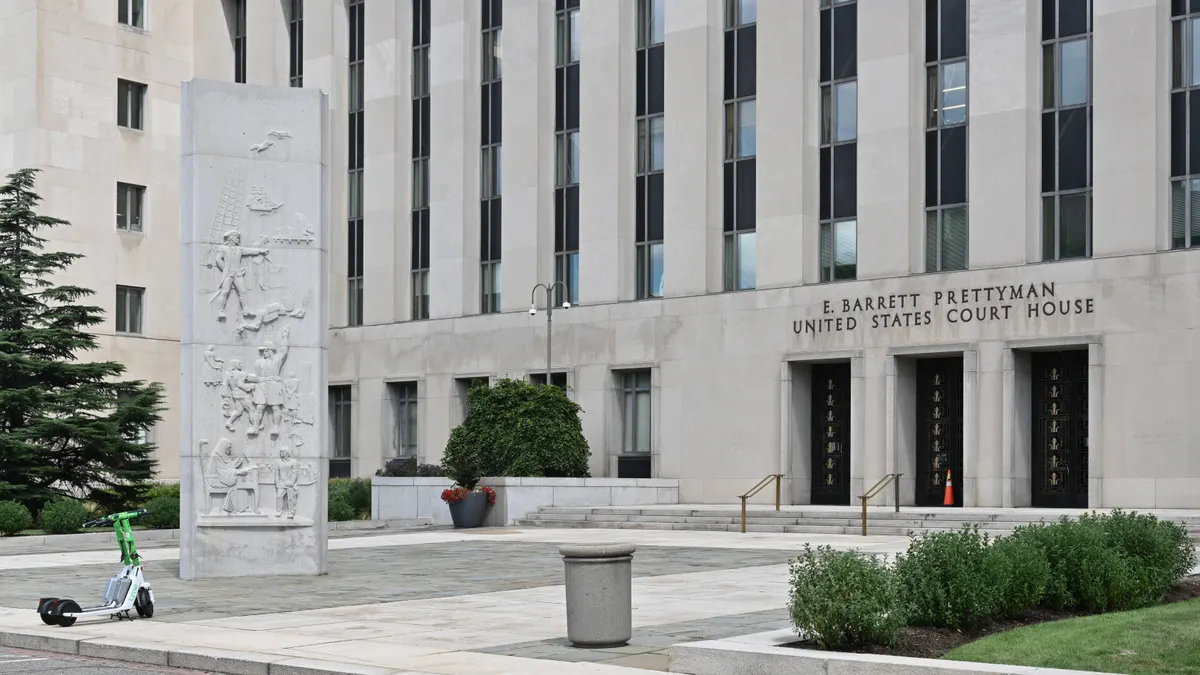
This is today's Both Sides report. Each side's argument is attributed and kept short. The quoted passage is from the DNC's complaint as posted by the DNC. The $10 million spending estimate is AdImpact's, as reported by NBC News; the $100,000 figure is the DNC's claim. The hero photo is a July 2026 file photo of the federal courthouse in Washington, where the U.S. District Court for the District of Columbia sits. Updated Nov. 15 with the Oct. 28 TRO and the Washington Sun report that it ran through Nov. 11; a related Common Cause order in New York was extended through Nov. 20. Status of the D.D.C. case after Nov. 11 was not independently confirmed.
Like US Brief? You can support it with a tip.