
Democrats plan AI bills after taking Congress
Democratic lawmakers and aides say they will push bills on data-center power costs, independent AI safety tests and liability when they take Congress in January; President Trump said Friday he backs states that want to get "RICH" from AI.
AI-assisted · US Brief desk · Sources listed below
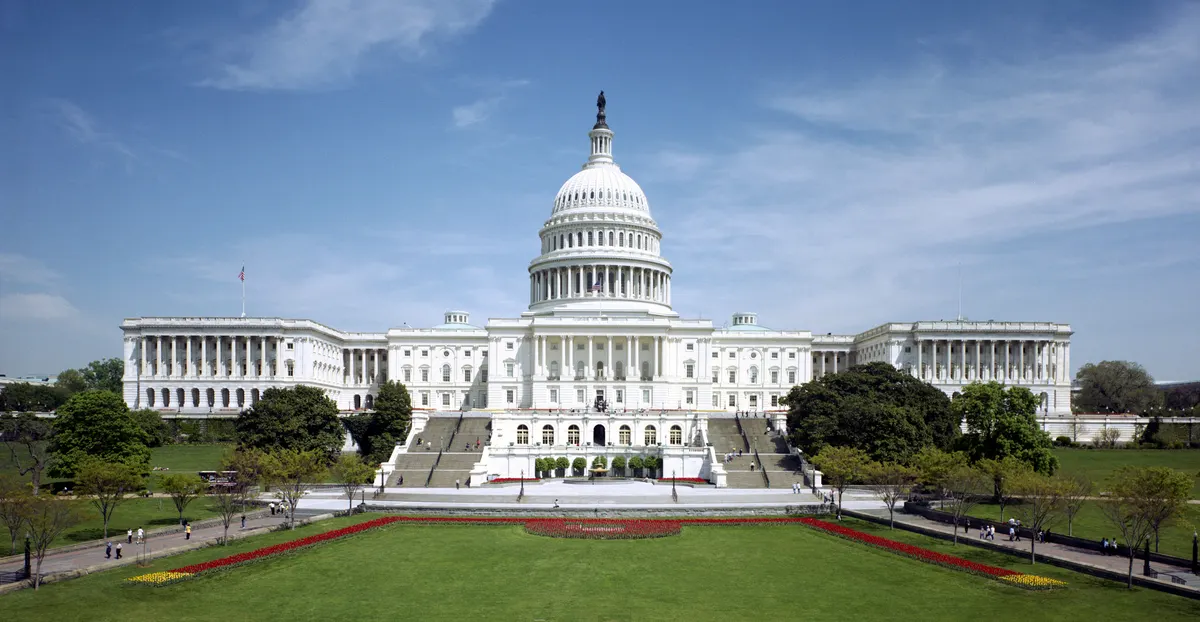
What happened
Democratic lawmakers, aides and advocates told Reuters they plan a wave of bills on artificial intelligence and data-center development when Democrats take control of Congress in January. The agenda would reverse the prior Republican-led Congress, which largely promoted AI buildout and did not pass bills restricting the technology even as voters turned against fast data-center growth.
Why it matters
Data-center power use is already a midterm and markets story. CBS News noted voters passed at least 44 of 47 local measures to restrict data centers on Tuesday, and Texas Gov.-elect Gina Hinojosa has pledged to halt new centers until more safeguards are in place. Thursday's AI-led selloff knocked the Nasdaq into a correction as investors priced in slower buildouts; CNBC said Nvidia fell 9.3% and AMD 17.3% that day before a partial Friday rebound.
What’s next
Democrats take the House and Senate in January. Watch which AI and data-center bills get committee hearings first, whether Trump veto threats hold, and whether state governors who campaigned on pauses (Texas, Georgia and others) move first and set the federal fight.
More context
Reuters reported three early targets: shielding households from higher electricity costs tied to data centers; requiring independent testing of advanced AI systems; and clarifying when AI companies can be held liable for harm. Sen. Chuck Schumer, expected to become majority leader, said Thursday that protecting consumers from data-center-linked energy costs would be among his priorities. Rep. Lori Trahan's office said she will push independent safety evaluations and clearer liability rules.
President Trump pushed back Friday on Truth Social, saying he is "100% in favor of Super Intelligence (SI)" and will work with states that "want to become RICH" by hosting it. "They are GOLD, and only foolish leadership will say 'NO' to the riches they bring!" he wrote, as quoted by Newsmax and CBS. Reuters noted he has repeatedly dismissed mandatory federal AI rules.
Strongest case from each side — original layer: Democrats argue committee control lets them compel testimony, spotlight electricity bills and set liability rules if AI systems cause real-world harm; Rep. Greg Casar already called for AI executives to testify under oath. Trump and AI-growth supporters say states that welcome data centers can gain jobs and tax base, and that heavy federal limits would hand an edge to China while households lose the upside of U.S. AI leadership.
Weak spot: Treating January bill introductions as near-certain new law overstates the path. Reuters itself says any legislation faces steep odds while Trump can veto, and overriding a veto needs two-thirds of both chambers. Separately, Senate Democrats helped block cloture on the GOP Ratepayer Protection Act on Sept. 30 (57-43; 60 needed), saying it was too weak — so electricity-cost politics cut both ways before the midterms (NY Post / Reuters).
Sources across the spectrum This story cites right-leaning and left-leaning outlets. Every source is listed below.
7 listed sources
- Reuters (Courtney Rozen) via CNA, Democrats planning flood of AI bills when they take control of Congress, Nov. 6, 2026
- Reuters via Investing.com, Democrats planning flood of AI bills when they take control of Congress, Nov. 6, 2026
- CBS News (Lucia I Suarez Sang), AI data center backlash fuels votes for change and sharp stock market swings, Nov. 6, 2026
- Newsmax via Yahoo (Charlie McCarthy), Trump: States Can Get Rich From AI Data Centers, Nov. 6, 2026
- President Trump, Truth Social post on Super Intelligence / states becoming RICH, Nov. 6, 2026
- CNBC (Kai Nicol-Schwarz), AI stocks hammered by midterm shock, Nov. 6, 2026
- New York Post (Reuters), Schumer, Senate Democrats block bill to address AI data center costs, Sept. 30, 2026
References listed by US Brief; a source count is not a verification score.
Editorial sourcing notes
Drafted Nov. 6 ~4:10 p.m. PT from Reuters (Courtney Rozen) via CNA and Investing.com syndications; CBS News; Trump Truth Social as reported by Newsmax/Yahoo; CNBC on the AI selloff; NY Post (Reuters) on the Sept. 30 Ratepayer Protection Act cloture vote. Contested Congress/AI story: cite wire + left-lean (CBS) + right-lean (Newsmax, NY Post).
Like US Brief? You can support it with a tip.