
Both Sides: Should voters ban trans girls from girls' school sports?
Colorado's Proposition 134 and Washington's Initiative 638 would bar transgender girls from girls' school teams, the first time voters, not lawmakers, decide the question. Supporters say it is about fairness and safety for girls; opponents say it singles out a handful of kids and invites invasive checks.
AI-assisted · US Brief desk · Sources listed below
What happened
The question: On Nov. 3, voters in Colorado and Washington, two states where Democratic lawmakers have rejected such bans, will decide whether transgender girls can play on girls' school teams. AP says this is the first time the question has gone directly to voters. Twenty-seven states already have bans, and Arizona and Nebraska have related measures on their ballots.
What the measures do: Colorado's Proposition 134 covers K-12 and college sports and would assign teams by reproductive biology; it does not spell out how a student's sex would be checked (CPR). Washington's Initiative 638 covers K-12 and would require a healthcare provider to verify a student's "biological sex, relying only on one or more of the following: The student's reproductive anatomy, genetic makeup, or normal endogenously produced testosterone levels" (AP).
The strongest case for the measures: Backers, including Protect Kids Colorado and Let's Go Washington, say girls deserve a fair and safe category of their own. Ahnaleigh Wilson, 17, a junior at Eastmont High School in Washington, told AP she finished second to a transgender athlete in a major 1,600-meter race in junior high: "I knew it wasn't right and it wasn't fair." Let's Go Washington says it has counted 16 transgender athletes in the state. Jennifer Sey, CEO of XX-XY Athletics, said in June that the Colorado campaign gathered 25% more signatures than required and argued state laws are needed because President Trump's February 2025 executive order on women's sports could be undone: "We have an executive order, but that's temporary" (Fox News).
Why it matters
Statewide ballot results will be read as a direct test of voter opinion on an issue both parties are campaigning on, and a passed measure would put the policy in state law rather than relying on a federal executive order that supporters themselves call temporary.
More context
The strongest case against: One Colorado and Families Not Politics oppose Prop 134 (Axios). "I don't understand how you can protect kids and discriminate against kids at the same time," said Nadine Bridges, One Colorado's executive director. In Washington, Dr. Libby Loft argued the verification language implies a genital inspection or expensive testing and could push some girls, transgender or not, out of sports.
Where opinion stands: A June Quinnipiac poll found about 7 in 10 registered voters nationally say transgender women and girls should not play on female teams, and about a quarter say they should; Democrats were split about evenly (AP). There is no public polling on the Colorado measure.
The money: Groups opposing the Colorado measure have raised nearly $4 million, more than 20 times what supporters raised. In Washington, Let's Go, funded by hedge fund manager Brian Heywood, has raised more than $7.8 million for three ballot measures, nearly twice what ban opponents raised (AP).
Weak spot (supporters): AP notes there is no clear agreement among researchers on how much advantage transgender girls retain; it depends on age, sport, whether an athlete went through male puberty and how long they have had hormone therapy. Colorado's measure also leaves open how schools would verify sex, which supporters have not fully answered.
Weak spot (opponents): The argument that the ban targets only "an estimated five or 10 girls" in Washington (Loft) rests on an estimate; neither state keeps an official count, and Let's Go says it has already found 16. Loft's genital-inspection claim is also disputed: the measure lets a provider rely on genetic makeup or hormone levels, and Let's Go spokesperson Hallie Herzberg called verification "as simple as a checkbox," saying doctors can use a patient's medical history.
What's still unknown: How Colorado would enforce Prop 134 if it passes, whether either measure faces court challenges, and whether results push other Democratic-led states to revisit the issue.
Sources across the spectrum This story cites right-leaning and left-leaning outlets. Every source is listed below.
4 listed sources
- AP via Fox Sports, Oct. 24, 2026
- Fox News, June 17, 2026
- Axios Denver, Oct. 16, 2026
- Colorado Public Radio, Sept. 25, 2026
References listed by US Brief; a source count is not a verification score.
Editorial sourcing notes
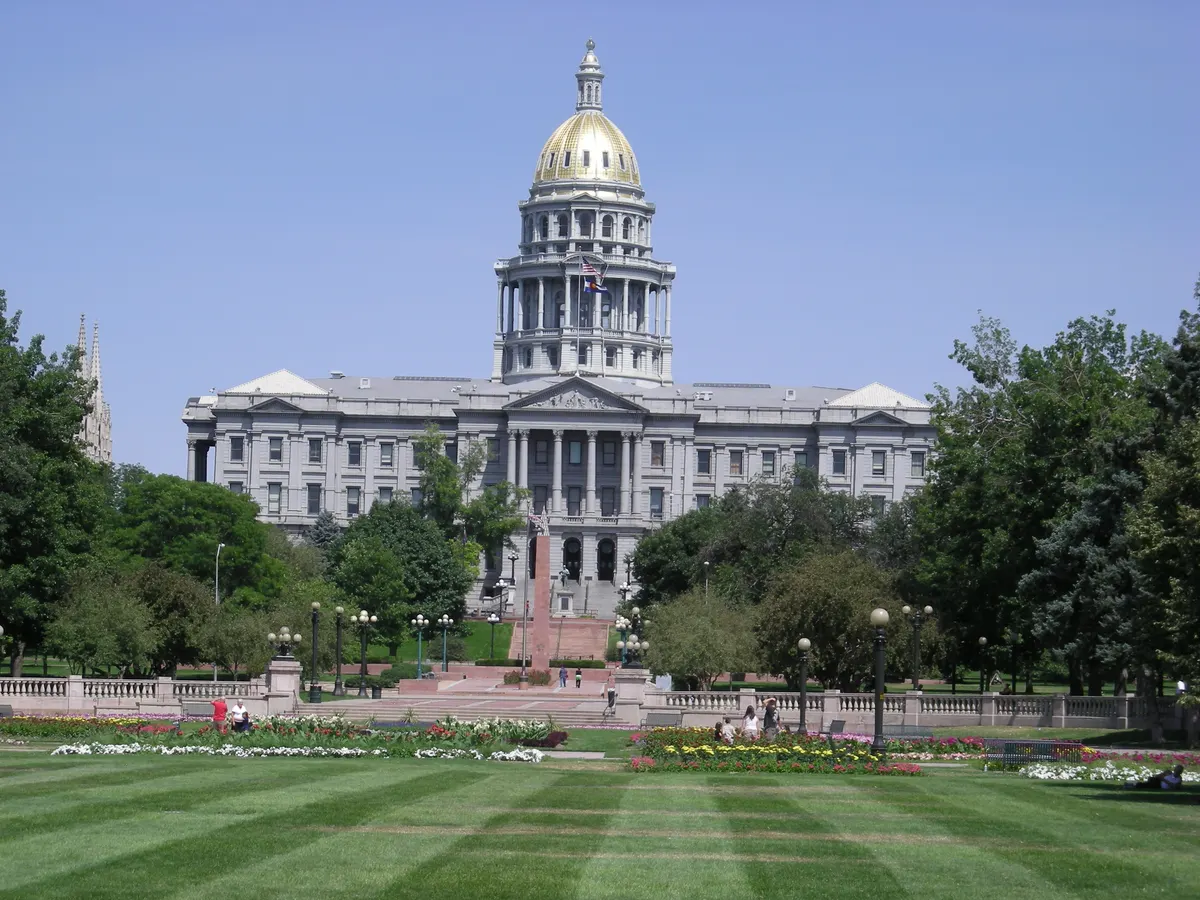
Sourcing: AP (published via Fox Sports), Fox News (right-leaning), Axios Denver (left-leaning) and Colorado Public Radio. Polling is Quinnipiac's June national survey as reported by AP; there is no public polling on the Colorado measure, AP said. Measure descriptions are summaries; read the official ballot text before voting. Photos are file images of the two state capitols.
Like US Brief? You can support it with a tip.