
Both Sides: Will the Senate permitting bill cut power bills?
The Senate voted 70-27 Monday to end debate on revisions to a bipartisan bill that would speed permits for power lines, pipelines, mines and data centers, setting up a final vote. Backers say it will lower electricity bills; many environmental groups say it weakens core environmental laws.
AI-assisted · US Brief desk · Sources listed below
What happened
The Senate voted 70-27 Monday night to end debate on dozens of revisions to the Bipartisan American Affordability and Jobs Act, known as BAAJA, Energy Central reported. A final Senate vote is expected by Friday, then the bill would go to the House. The Senate resumes work on it Tuesday morning, according to the Senate Daily Press schedule.
Why it matters
Rhodium notes that if the bill fails in this lame-duck session, the process starts over in January with a new Congress "likely with different priorities." The outcome will shape how fast new power lines, pipelines and data centers get built as electricity demand climbs.
More context
What's in it: Sens. Shelley Moore Capito (R-W.Va.) and Mike Lee (R-Utah) wrote it with Democratic Sens. Martin Heinrich (N.M.) and Sheldon Whitehouse (R.I.). The 417-page bill would narrow which projects need full environmental reviews, set permit deadlines, limit lawsuits and expand federal authority over interstate power lines, KUNC, the Daily Caller News Foundation and the Washington Examiner reported. It would also have federal regulators make data centers pay for grid upgrades built for them.
The case for passing it: President Trump urged senators to pass it, saying it would let the country "build Pipelines, Mines, and Power Plants faster than ever before." The conservative Heritage Foundation backs it, calling it "not perfect" but "a significant improvement". Whitehouse said it would "lower costs" and "reduce pollution." Sen. John Hickenlooper (D-Colo.) called it a "golden opportunity" to cut energy bills.
The data backers cite: The Rhodium Group projects the bill would cut household electricity bills by $50 to $78 a year by 2040, compared with no bill, partly by barring utilities from charging other customers for data-center costs. Heinrich's committee staff has promoted those numbers.
The case against: Many environmental groups oppose it, The Washington Post reported, worried about damage to public lands and more fossil fuel projects. A letter from 29 Colorado groups warned it would lock in oil and gas leasing in the state, KUNC reported. Sen. Michael Bennet (D-Colo.) voted against advancing it, saying not all perspectives were "sufficiently heard" and tribes need more protection. Some progressive Democrats want to wait for a better deal when their party controls Congress in January, Bloomberg reported, per the Daily Caller News Foundation.
Opposition on the right: Several Republican senators filed amendments to scale back the power-line provisions, the Washington Examiner reported. They worry the bill spreads transmission costs to Republican-led states for lines that carry power to Democratic-led ones.
Where they split: Both sides say permits take too long and power bills are too high. They disagree over how much environmental review and public input to give up for speed, and over who pays for new power lines.
Weak spot (environmental groups): The Colorado letter says the bill would "cede virtually all decision-making" on public lands to corporations, including "the fossil fuel industry." But Rhodium projects the bill would cut U.S. greenhouse gas emissions by 5 to 148 million metric tons a year by 2040 and add 17 to 249 gigawatts of clean power. Rhodium did not model the "permit certainty" sections the groups object to most.
Weak spot (Republican critics): The cost worry targets the bill's transmission rules, but Heritage said the revised text answers "many of our initial concerns" by tying costs to "demonstrable economic and reliability benefits."
How outlets framed it: The Washington Examiner led with Republicans trying to weaken a "key Democratic priority." The Washington Post led with liberal opposition. The Daily Caller News Foundation led with Trump's push to pass it before Democrats take over.
Sources across the spectrum This story cites right-leaning and left-leaning outlets. Every source is listed below.
9 listed sources
- Energy Central (Molly Glick), BAAJA is teed up for a final Senate vote this week, Nov. 17, 2026:
- Washington Examiner (Callie Patteson), Republicans look to weaken transmission reforms in bipartisan permitting bill, Nov. 16, 2026:
- Daily Caller News Foundation (Simon August), Trump Pushes To Speed Pipeline, Power Plant Approvals Before Democrats Take Over, Nov. 9, 2026:
- The Washington Post (Jake Spring), Many liberals hate this bill to overhaul permitting. Democrats may help pass it anyway., Nov. 11, 2026:
- KUNC / Summit Daily (Ali Longwell), A 'golden opportunity' or 'fatally-flawed': Colorado environmental groups sound the alarm on federal permitting reform, Nov. 16, 2026:
- Senate Energy and Natural Resources Committee (Democrats), NEW DATA: Heinrich's Bipartisan American Affordability & Jobs Act Will Hold Data Centers Accountable, Lower Electricity Bills by $50-78 Annually:
- Rhodium Group, Estimating the US Energy System Impacts of the Bipartisan American Affordability and Jobs Act, Nov. 2, 2026:
- U.S. Senate Daily Press, Tuesday, November 17, 2026 (floor schedule):
- Sourcing note: the Washington Examiner and Daily Caller News Foundation are generally seen as right-leaning; The Washington Post and public radio station KUNC as left-leaning; Energy Central is a trade outlet; Rhodium Group is a research firm whose study was funded by CleanEcon.
References listed by US Brief; a source count is not a verification score.
Editorial sourcing notes
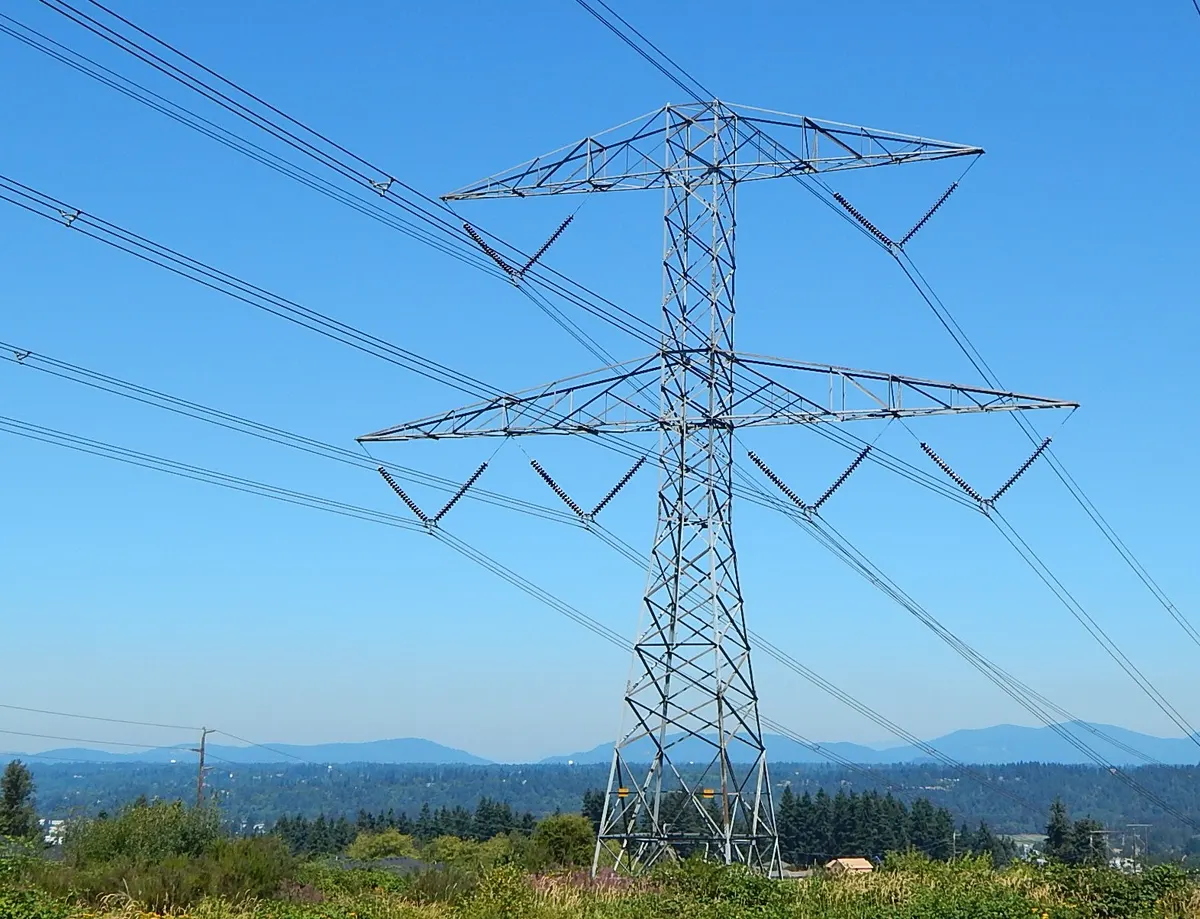
Monday's 70-27 vote was cloture on a substitute amendment, not final passage. Bill savings and emissions figures are Rhodium Group projections for the bill as first introduced. The lead photo is a 2017 file image of power lines in Auburn, Wash.
Like US Brief? You can support it with a tip.