
Both Sides: What each party told voters before Election Day
As voters head to the polls Tuesday, Democrats closed on affordability, corruption and what they call Trump administration chaos, while Republicans argued Democrats are too radical and would raise costs. Trump's Monday closing speech at the Lincoln Memorial Reflecting Pool focused largely on the pool's renovation.
AI-assisted · US Brief desk · Sources listed below
What happened
Both parties spent the final days before Tuesday's midterm elections making their closing arguments. Trump held rallies in Florida, Iowa and Kansas, the BBC reported, then gave his final scheduled speech on Monday at the Lincoln Memorial Reflecting Pool. He spent more than 20 minutes on the pool's renovation and other Washington projects before turning to the election, CNBC reported, calling it "the most important midterm, I believe, in our lifetime" and saying Democrats had nominated "the most extreme and dangerous slate of candidates in American history." He also repeated his promise that Americans would get $5,000 if Republicans win.
Why it matters
Today's vote decides which party controls the House and the Senate for the last two years of Trump's term, and with it whether his agenda keeps moving through Congress or runs into a chamber led by the other party.
More context
The case for Republicans: Republicans argue Democrats would raise costs and push the country too far left. In Texas, Senate nominee Ken Paxton said of Democrat James Talarico, "He wants to tax your tips. He wants to tax your overtime, and he wants to tax your Social Security," Fox News reported, and called him a "democratic socialist." "This isn't just red versus blue," Paxton said Friday. "It's the America our founders gave us versus something they would never recognize." In Ohio, Sen. Jon Husted called his race against Democrat Sherrod Brown "common sense versus crazy." At rallies, Trump said Democrats would "open the border" and "bankrupt your family," the BBC reported, and he pointed to stock-market gains during his presidency, The New York Times reported.
The case for Democrats: Democrats have centered their closing pitch on affordability, corruption and what they describe as the chaos of the Trump administration, The Times reported. "We have an affordability crisis because we have a corruption crisis," Talarico told supporters in Houston on Saturday, accusing Paxton of being controlled by Elon Musk, who The Times said has put more than $158 million into the race. In Ohio, Brown said, "Tell them we're going to end this war. Tell them we're going to end these tariffs." In Iowa, Senate nominee Josh Turek told voters who backed Trump that he understood why: "he accurately identified the status quo was not working for the average person."
Weak spot (Democratic side): Talarico's line ties high prices to corruption, but in the reported remarks he offered no specific evidence linking the two beyond saying the system "has been rigged by billionaires and corrupt politicians". The BBC reported that prices have risen most for fuel, groceries and health care since the Iran war began more than eight months ago, a cause the corruption argument does not address.
Weak spot (Republican side): Trump called the focus on affordability a "hoax," The Times reported, yet Ohio voters waiting in early-voting lines told Fox News that kitchen-table costs were on their minds, with one pointing to gas prices and families struggling to feed themselves. Trump himself acknowledged the odds Monday, saying "the sitting president doesn't win the midterms, but we gave this a very strong shot," The Hill reported. House Speaker Mike Johnson's case that polls are missing Republican voters rests on his own impression: "I can't find a Republican anywhere who's responding to polls right now," he said, adding, "we are going to shock them on Tuesday."
Where the numbers stand: An NBC News poll found registered voters prefer a Democratic-controlled Congress 52% to 45%, the BBC reported. Polls from The New York Times and Siena released Sunday night, before Election Day, showed Democratic Senate candidates ahead in Kansas, Maine, Ohio and Texas, narrowly ahead in Alaska and effectively tied in Iowa, all seats now held by Republicans. More than 54 million people had voted early by Sunday afternoon, according to the University of Florida Election Lab, The Times reported. Polls can miss, and Republicans like Johnson argued they were doing so this year.
How outlets framed it: The Times led with "economic anxiety, a backlash to the Iran war and disapproval" of Trump's agenda. Fox News's Monday preview led with Republicans "fighting to defend their congressional majorities" across nine battleground states. The BBC wrote that Trump's rallies appeared to have two aims: "to change the subject" from prices and "use fear to turn out the Republican vote."
What's still unknown: Whether turnout tops past midterms and whether the polls were accurate this time. Results start coming in Tuesday night, and Fox News noted that some races may remain undecided into Wednesday.
Sources across the spectrum This story cites right-leaning and left-leaning outlets. Every source is listed below.
7 listed sources
- The New York Times, Nov. 2, 2026
- Fox News live updates, Nov. 1, 2026
- Fox News, Nov. 2, 2026
- BBC, Nov. 2, 2026
- Axios, Nov. 1, 2026
- CNBC, Nov. 2, 2026
- The Hill, Nov. 2, 2026
References listed by US Brief; a source count is not a verification score.
Editorial sourcing notes
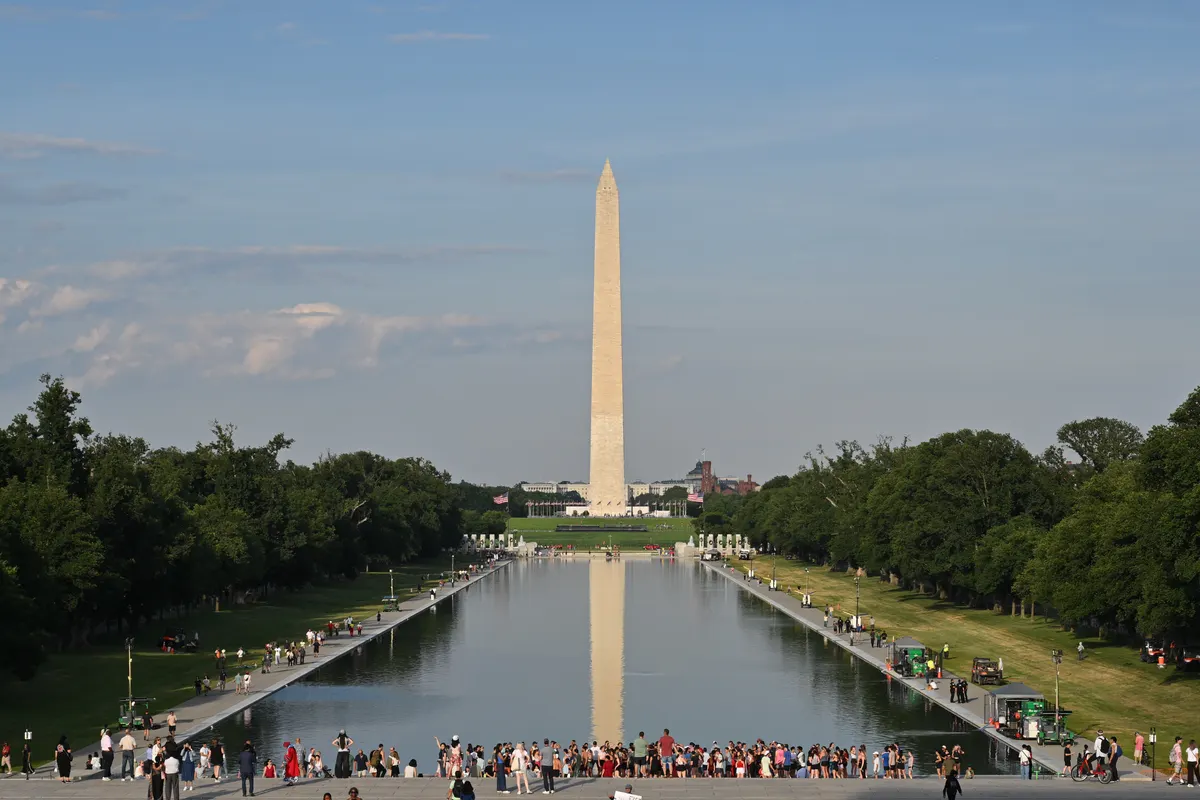
Quotes are from campaign events and statements as The New York Times, Fox News, the BBC, CNBC and The Hill reported them. Poll figures are attributed to the pollsters named. The hero is a June 2026 file photo of the Reflecting Pool, where Trump spoke Monday; it does not show the event.
Like US Brief? You can support it with a tip.