
Both Sides: Are DOJ's California election subpoenas enforcement or intimidation?
The Justice Department has sent federal grand jury subpoenas to election officials in at least four California counties seeking records on possible noncitizen voting. Supporters call it overdue enforcement; critics, including a federal judge, describe a pattern of pressure on election workers.
AI-assisted · US Brief desk · Sources listed below
What happened
The Justice Department has issued federal grand jury subpoenas to local election officials in California as part of criminal investigations into alleged voting by noncitizens, NBC News reported Thursday, citing a US official. The San Francisco Chronicle obtained subpoenas sent to Los Angeles and Orange counties; Santa Clara County confirmed it received subpoenas, and San Diego County officials did too, according to the news site inewsource. Some were sent in September, and one arrived as recently as Oct. 29.
The Los Angeles County subpoenas, from First Assistant U.S. Attorney Bill Essayli and Homeland Security Investigations agents, ask officials for any information that "tends to indicate an alien has voted in a federal election" or that someone helped a noncitizen vote, plus the office's methods for preventing it, the Chronicle reported. Officials were told to appear with the records in Santa Ana on Nov. 4, the day after the election. Orange County, which has received four subpoenas covering about 80 voter records, said it complied with three from September and would answer the latest one.
The subpoenas come a day after U.S. District Judge David O. Carter rejected the department's emergency request to set aside mail ballots tied to more than 20,000 voters it calls "likely aliens." Essayli told Fox News the department has appealed to the Ninth Circuit. AP reported that a federal judge has also appointed a special master to examine the department's claim before California's Dec. 3 certification deadline. A US official told NBC News that receiving a subpoena does not mean a person is a target.
Why it matters
The fight puts local election offices under federal criminal scrutiny in the final days before the Nov. 3 midterms, as counties process ballots. How courts rule on the 20,000-voter list could shape how far federal prosecutors can reach into state-run elections.
What’s next
The Ninth Circuit appeal, the special master's review, the Nov. 4 appearance date for Los Angeles County officials and California's Dec. 3 certification deadline.
More context
The strongest case for the subpoenas: The Justice Department told NBC News that federal courts have said voting unlawfully carries criminal exposure, and Essayli told Fox News that the court's refusal "disenfranchises American citizens through dilution" because ineligible votes cancel out lawful ones. Hans von Spakovsky of Advancing American Freedom, a conservative group, argued that California's automatic voter registration at the DMV puts the burden on individuals to say they are ineligible, and that officials "don't even want to check." Even Judge Carter noted federal authorities remain free to pursue individual fraud cases, and a US official told NBC News the department rarely subpoenas people it intends to charge.
The strongest case against: Judge Carter called the department's actions in California "a broad, ongoing pattern of attempted election interference by federal officials" and wrote that threats to election workers "must stop," the Chronicle reported. Los Angeles County Registrar Dean Logan said the department has taken "a confrontational, adversarial approach" while his office follows state and federal law. UCLA law professor Rick Hasen told Fox News the ballot demand was a "total overreach of federal power," since the Constitution leaves running elections to states unless Congress says otherwise.
Weak spot (supporters of the subpoenas): The federal numbers have shifted. The government first suggested more than 190,000 noncitizens might be registered in California, later cited 20,000, and has charged 28 people with citizenship-related voting crimes, five of whom are not accused of voting, according to the Chronicle. California officials told the court their early review of the 20,000 found U.S.-born citizens on the list, Fox News reported. Weak spot (critics): Calling the probe a "weaponized" effort, as former DOJ lawyer David Becker did, does not show the subpoenas are improper. Orange County has already handed over records for earlier subpoenas, and a US official said recipients are generally witnesses, not targets.
Sources across the spectrum This story cites right-leaning and left-leaning outlets. Every source is listed below.
5 listed sources
- NBC News, Oct. 29, 2026
- San Francisco Chronicle, Oct. 29, 2026
- Fox News, Oct. 29, 2026
- AP, Oct. 29, 2026
- POLITICO, Oct. 29, 2026
References listed by US Brief; a source count is not a verification score.
Editorial sourcing notes
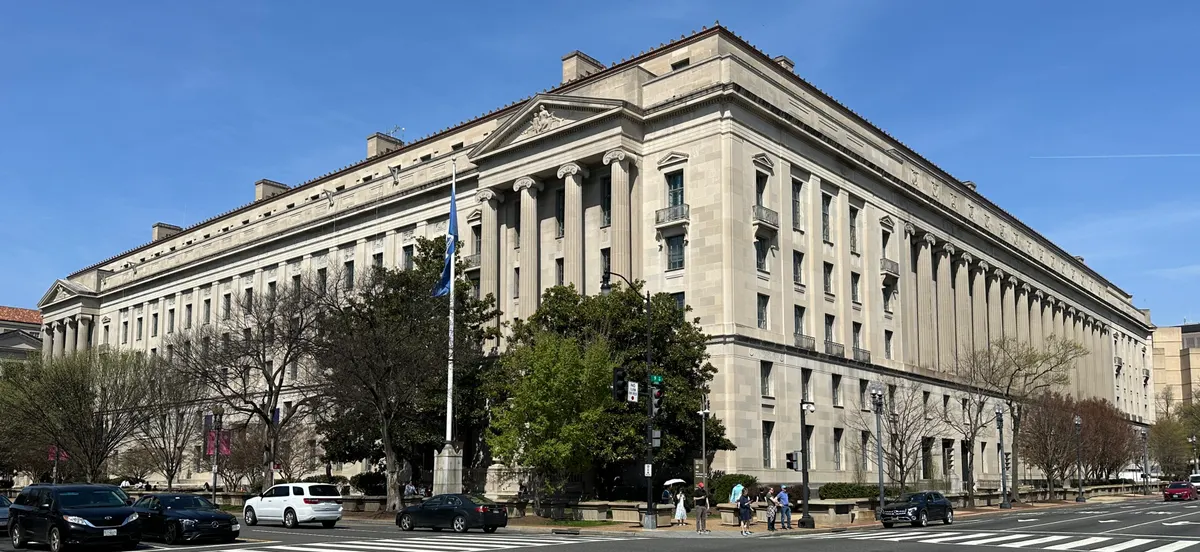
Sourcing: NBC News (citing a US official), the San Francisco Chronicle (which obtained subpoenas sent to Los Angeles and Orange counties), Fox News and AP, Oct. 29, 2026. The Justice Department declined to comment on what it called "leaks about alleged grand jury subpoenas," so the total number of subpoenas and recipients is not confirmed. The special-master appointment is as reported by AP. Photos are file images of DOJ headquarters.
Like US Brief? You can support it with a tip.