
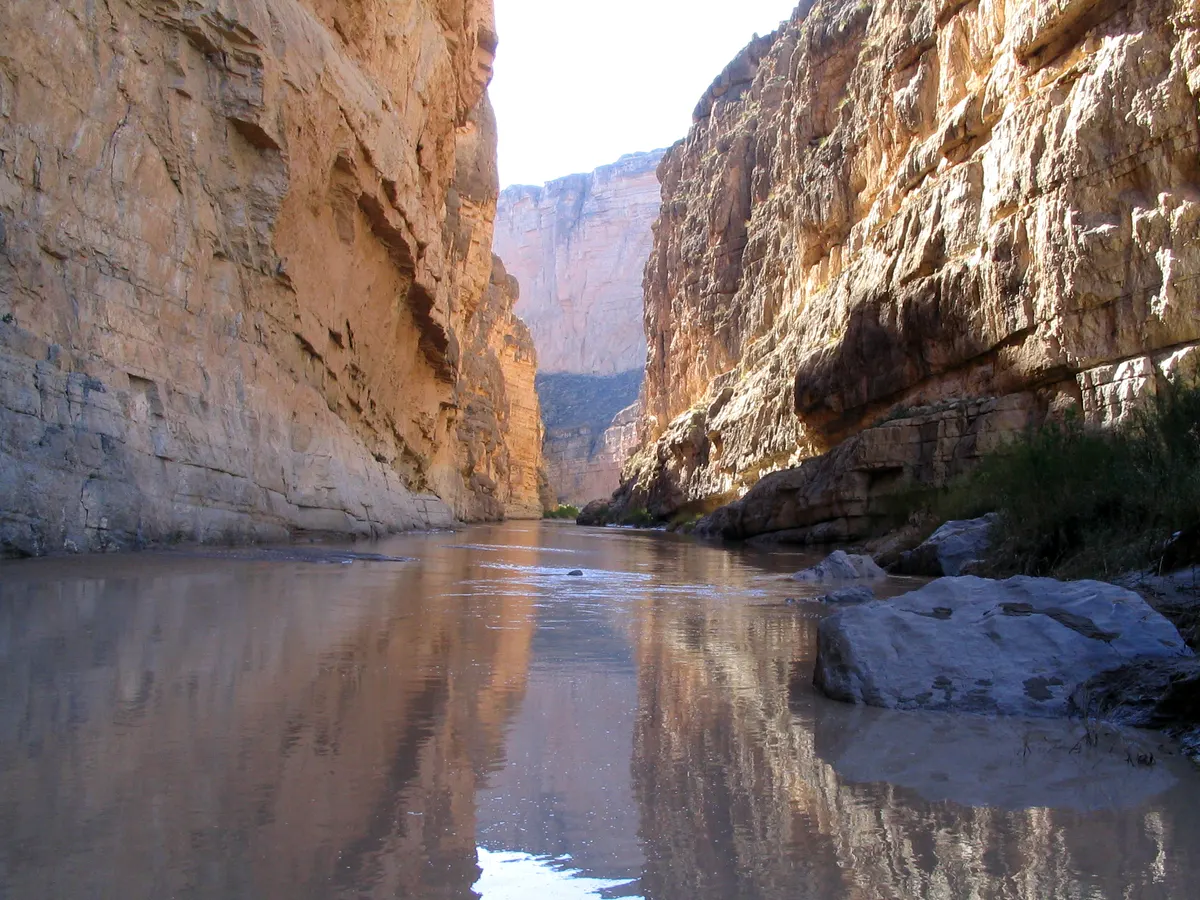
Both Sides: Should the Big Bend border wall go ahead?
The Supreme Court let border wall and road work restart in Texas' Big Bend while a lawsuit continues. The administration calls the remote stretch a gap cartels would use; challengers say the legal waivers go too far where few people cross.
AI-assisted · US Brief desk · Sources listed below
What happened
The Supreme Court on Monday paused a federal judge's order that had stopped border wall and road construction in the Big Bend region of West Texas. The unsigned order lets work resume while the case continues. Justice Ketanji Brown Jackson said she would have denied the request but did not write an opinion.
Why it matters
Big Bend has some of the most remote and best-known scenery on the U.S.-Mexico border, including Big Bend National Park. The plan has drawn opposition from people in both parties, NPR reported. The order is not a final ruling on whether the Homeland Security secretary's waivers of environmental laws are legal.
More context
From the order: Congress gave the Homeland Security secretary power "to waive all legal requirements" to speed border barriers, and allowed only constitutional challenges. The justices said the challengers' claim, though labeled constitutional, really argued the secretary exceeded his statutory power. "There is no such thing as a 'constitutional' major-questions claim," the court wrote. It said the government is losing nearly half a million dollars a day it cannot recover while work is stopped.
How outlets framed it: Fox News called it a ruling that "cleared the way" for the administration to resume construction. The Washington Examiner called it "a key win" on the court's emergency docket. NPR led with the "bipartisan backlash" over the park. The Washington Post called the more than 500-mile project "one of the longest and most controversial sections."
The case for building: The administration says any gap would draw smugglers. Solicitor General John Sauer called the lower-court order "baseless" and said an open stretch of Big Bend would "become a funnel point for illegal alien crossings that are thwarted by barriers elsewhere," NPR reported. Officials say the wall would help stop cartel drug smuggling and that most construction would be on private land, Fox News reported.
The case against: The challengers are a river guide, a group preserving a historic church in Ruidosa, Texas, and the Center for Biological Diversity. They argue the waivers are an "extraordinary" use of power in an area with few crossings, SCOTUSblog reported. "This decision greenlights the contractors and allows the bulldozers to come roaring back into the region," Laiken Jordahl of the center told NPR.
Weak spot: The government's waivers call Big Bend "an area of high illegal entry." But the sector covers about a quarter of the border and accounted for 1.3% of apprehensions in 2025, according to Reuters data cited by Fox News. Judge Kathleen Cardone put its share at 0.3% to 2.2%, SCOTUSblog reported.
Weak spot: The center warned of "dynamiting of national park canyon walls." Administration officials say the planned 17-mile barrier in the national park will not use the 30-foot steel fencing planned elsewhere, Fox News reported. Neither side has released a segment-by-segment map in these reports.
What would change the story: The stay lasts while the government asks the court to take up the case. A separate lawsuit from Texas landowners, filed in September, is still pending, NPR reported. A final ruling against the waivers, or Congress limiting them, could still stop the work.
Sources across the spectrum This story cites right-leaning and left-leaning outlets. Every source is listed below.
6 listed sources
- Supreme Court of the United States, Mullin v. Friends of the Ruidosa Church, No. 26A560 (per curiam order on application for stay), Nov. 9, 2026
- SCOTUSblog (Amy Howe), Supreme Court allows Trump administration to continue border wall construction, Nov. 9, 2026
- Fox News (right-leaning; Louis Casiano), SCOTUS allows Trump admin to temporarily resume border construction in Texas' Big Bend, Nov. 9, 2026
- Washington Examiner (right-leaning; Jack Birle), Supreme Court lifts block on Big Bend border wall construction lawsuit, Nov. 9, 2026
- NPR (left-leaning; Carlos Morales), Supreme Court says border wall construction can continue in West Texas, Nov. 9, 2026
- The Washington Post (left-leaning), Supreme Court allows major part of Trump's border security project in Texas, Nov. 9, 2026
References listed by US Brief; a source count is not a verification score.
Editorial sourcing notes
Order text, the half-million-dollar daily cost and the parties are from the Supreme Court's Nov. 9 per curiam order in Mullin v. Friends of the Ruidosa Church (No. 26A560). Lower-court reasoning and apprehension shares are from SCOTUSblog's account of Judge Kathleen Cardone's ruling; the 1.3% figure is Reuters data that Fox News cited. Quotes from the Center for Biological Diversity and Solicitor General John Sauer are from NPR. Plans for the park segment are administration statements in Fox News' report. The hero photo shows Santa Elena Canyon in Big Bend National Park (file photo, 2004), not construction.
Like US Brief? You can support it with a tip.