
Consumer sentiment rises to 51 as 57% cite high prices
The University of Michigan's preliminary November consumer sentiment index rose to 51.0 from 48.0 in October, above the unchanged 48.0 reading economists polled by Reuters had expected. About 57% of consumers spontaneously said high prices had eroded their living standards; the director also cited AI-bubble anxiety without giving a share.
AI-assisted · US Brief desk · Sources listed below
What happened
The University of Michigan's Surveys of Consumers, run by its Institute for Social Research, said Friday that its preliminary Index of Consumer Sentiment rose to 51.0 in November from a final reading of 48.0 in October, a 6.3% gain that matched the November 2025 level. Economists polled by Reuters had forecast the index would stay at 48.0. Interviews for the release were conducted between Oct. 20 and Nov. 2.
Why it matters
The survey is a widely watched read on whether households feel able to spend, and price complaints still dominate even after this month's bounce. Hsu said that in the two months leading into the election, more than two-thirds of consumers expected Democrats to win the House and over half expected the same for the Senate. Reuters separately tied public anger over inflation from import tariffs and the U.S.-Israeli war to Republicans losing Congress; the Michigan interviews themselves ended the day before Election Day, so they do not measure how people felt after the results.
More context
Where the gain showed up: The gauge of current economic conditions rose to 51.0 from 46.7, a 9.2% increase. The index of consumer expectations rose to 50.9 from 48.8, up 4.3%. Survey director Joanne Hsu said modest improvements in expected personal finances and business conditions were concentrated primarily among independents. Sentiment lifted for lower- and middle-wealth consumers, she said, but fell 5% for those with the largest stock portfolios after a turbulent stretch in markets.
What the evidence shows: About 57% of consumers spontaneously mentioned that high prices had eroded their living standards, the highest share since May and up from 46% in February, just before the Iran conflict. Hsu said consumers' comments also "revealed growing anxiety over a possible AI bubble," but she did not say what share of respondents raised that worry, and she added that AI worries "were dwarfed by cost of living concerns," which remain at the forefront across the population. Despite this month's improvement, she said sentiment is still down 10% from February.
Inflation outlook: Year-ahead inflation expectations fell to 4.3% from 4.7% in October, the lowest reading since August but still well above the 3.4% recorded in February and above all 2024 readings. Longer-run inflation expectations edged down to 3.4% from 3.5%, remaining above their 2024 range of 2.8% to 3.2%.
How outlets framed it: The Washington Post's Saturday report led with Americans worrying that the AI boom could go bust, calling that a relatively new source of economic grumpiness alongside the high cost of living. Reuters led with the improvement in sentiment, lingering living-cost concerns, and the AI-bubble comments. Fox Business framed the print as a rebound from a very weak reading. The survey's own tables lead with the 6.3% rise in the headline index and Hsu's statement that price complaints still dominate.
What's still unknown: Because the interviews ended Nov. 2, the preliminary reading does not capture the Nov. 3 midterms or any change in mood after Election Day. Hsu gave no figure for how common the AI-bubble comments were, so it is not possible to say from this release how widespread that fear is. The survey also does not say whether the 5% drop in sentiment among the largest stockholders was driven by losses in particular industries or by the broader market turbulence she cited.
Sources across the spectrum This story cites right-leaning and left-leaning outlets. Every source is listed below.
4 listed sources
- University of Michigan Surveys of Consumers (Joanne Hsu), Preliminary Results for November 2026, Nov. 6, 2026
- Reuters, via Investing.com, US consumer sentiment improves in November; worries about AI bubble emerge, Nov. 6, 2026
- The Washington Post (Shira Ovide), Americans are worried about the AI boom going bust, survey finds, Nov. 7, 2026
- Fox Business, Consumer sentiment rebounds from second-lowest level on record, Nov. 6, 2026
References listed by US Brief; a source count is not a verification score.
Editorial sourcing notes
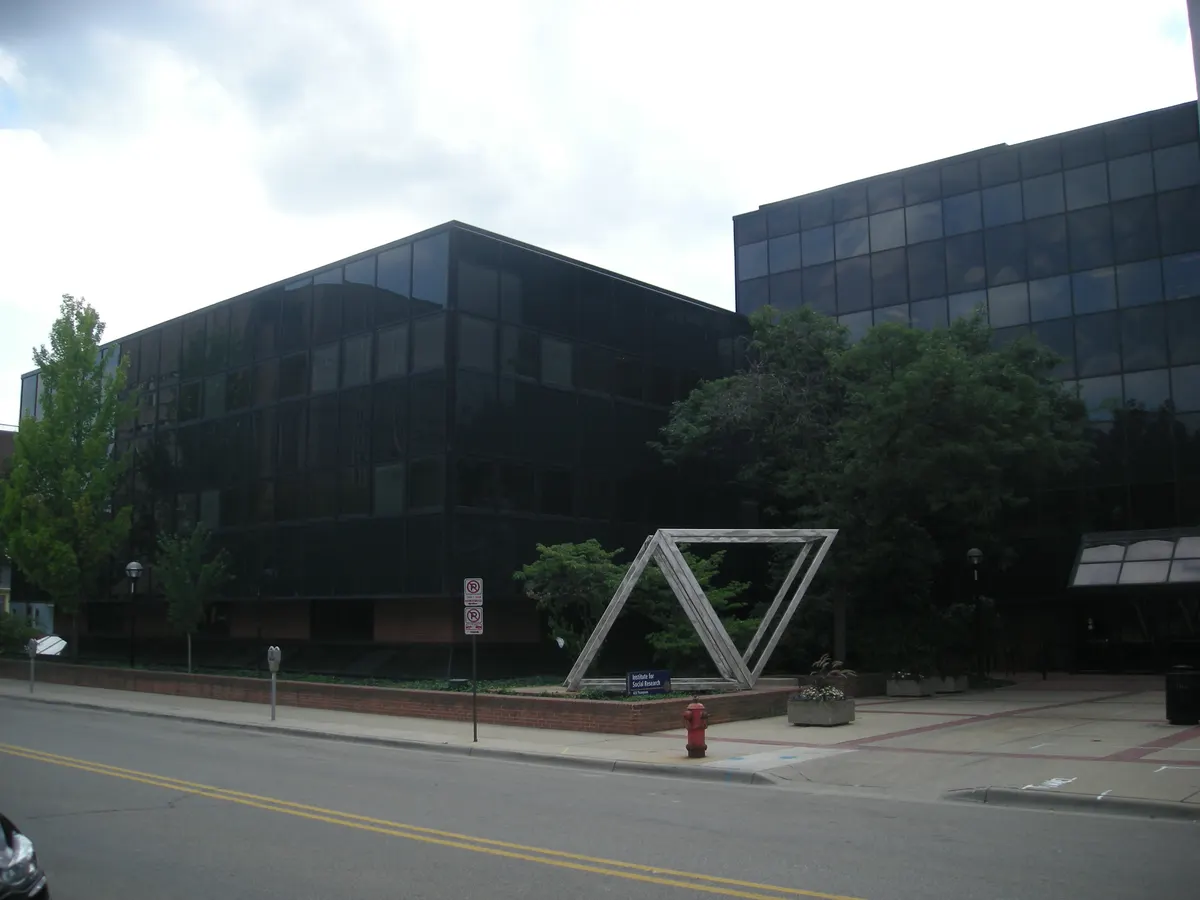
Figures come from the University of Michigan Surveys of Consumers preliminary tables for November 2026 and director Joanne Hsu's statement posted with that release. The Reuters economists' forecast of an unchanged 48.0 reading is from the Reuters dispatch carried by Investing.com. Hsu's AI-bubble remark is from open-ended comments and includes no percentage. Interviews were conducted Oct. 20 through Nov. 2, before the Nov. 3 midterms. The hero photo is the Institute for Social Research in 2013; the in-body photo is Angell Hall in 2010. Neither is from this release.
Like US Brief? You can support it with a tip.