
Fed's inflation gauge rises to 3.8%, cementing December rate-hike bets
The PCE price index, the Federal Reserve's preferred inflation measure, rose 3.8% in the year through October, and core prices rose 3.3%, slightly hotter than forecast. Traders now see about a 98% chance the Fed raises rates at its Dec. 8–9 meeting.
AI-assisted · US Brief desk · Sources listed below
What happened
The Fed's preferred inflation gauge, the personal consumption expenditures (PCE) price index, rose 0.3% in October and 3.8% from a year earlier, the Commerce Department's Bureau of Economic Analysis (BEA) said Wednesday. Core PCE, which leaves out food and energy, also rose 0.3% for the month and 3.3% for the year, up from 3.1% in September. The headline figure matched economists' forecasts, while core came in 0.1 point above the 3.2% estimate, CNBC and Fox Business reported.
Why it matters
Inflation is running nearly twice the Fed's 2% target, and the report was the last major inflation reading before the Fed meets Dec. 8–9. Traders put the chance of a quarter-point rate hike at 97.8%, up from 93.5% a week earlier, according to CME Group's FedWatch tool as cited by Fox Business. That would lift the Fed's benchmark range from 3.75%–4.00% to 4.00%–4.25%. Higher rates raise the cost of loans like mortgages and student debt, The Guardian noted.
More context
The trend, by BEA's numbers: Annual PCE inflation was 3.4% in July, 3.5% in August, 3.7% in September (revised from the 3.6% first reported) and 3.8% in October. Heather Long, chief economist at Navy Federal Credit Union, said core PCE inflation in October was "the highest in 3 years," Fox Business reported, and The Guardian said the headline rate was the highest since May.
Paychecks and spending: Personal income jumped 0.7%, well above the 0.4% economists expected, CNBC said. After taxes and inflation, disposable income rose 0.5%. The BEA said the income gain partly reflected one-time payments tied to a Medicare Improvement Fund premium rebate. Spending rose 0.3% in dollars but was essentially flat after inflation, and the saving rate rose to 4.1% from 3.6% in September.
The rest of the data: In a separate report, the BEA revised third-quarter growth to a 4.3% annual rate, CNBC reported; the BEA's first estimate, released Oct. 29, was 3.4%. Consumer spending grew at a 4.2% rate in the quarter. Initial jobless claims fell 13,000 to 189,000 last week, near the lowest level since the late 1960s, according to the Labor Department as reported by CNBC.
Markets: The report landed on a rough day for tech stocks. Nvidia fell 8%, and AMD, Micron, Marvell and Intel each dropped more than 9%, CNBC reported. The Nasdaq was down more than 4% Wednesday morning, The Guardian said, before selling eased; by about 1:40 p.m. Eastern, the Dow had turned higher and the S&P 500 and Nasdaq had pared their losses, MarketWatch reported. The White House also announced a fresh round of tariffs on 14 trading partners, including China, the European Union and Japan, CNBC reported. Markets are closed Thursday for Thanksgiving.
The strongest case for moving faster: "America's inflation problem is bigger than an energy shock," Long said, according to Fox Business. "The Federal Reserve has to act in December and likely January." Fed Governor Christopher Waller has signaled he could support a larger half-point increase, Reuters reported, and Fwdbonds chief economist Chris Rupkey told CNBC that inflation "will not be brought under control as long as economic demand is also too hot."
The strongest case for caution: Inflation-adjusted spending was flat in October. "The cautious consumer is back," Long said. Gas prices have also eased, from a high of $4.41 a gallon in early October to $3.61 by mid-November, according to AAA figures cited by The Guardian. After the report, traders cut the odds of a third hike in 2027 to about 1 in 3 from 50-50 on Tuesday, CNBC reported, while still pricing in two more increases.
What would change the story: A surprise in the Fed's Dec. 8–9 decision, such as a half-point hike or a pause, would reset expectations for mortgage and loan rates. The next PCE report, covering November, is due Dec. 23, the BEA said.
Sources across the spectrum This story cites right-leaning and left-leaning outlets. Every source is listed below.
9 listed sources
- Bureau of Economic Analysis (primary), Personal Income and Outlays, October 2026, Nov. 25, 2026
- Bureau of Economic Analysis (primary), Personal Consumption Expenditures Price Index data page, Nov. 25, 2026
- Bureau of Economic Analysis (primary), GDP (Advance Estimate), 3rd Quarter 2026, Oct. 29, 2026
- CNBC (Jeff Cox), Fed's preferred inflation gauge accelerated to 3.8% in October, Nov. 25, 2026
- Fox Business (Eric Revell; right-leaning), Fed's favored inflation gauge rose in October ahead of expected Fed rate hike next month, Nov. 25, 2026
- Reuters via MSN (Lucia Mutikani), US inflation rises further in October, Nov. 25, 2026
- The Guardian (Lauren Aratani; left-leaning), US inflation hits highest since May after prices climb 3.8% over the last year, Nov. 25, 2026
- CNBC (Samantha Subin), Nvidia leads tech sell-off as Huang comeback rally fizzles, Nov. 25, 2026
- MarketWatch, Stock Market Today: Dow turns higher, S&P 500 and Nasdaq pare losses as tech selling eases (live update), Nov. 25, 2026
References listed by US Brief; a source count is not a verification score.
Editorial sourcing notes
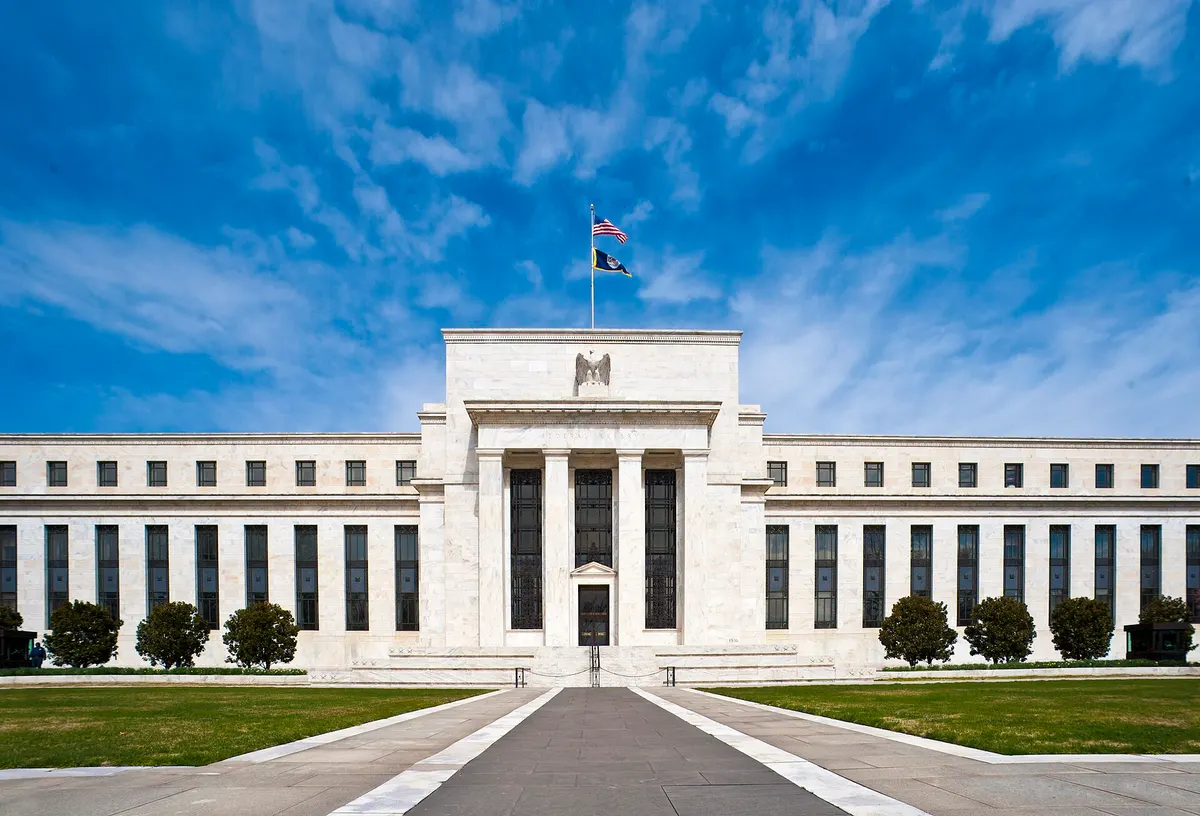
Inflation, income and spending figures are from the BEA's October 2026 release and its PCE data page. Reuters reported September's annual PCE rate as 3.6%; BEA's data page now lists it as 3.7% after revision, which CNBC and Fox Business also reflect. Stock moves are intraday figures from the cited reports as of early Wednesday afternoon Eastern time and will change by the close. FedWatch odds move with trading. The hero photo is a file image of the Eccles Building (2011).
Like US Brief? You can support it with a tip.