
Nasdaq futures jump nearly 3% after worst week since 2020
Nasdaq-100 futures rose 2.76% and S&P 500 futures rose 2.03% Sunday evening, CNBC reported, a bounce after the Nasdaq's 10% drop last week, its worst week since March 2020. Futures can reverse before Monday's open, and a holiday-shortened week brings Dell earnings and the Fed's preferred inflation gauge.
AI-assisted · US Brief desk · Sources listed below
What happened
U.S. stock futures rose sharply Sunday evening as a Thanksgiving-shortened trading week got underway. As of 7:41 p.m. ET (4:41 p.m. PT), Nasdaq-100 futures were up 2.76%, S&P 500 futures were up 2.03% and Dow futures were up 673 points, or 1.4%, CNBC reported. Fortune, at 7:13 p.m. ET, had Nasdaq futures up 2.89% and Dow futures up 684 points.
Why it matters
Futures often signal how stocks will open, but they can reverse overnight, so Monday's 9:30 a.m. ET open is the real test. The slide reaches households through 401(k)s. Moody's Analytics chief economist Mark Zandi estimated that consumer spending moves about 2 cents for every $1 change in net worth over about a year, Fortune reported. If stocks stay where they are, he said, that would trim almost 0.3 percentage point from economic growth a year from now.
More context
The week before: Last week's 10% drop in the Nasdaq was its largest weekly fall since the pandemic panic of March 2020, Reuters reported. CNBC said it was also the Dow's worst week in more than six years and the S&P 500's worst since April 2025. All three major averages ended Friday in correction territory, meaning 10% or more below their highs, and the Nasdaq turned negative for 2026.
Why stocks fell: Investors are questioning whether the mostly borrowed money spent building AI data centers will pay off fast enough to repay lenders and justify high stock prices, Reuters reported. It also pointed to Jensen Huang's exit as Nvidia CEO and Anthropic's 8.5% drop on Friday.
Asia opens lower: South Korea's Kospi fell 2.34% in early Monday trading, with Samsung Electronics down about 3% and SK Hynix about 2%, CNBC reported. Japan's markets were closed for a holiday. South Korea's finance ministry said Sunday it is ready to deploy a market stabilization fund immediately if needed and will ease daily share-buyback limits for listed companies for three months starting Tuesday, The Herald Business reported. Seoul Economic Daily said the fund has not been tapped since 2008. Taiwan's regulator tightened short-selling rules on Saturday, Reuters reported.
The week ahead: Monday after the close, Hewlett Packard Enterprise reports earnings. Tuesday, Best Buy reports before the open, and Dell and Workday report after the close, CNBC said; HPE is down 25% this month and Dell 34%. Wednesday at 8:30 a.m. ET, the government releases October PCE inflation, the Fed's preferred price gauge, plus a second estimate of third-quarter GDP. Markets close Thursday for Thanksgiving, and Friday's session ends early, at 1 p.m. ET.
Black Friday test: Investors will watch holiday shopping for signs of how consumers are coping with higher energy and borrowing costs, Reuters reported. The National Retail Federation projects 182.7 million people will shop over the five days from Thanksgiving through Cyber Monday, down from 186.9 million last year, Reuters said.
The strongest case each way: Drew Pettit of Roundhill told CNBC that Friday's broad selling may be a sign the sell-off is ending. "Fundamentally, I think the floor is a lot higher," he said, though he added that bulls still have to prove the long-term earnings story isn't broken. Zandi was more cautious: "it feels increasingly like the easy money in the AI trade has been made," he wrote, according to Fortune.
What's still unknown: Whether Sunday's bounce holds into Monday's open. Fortune noted that thin holiday trading can amplify rebounds, and analyst Dan Ives warned clients there could be more room for stocks to fall, CNBC reported. Dell's results and Wednesday's inflation reading are the next big tests.
8 listed sources
- CNBC (Davis Giangiulio, Lim Hui Jie), S&P 500 futures rebound sharply to rise 2%, kick-starting shortened week after tech rout: Live updates, Nov. 22, 2026:
- Reuters via Investing.com, US futures bounce while Asia markets brace for AI wipeout, Nov. 22, 2026:
- Fortune, Dow futures jump nearly 700 points and Nasdaq soars 3% as stocks rebound from correction, Nov. 22, 2026:
- Barron's (Janet H. Cho), Stock Futures Are Rebounding After Last Week's Bloodbath, Nov. 22, 2026:
- Reuters via Investing.com (Lewis Krauskopf), 'Black Friday' brings consumer spending into focus for AI-rocked market, Nov. 20, 2026:
- U.S. Bureau of Economic Analysis, Release Schedule (Personal Income and Outlays, October 2026; GDP second estimate, Q3 2026; Nov. 25, 8:30 a.m.):
- The Herald Business, Gov't activates market stabilization fund, eases buyback limits to head off 'Black Monday', Nov. 22, 2026:
- Seoul Economic Daily, Korea Eases Buyback Limits but Leaves Short-Selling Rules Untouched, Nov. 22, 2026:
References listed by US Brief; a source count is not a verification score.
Editorial sourcing notes
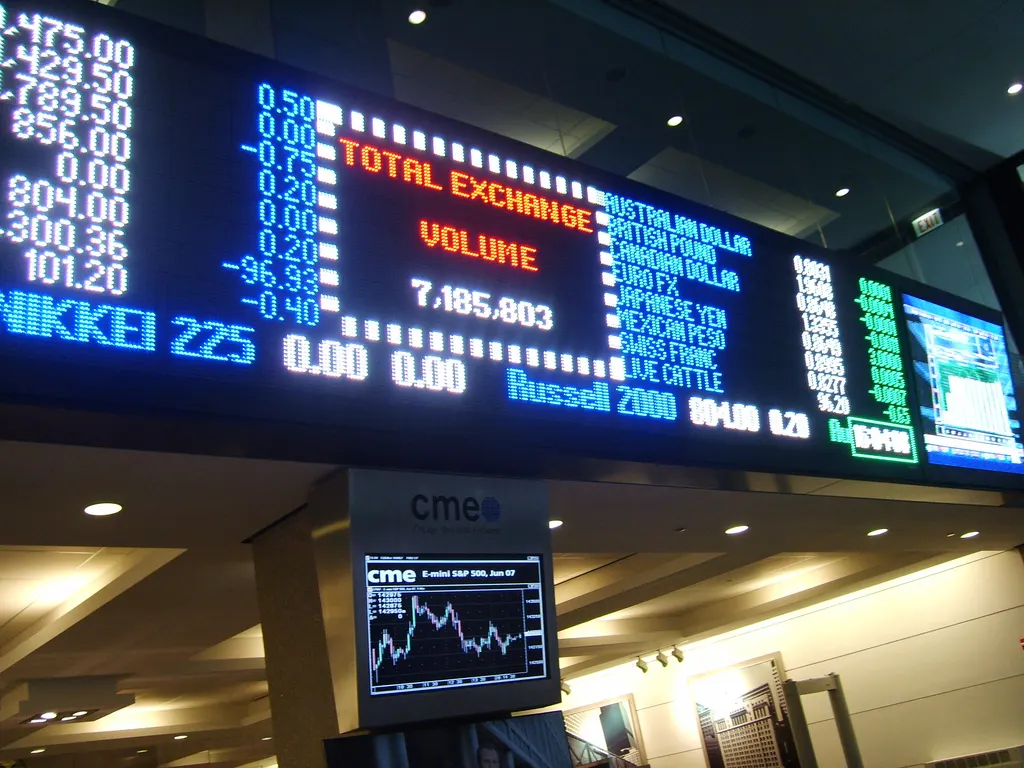
Futures figures are CNBC's as of 7:41 p.m. ET Sunday, Nov. 22, 2026, and Fortune's as of 7:13 p.m. ET. US Brief rechecked CNBC's live updates at about 5:07 p.m. PT Sunday; the page still showed those 7:41 p.m. ET figures (Nasdaq-100 futures up 2.76%, S&P 500 futures up 2.03%, Dow futures up 673 points, or 1.4%). Futures trade overnight and the numbers will change before Monday's open. The explanations for last week's sell-off are each outlet's, not US Brief's. Earnings dates are from CNBC; the PCE and GDP release time is from the Bureau of Economic Analysis schedule. The hero is a 2007 file photo from inside the Chicago Mercantile Exchange, where S&P 500 futures trade; it does not show Sunday's prices.
Like US Brief? You can support it with a tip.