
Halloween candy sales fall 6.7% as chocolate prices squeeze shoppers
Halloween candy sales fell 6.7% in the month ending Oct. 17 compared with a year earlier, NielsenIQ data show, as high chocolate prices and $4-plus gasoline squeeze household budgets. Small bags are the only size still growing, while industry analysts say some shoppers may simply be buying later.
AI-assisted · US Brief desk · Sources listed below
What happened
Halloween candy sales fell 6.7% in the month ending Oct. 17 compared with the same stretch last year, according to market research firm NielsenIQ, the Associated Press reported Saturday. NielsenIQ also counted an 11.7% drop in candy sales in mid-September, wiping out the early-season gains Halloween candy posted the previous two years. Small bags were the only size still growing through mid-October; large and extra-large bags fell the most.
Why it matters
Candy has become a visible example of grocery inflation. Government data cited by AP show candy and gum prices up 44% over five years through September, versus 22.5% for all food eaten at home. NielsenIQ's Chris Costagli told AP that gasoline, which averaged $4.29 a gallon Friday, up nearly 40% from a year ago, is squeezing budgets. "I can't afford it this year because I've paid so much more for so many other things," he said, describing shoppers' thinking.
More context
Cocoa is the main driver, AP reported. Prices hit a record $10,710 per metric ton in January 2025 because of poor weather in West Africa, which AP says supplies 70% of the world's chocolate, and speculative trading, according to the Bureau of Labor Statistics. They fell to $3,241 by March of this year but began rising again in the spring as the Iran war disrupted Africa's fertilizer supplies, according to AP, and an El Niño pattern is expected to bring hot, dry weather through February.
What the price numbers show: The figures depend on what is measured. Store transaction data from Consumer Edge show chocolate prices per unit up 5.2% and non-chocolate candy up 1.6% year over year through Oct. 15, with volumes down 7.1% and 10.6%. The federal consumer price index for candy and chewing gum was 8.1% higher in August than a year earlier, Ohio State economist Alexis Villacis noted. NielsenIQ says non-chocolate Halloween candy averaged $6.08 a pound over nine weeks, about 3% cheaper than last year, yet sales still did not rise.
What the evidence shows: An analysis by the progressive groups Groundwork Collaborative and The Century Foundation puts Halloween candy prices up more than 15% this year, Food Dive reported. That figure tracks a set of specific seasonal products, such as a Mondelēz sour gummy pack it says costs 39% more. Broader measures show smaller increases: 5.2% per unit for chocolate in Consumer Edge's store data and 8.1% in the government's August candy index.
The other side: Candy makers say it's too early to call the season. The National Confectioners Association, a trade group whose members include Mars and Ferrara, said Friday that "consumer enthusiasm remains incredibly strong" as the peak buying period begins. Circana's Sally Lyons Wyatt told AP that shoppers are making smaller, more frequent trips and may be buying closer to the holiday. "I don't think Halloween is doomed," she said. Consumer Edge notes that Oct. 30 and 31 typically run 1.5 to 2 times a normal October day in candy sales.
Still unknown: whether last-minute buying closes the gap, and when lower cocoa prices will reach store shelves. Ohio State's Villacis said cheaper cocoa does not translate into cheaper chocolate right away. NRF projects record Halloween spending of $13.5 billion this year, including $4.1 billion on candy, Ohio State noted, with 31% of shoppers planning to compare prices.
4 listed sources
- AP via WRAL, Oct. 24, 2026
- Consumer Edge, Oct. 21, 2026
- Food Dive, Oct. 22, 2026
- Ohio State University CFAES, Oct. 6, 2026
References listed by US Brief; a source count is not a verification score.
Editorial sourcing notes
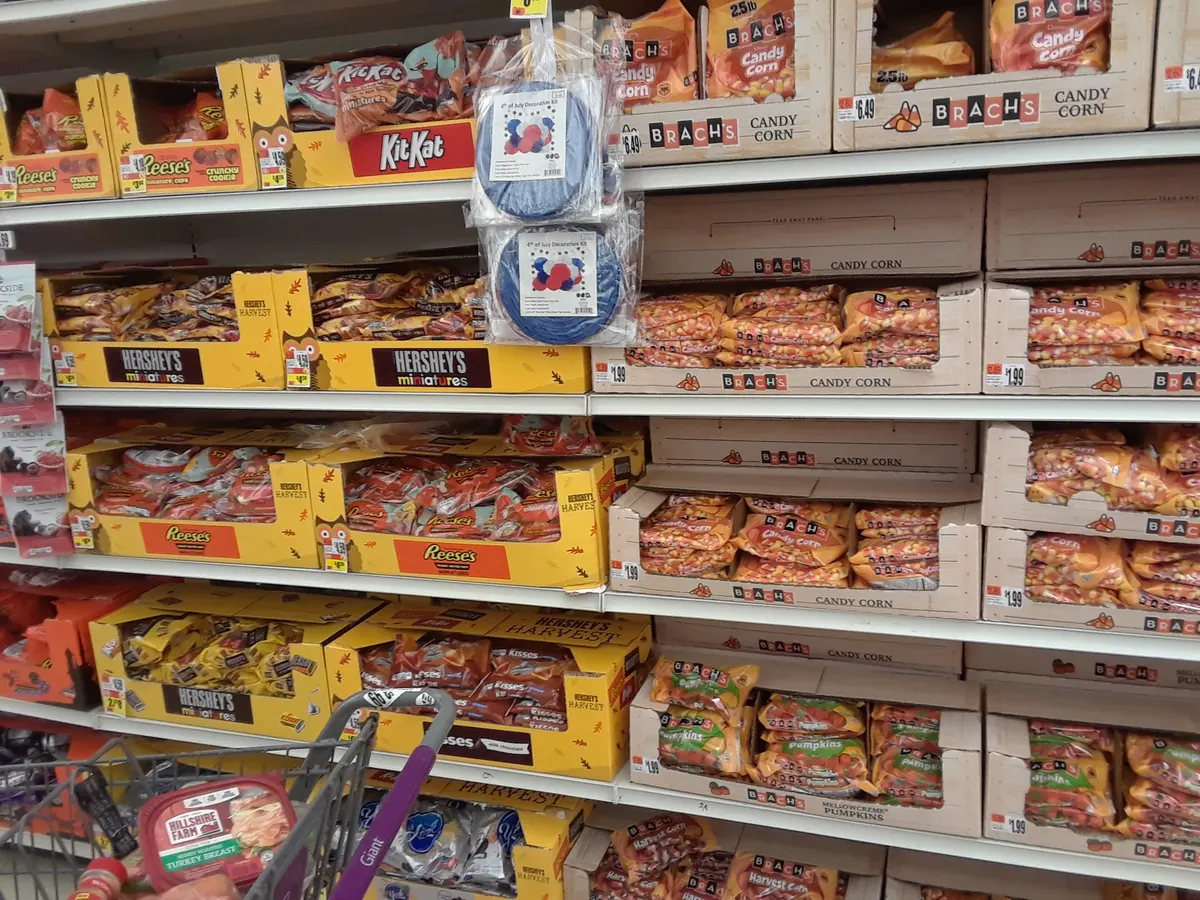
Sales figures are from private market-research firms (NielsenIQ and Consumer Edge) and cover different periods and store panels, so they don't match exactly. The biggest candy-buying days, Oct. 30 and 31, are still ahead. The photos are file photos and do not show this year's stores or harvest.
Like US Brief? You can support it with a tip.