
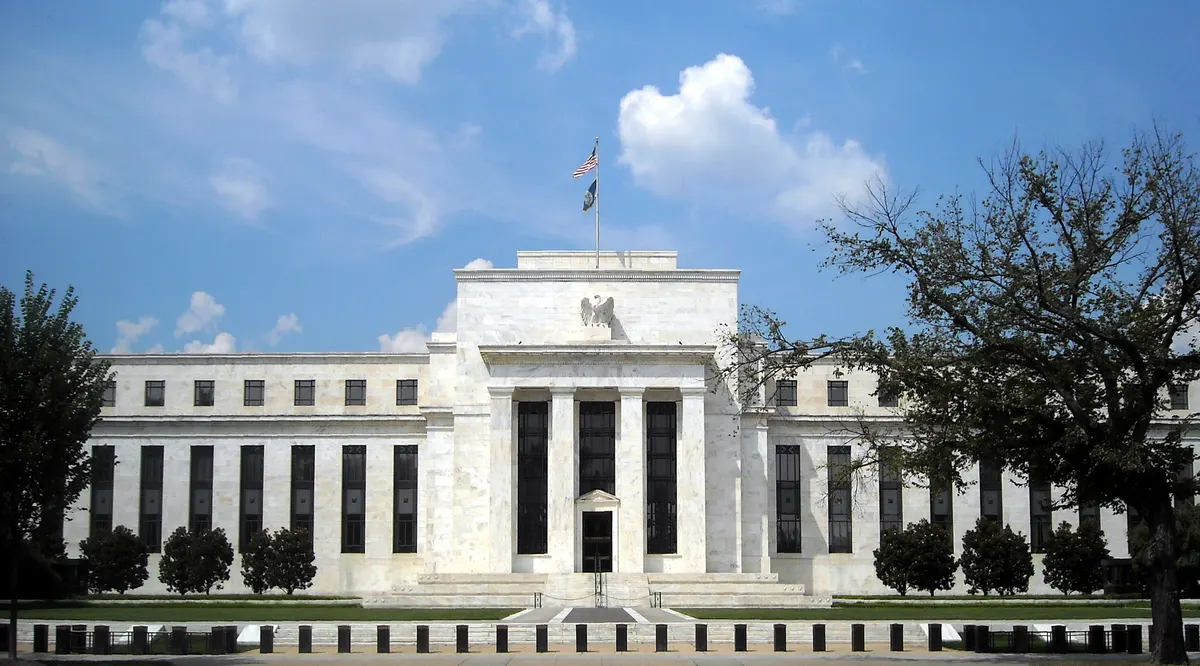
AI tops Fed survey of financial risks, cited by 87% of contacts
AI is now the most-cited risk to the U.S. financial system in the Fed's twice-yearly survey of market contacts, named by 87%, up from 50% in the spring. The Fed's Nov. 13 report also says AI-related debt issuance topped $680 billion.
AI-assisted · US Brief desk · Sources listed below
What happened
The Federal Reserve's twice-yearly Financial Stability Report, released Friday, Nov. 13, found AI is now the top-cited risk to the U.S. financial system among market contacts surveyed by staff at the New York Fed. AI was named by 87% of them, up from 50% in the spring survey. Next came a broad drop in risky assets (52%), higher long-term interest rates (48%), cyberattacks (43%) and the federal debt (43%), the report and CNBC said.
Why it matters
Many 401(k) plans and index funds hold the big tech stocks at the center of this boom. The warning lands days before Nvidia reports earnings on Tuesday, its first since Jensen Huang stepped down, and before Anthropic's expected stock market debut on Thursday.
More context
What worries them: Respondents named three AI concerns, the report says: stock prices that could fall if AI earnings disappoint, cyberattacks by state actors or damage caused by advanced AI models themselves, and "complex forms of AI-related financing." Many also said "circular financing" and heavy borrowing for the AI buildout could make losses worse.
The debt behind the data centers: Debt issued to fund AI computing passed $680 billion by October 2026, about five times the $130 billion issued in all of 2023, the Fed said. The Fed estimates outstanding public debt tied to AI computing at more than $1.1 trillion. Big tech firms have also signed up for leases that haven't started yet (over $1 trillion) and other guarantees and contracts (over $2 trillion). The Fed says those commitments mean the firms' exposure in a downturn "may be substantially larger" than their balance sheets show. The largest U.S. banks have close to $1 trillion of exposure to tech firms, data center developers, related financing vehicles and utilities.
In the Fed's words: "The complex interlinkages among firms engaged in the data center buildout, public credit markets, private lenders, and special purpose financing vehicles create vulnerabilities that necessitate close monitoring."
The rest of the picture: The Fed said the banking sector "remained sound and resilient overall" and household debt kept falling relative to the economy. Stock valuations stayed high, which the Fed partly tied to "market enthusiasm for super intelligence." Hedge fund leverage reached its highest level since comprehensive data began in 2013, concentrated in a few large funds. Treasury yields "rose markedly" over the past six months.
What the survey is, and isn't: It reflects answers from 23 contacts at broker-dealers, banks, investment funds and advisory firms, so 87% is about 20 people. It was taken in September and October, before Huang's exit. The Fed says the survey is a summary of their views, not the Fed Board's own. The Fed compared the AI buildout with the 1990s telecom boom and said today's spending may surpass that pace "relatively soon."
5 listed sources
- Federal Reserve Board, Financial Stability Report, November 2026 (released Nov. 13, 2026)
- American Banker, Fed warns of financial risks from AI-driven market optimism, Nov. 13, 2026, updated Nov. 15, 2026
- Chosun Biz, Fed warns AI boom and data center debt pose financial stability risks, Nov. 15, 2026
- Reuters via U.S. News & World Report, AI Rockets to Top of Worries About Financial System in Latest Fed Survey, Nov. 13, 2026
- CNBC, AI risks are the biggest threat to the financial system, Fed survey finds, Nov. 13, 2026
References listed by US Brief; a source count is not a verification score.
Editorial sourcing notes
Figures come from the Federal Reserve's November 2026 Financial Stability Report (data as of Oct. 28, 2026) and its survey box. The survey reflects 23 market contacts' views, not the Fed Board's own forecast. Lead photo: the Fed Board's Eccles Building in Washington (file, 2008).
Like US Brief? You can support it with a tip.