
Exxon profit doubles to $15.4 billion as diesel hits $6.32
ExxonMobil and Chevron beat Wall Street forecasts Friday as the Iran war and refinery attacks abroad pushed fuel-making profits to records. Exxon's quarterly profit doubled to $15.4 billion and Chevron's nearly tripled to $9.9 billion, while U.S. diesel averages $6.32 a gallon, up more than 70% in a year, four days before the midterms.
AI-assisted · US Brief desk · Sources listed below
What happened
ExxonMobil said Friday it earned $15.4 billion in the third quarter, or $3.72 a share, double the $7.5 billion it made a year earlier, CNBC reported. Chevron earned $9.9 billion, or $5.06 a share, up nearly 200% from $3.5 billion. Both beat analysts' forecasts on an adjusted basis: Exxon earned $4.23 a share against $4.08 expected, and Chevron $5.28 against $4.89, according to LSEG estimates cited by CNBC. Both stocks touched all-time highs Friday morning, with Chevron up nearly 2% and Exxon more than 1%.
More context
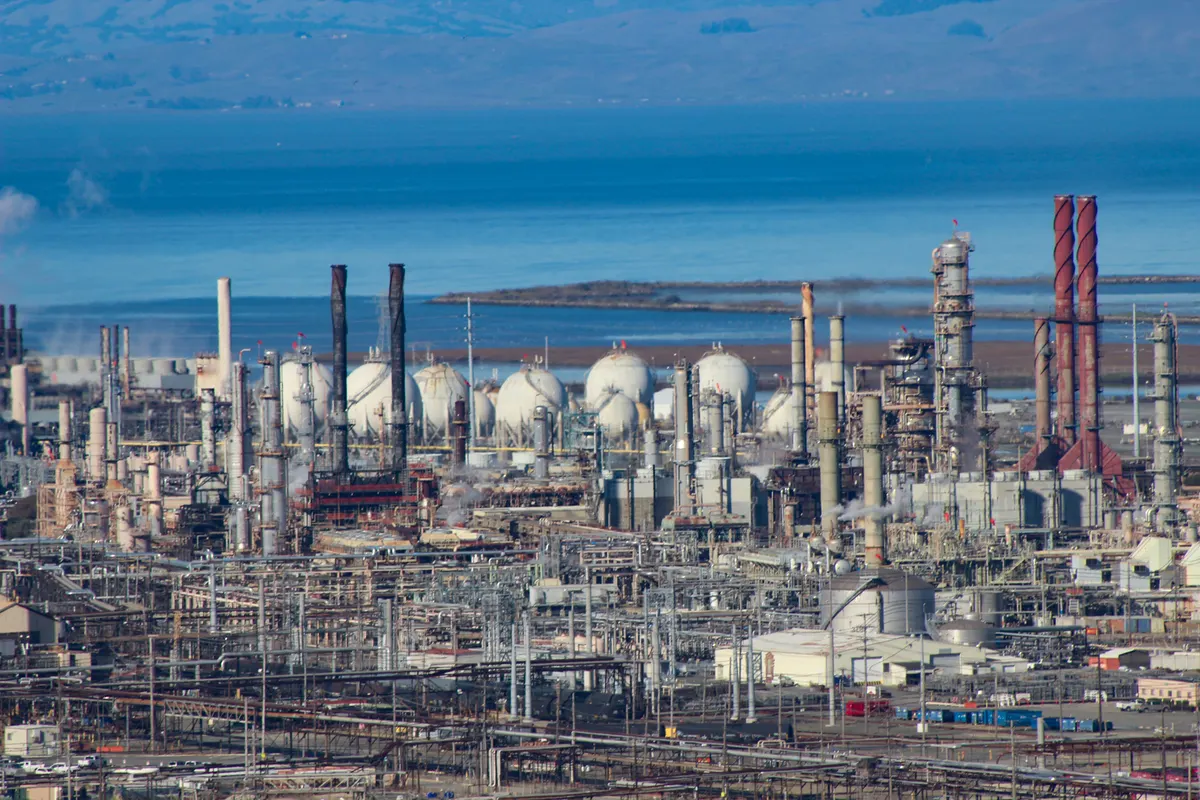
Where the money came from: Refining. Attacks on refineries in Russia and the Middle East and the effective closure of the Strait of Hormuz have knocked fuel-making capacity offline, so buyers abroad turned to U.S. Gulf Coast plants, Reuters and CNBC reported. Exxon's refining arm earned about $7.2 billion, more than its oil and gas production business for the first time in at least six years, and its Gulf Coast refineries ran at 100% of capacity. Chevron's refining profit jumped more than 300% to $4.9 billion as its U.S. plants processed a record 1.09 million barrels of crude a day. 'Diesel is the key crunch point here because it is so critical to economic growth,' Exxon CEO Darren Woods told CNBC.
What it means at the pump: Diesel, which powers the trucks, trains and farm equipment that move most goods, averaged $6.32 a gallon Friday, up more than 70% from a year ago, according to AAA figures cited by CNBC and AP. It hit a record high in September. Regular gasoline averages about $4.23, roughly 39% higher than before the U.S. and Israel attacked Iran, the Washington Post reported. 'The system is under stress,' Chevron CEO Mike Wirth told CNBC. 'We remain in an environment that is fairly fragile.'
The political fight: The results land four days before the Nov. 3 midterms. Josh Freed of Third Way, a center-left think tank, told the Post that prices are up 'because Donald Trump made decisions that increased them.' Sen. Bernie Sanders (I-Vt.) also criticized the profits online, and Democrats have pushed windfall-profit taxes on oil companies, which the White House has resisted, the Post reported. Trump himself said in August that oil companies were 'making too much money, okay, based on a shortage' and 'better cut the retail price,' Fox Business reported. At a Corpus Christi rally Tuesday he said, 'Your country is making an absolute fortune because of the situation in the Middle East,' adding that 'we couldn't let Iran have a nuclear weapon.' White House spokesperson Taylor Rogers said 'once the conflict with Iran comes to an end, gas prices will plummet.'
What the evidence shows (windfall taxes): The last federal windfall-profit tax on oil, in the 1980s, raised about $80 billion before offsets, far below the $393 billion once projected, and may have cut U.S. oil production by 1.2% to 8% while raising reliance on imports, the Congressional Research Service found (https://www.everycrsreport.com/reports/RL33305.html). CRS said that kind of tax would not raise crude prices, but it also offers no evidence it would lower them, which cuts against pitching it as relief at the pump.
Weak spot (the White House's price case): The promise that prices will 'plummet' after the war is a forecast, not a finding. The squeeze is in refining, not just crude: Exxon's Woods said 'refining capacity is very tight today,' and Reuters reported that damaged plants in Russia and the Middle East drove the shortage (https://au.investing.com/news/stock-market-news/exxon-chevron-earnings-propelled-by-wardriven-refining-surge-4729254). Neither company forecast when that capacity comes back.
What's still unknown: How long the refining windfall lasts. Brent crude swung between $68 and $132 a barrel during the quarter, Reuters reported, and Chevron's production slipped to 3.9 million barrels a day from about 4 million a year earlier. Exxon announced $20 billion in share buybacks planned for 2027 and raised its dividend for a 44th straight year. Shell said Thursday its earnings nearly doubled.
8 listed sources
- ExxonMobil third-quarter 2026 results, Oct. 30, 2026
- Chevron third-quarter 2026 results, Oct. 30, 2026
- CNBC, Oct. 30, 2026
- Reuters via Investing.com, Oct. 30, 2026
- AP, Oct. 30, 2026
- Washington Post via The Seattle Times, Oct. 30, 2026
- Fox Business, Aug. 3, 2026
- Congressional Research Service, 'The Crude Oil Windfall Profit Tax of the 1980s' (RL33305), 2006
References listed by US Brief; a source count is not a verification score.
Editorial sourcing notes
Profit figures are from the companies' own Oct. 30 releases; 'doubled' and 'nearly tripled' compare reported net income with the third quarter of 2025, as reported by CNBC. The Washington Post cited adjusted profits ($17.5 billion and $10.4 billion), which exclude one-time items. Diesel and gas averages are AAA figures cited by CNBC, AP and the Post. Stock moves are intraday. The hero photo is a 2023 file photo and the price sign is from September, not today. Not investment advice.
Like US Brief? You can support it with a tip.