
OPEC+ keeps November oil targets steady as Gulf output stays short
Seven core OPEC+ producers agreed Sunday to leave November production ceilings unchanged from September levels. Actual Gulf output remains well below those targets because of Iran-war export disruptions, Reuters reported.
AI-assisted · US Brief desk · Sources listed below
What happened
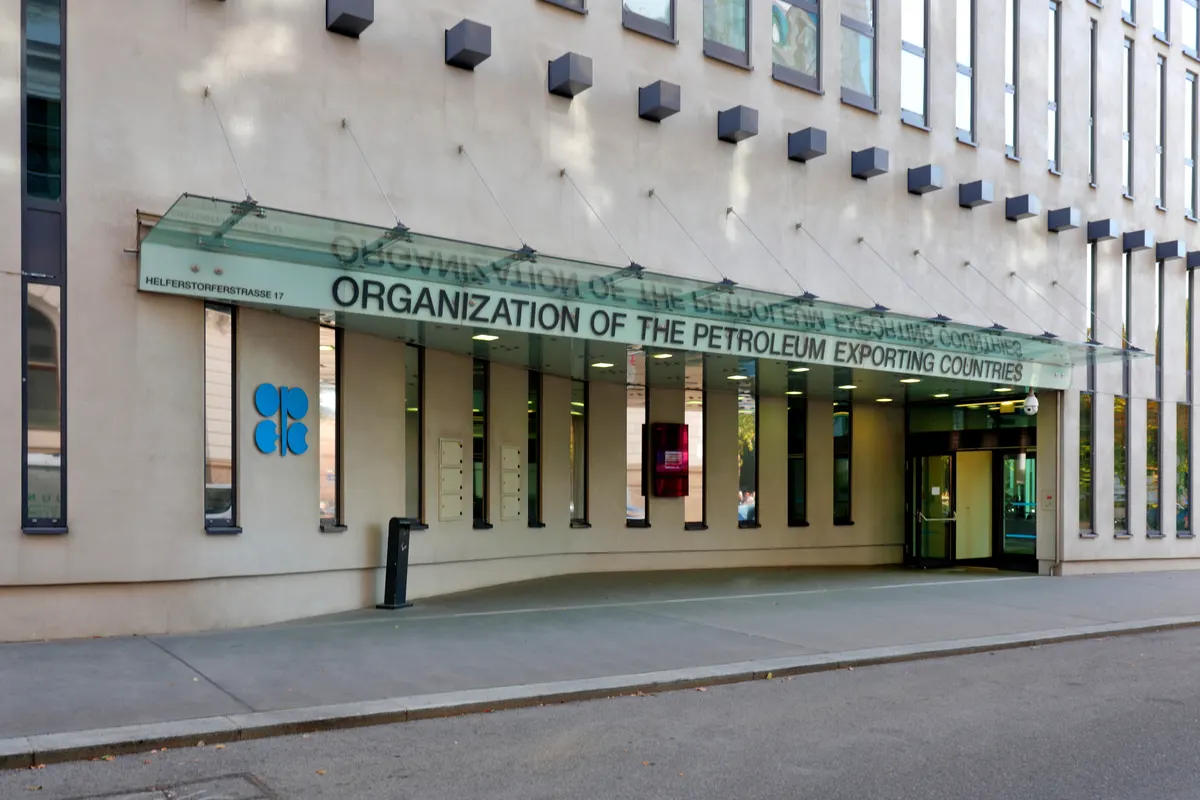
Seven core OPEC+ producers agreed Sunday to keep November oil production ceilings unchanged from September levels, the group said after a brief online meeting.
Who decided: The countries were Saudi Arabia, Russia, Iraq, Kuwait, Algeria, Kazakhstan and Oman, OPEC said. They will meet again on Nov. 1. OPEC's table keeps Saudi Arabia's quota at 10.478 million barrels a day and Russia's at 9.949 million, TASS reported. A separate Joint Ministerial Monitoring Committee also met Sunday to review the market; it does not set policy.
Targets vs. actual output: Gulf OPEC+ producers have been pumping well below their ceilings because of export disruptions tied to the U.S.-Israeli war on Iran, Reuters reported. Exports have fluctuated at about 60% to 80% of normal levels in recent months, the wire said.
Why it matters
Holding ceilings steady does little to add barrels while Gulf shipments stay disrupted. Traders will watch whether Hormuz and Gulf loadings keep recovering, and whether Europe's diesel reserve release softens prices.
What’s next
The seven meet again Nov. 1. Watch weekly Gulf export estimates, Brent and diesel prices after Europe's diesel release, and any word on the delayed capacity review.
More context
August figures: The seven pumped 25 million barrels a day in August, up 630,000 from July, yet still about 5 million barrels a day below February prewar levels, Reuters said, citing OPEC data. About 2 million barrels a day of output cuts remain in place across most members, according to the same report.
Why ceilings stayed put: OPEC+ has raised paper targets through much of 2026 after years of cuts, but much of that increase never reached the market because of the conflict, Reuters said. The war has also delayed a capacity review needed for 2027 quotas, industry sources told the wire. Further output policy changes are unlikely before 2027, those sources said.
Prices: Brent crude remains above $100 a barrel, up from about $73 before the Iran war began in late February, Reuters said. Prices fell on Friday after European leaders agreed to a U.S. request to release diesel reserves.
Analyst view: "The OPEC+ group of seven kept their production ceilings unchanged, in line with market expectations," UBS analyst Giovanni Staunovo told Reuters. "That said, despite rising flows through the Strait of Hormuz, their output levels remain well below quota. Consequently, the oil market remains tight."
6 listed sources
- OPEC.org, Oct 4, 2026: Saudi Arabia, Russia, Iraq, Kuwait, Kazakhstan, Algeria, and Oman reaffirm commitment to market stability
- Reuters (Ahmad Ghaddar, Alex Lawler, Olesya Astakhova) via StreetInsider, Oct 4, 2026: OPEC+ agrees to keep November oil output targets steady
- Reuters via Investing.com, Oct 4, 2026: OPEC+ agrees to keep November oil output targets steady
- TASS, Oct 4, 2026: OPEC+ seven keep November oil production plan unchanged (country quotas from OPEC table)
- Bloomberg (via Headlines Briefing), Sept 29, 2026: OPEC+ likely to stick with plan for steady quotas, delegates say
- Sourcing note: Decision confirmed by OPEC's own Oct 4 statement and by Reuters after the meeting. Export-disruption percentages, August production totals, and the Staunovo quote are from Reuters. Forecasts that further policy changes are unlikely before 2027 are attributed to industry sources cited by Reuters, not to OPEC's statement. Re-check 7:57 AM PT Oct 4: Reuters text and Staunovo quote verified; added country quotas (TASS, citing OPEC's table) and Bloomberg's pre-meeting delegate report; corrected 'G7 diesel release' to Europe's diesel reserve release, per Reuters. No right-leaning US outlet found.
References listed by US Brief; a source count is not a verification score.
Editorial sourcing notes
Primary: OPEC.org statement Oct 4, 2026 (seven countries keep September 2026 required production for November; next meeting Nov 1). Context and market figures: Reuters (Ahmad Ghaddar, Alex Lawler, Olesya Astakhova) via StreetInsider, updated after the meeting — exports 60–80% of normal; August output 25 million bpd (+630,000 from July, ~5 million below February prewar); ~2 million bpd cuts still in place; capacity review delayed; Brent above $100 vs ~$73 prewar; UBS Giovanni Staunovo quote on ceilings vs actual output. Caveat: StreetInsider carries the Reuters text; treat Reuters figures as wire reporting. OPEC statement does not publish the full quota table in the fetched HTML. Re-check ~7:55 AM PT Oct 4. Re-check 7:57 AM PT Oct 4: see sourcing note. removeIds set to oldest Finance bullet fin-g7-oil-release (Oct 2, 11:10 AM) to keep Finance at 6.
Like US Brief? You can support it with a tip.